Brandt's Cormorant vs Pelagic Cormorant
Urile penicillatus versus Urile pelagicus
Play a quiz with Brandt's Cormorant and Pelagic Cormorant
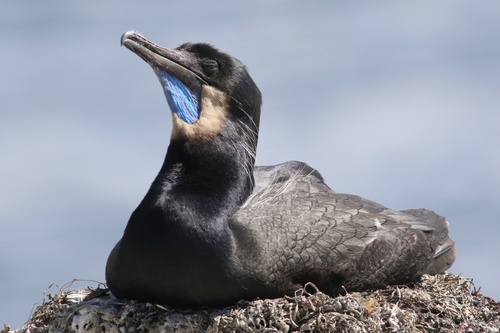
Brandt's Cormorant
Pelagic Cormorant
In short
Brandt's Cormorant and Pelagic Cormorant can be distinguished by their gular pouch color and overall size. Brandt's has a distinctive cobalt blue gular pouch during the breeding season, while Pelagic's is red. Brandt's is generally larger and bulkier than the more slender Pelagic Cormorant.
Identification tips
- Gular pouch color: Look for the cobalt blue of Brandt's versus the red of Pelagic during the breeding season. 2. Size and bulk: Brandt's is larger and bulkier. 3. Behavior: Brandt's often in colonies; Pelagic more solitary. 4. Habitat: Brandt's prefers rocky marine environments; Pelagic can be more varied.
Size
Brandt's Cormorant is larger and bulkier than the Pelagic Cormorant, which is more slender and smaller.
Plumage
Brandt's Cormorant has a cobalt blue gular pouch in the breeding season, while Pelagic Cormorant's is red. Both have dark plumage, but Brandt's is generally more robust.
Behaviour
Brandt's Cormorant is more likely to be seen in colonies, whereas Pelagic Cormorant often exhibits more solitary behavior.
Habitat
Both species are found along the Pacific Coast, but Brandt's Cormorant is more commonly associated with marine environments and rocky islets, while Pelagic Cormorant can be found in more varied coastal habitats.