Birdr

Bridled Tern vs Gull-billed Tern

Onychoprion anaethetus versus Gelochelidon nilotica

Play a quiz with Bridled Tern and Gull-billed Tern
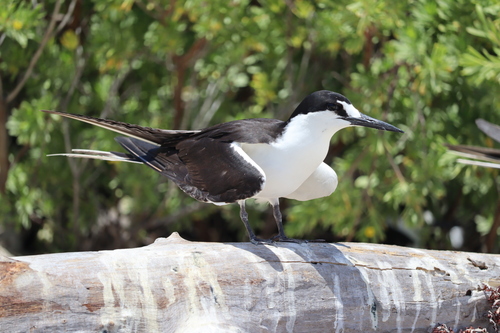
Bridled Tern (Onychoprion anaethetus) Bridled Tern
Gull-billed Tern (Gelochelidon nilotica) Gull-billed Tern

Media

Loading…

In short

The Bridled Tern and Gull-billed Tern can be distinguished by their bill shape and plumage patterns. The Bridled Tern has a slender, pointed bill and a distinctive dark eye-line, while the Gull-billed Tern features a short, thick black bill and lacks the eye-line.

Identification tips

1. Bill Shape: Look for the slender, pointed bill of the Bridled Tern versus the short, thick bill of the Gull-billed Tern. 2. Eye-line: The Bridled Tern has a distinctive dark eye-line, absent in the Gull-billed Tern. 3. Plumage: Note the darker upperparts of the Bridled Tern compared to the pale gray of the Gull-billed Tern. 4. Habitat: Consider the environment; Bridled Terns are more marine, while Gull-billed Terns are often found inland. 5. Behavior: Observe behavior; Bridled Terns associate with flotsam, whereas Gull-billed Terns forage over land.

Size

The Gull-billed Tern is generally larger and stockier than the Bridled Tern.

Plumage

Bridled Terns have a dark cap with a prominent white forehead and a dark eye-line, while Gull-billed Terns have a black cap in breeding plumage without an eye-line. The Bridled Tern's upperparts are darker, contrasting with its white underparts, whereas the Gull-billed Tern has pale gray upperparts and a very white body.

Behaviour

Bridled Terns are more likely to be seen near land and often associate with marine flotsam, while Gull-billed Terns are more terrestrial, often seen foraging over fields and wetlands.

Habitat

Bridled Terns are strictly marine, often found in tropical and subtropical seas, whereas Gull-billed Terns are more versatile, inhabiting coastal and inland wetlands.

Voice

Vocalizations are not a primary distinguishing feature between these species in the field.

Submit a better description

Use the same sections as the comparison. Your text is published immediately.

The Bridled Tern and Gull-billed Tern can be distinguished by their bill shape and plumage patterns. The Bridled Tern has a slender, pointed bill and a distinctive dark eye-line, while the Gull-billed Tern features a short, thick black bill and lacks the eye-line.

1. Bill Shape: Look for the slender, pointed bill of the Bridled Tern versus the short, thick bill of the Gull-billed Tern. 2. Eye-line: The Bridled Tern has a distinctive dark eye-line, absent in the Gull-billed Tern. 3. Plumage: Note the darker upperparts of the Bridled Tern compared to the pale gray of the Gull-billed Tern. 4. Habitat: Consider the environment; Bridled Terns are more marine, while Gull-billed Terns are often found inland. 5. Behavior: Observe behavior; Bridled Terns associate with flotsam, whereas Gull-billed Terns forage over land.

The Gull-billed Tern is generally larger and stockier than the Bridled Tern.

Bridled Terns have a dark cap with a prominent white forehead and a dark eye-line, while Gull-billed Terns have a black cap in breeding plumage without an eye-line. The Bridled Tern's upperparts are darker, contrasting with its white underparts, whereas the Gull-billed Tern has pale gray upperparts and a very white body.

Bridled Terns are more likely to be seen near land and often associate with marine flotsam, while Gull-billed Terns are more terrestrial, often seen foraging over fields and wetlands.

Bridled Terns are strictly marine, often found in tropical and subtropical seas, whereas Gull-billed Terns are more versatile, inhabiting coastal and inland wetlands.

Vocalizations are not a primary distinguishing feature between these species in the field.

Discard your changes?

You have unsaved edits. If you leave now, those changes will be lost.

Bridled Tern · Gull-billed Tern · My Tricky Birds