Birdr

Bright-rumped Attila vs Brown-crested Flycatcher

Attila spadiceus versus Myiarchus tyrannulus

Play a quiz with Bright-rumped Attila and Brown-crested Flycatcher
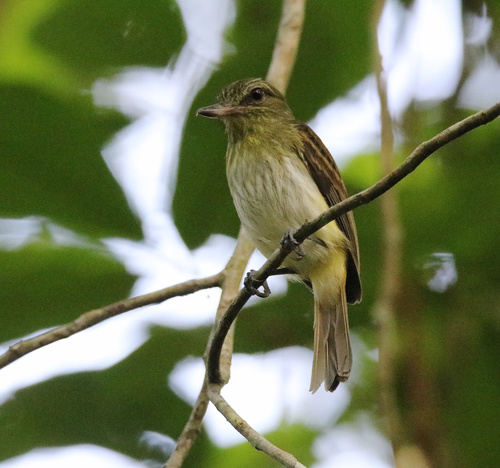
Bright-rumped Attila (Attila spadiceus) Bright-rumped Attila
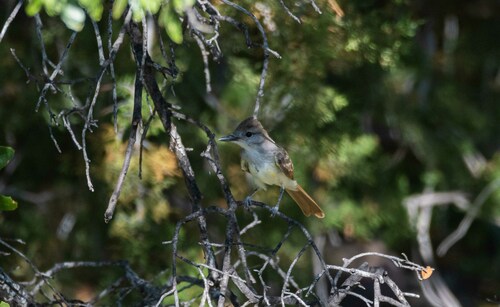
Brown-crested Flycatcher (Myiarchus tyrannulus) Brown-crested Flycatcher

Media

Loading…

In short

The Bright-rumped Attila and Brown-crested Flycatcher can be distinguished by their plumage and vocalizations. The Attila typically shows a bright rump and variable plumage morphs, while the Flycatcher has a more consistent brownish plumage with a distinctive crest. Vocalizations are also a key differentiator, with each species having unique calls.

Identification tips

  1. Look for the bright rump on the Bright-rumped Attila. 2. Note the consistent brownish plumage and crest of the Brown-crested Flycatcher. 3. Listen for distinct vocalizations, especially if visual identification is challenging. 4. Observe habitat preferences: Attila in less disturbed forests, Flycatcher in riparian or cactus areas.

Size

Both species are similar in size, typical of medium-sized flycatchers.

Plumage

The Bright-rumped Attila exhibits polymorphic plumage with variations from olive-green to rufous, often with a bright rump. In contrast, the Brown-crested Flycatcher has a more uniform brownish plumage with a noticeable crest and lacks the bright rump.

Behaviour

The Bright-rumped Attila is less commonly seen and tends to avoid heavily disturbed areas, while the Brown-crested Flycatcher is more conspicuous, often found in canopy layers and is partly frugivorous during migration and winter.

Habitat

The Attila inhabits a range of forest types but avoids heavily disturbed areas. The Flycatcher prefers mature riparian forests and cactus woodlands, utilizing cavities for nesting.

Voice

Vocalizations differ significantly; the Bright-rumped Attila's calls vary geographically, while the Brown-crested Flycatcher's calls are more consistent and play a dominant role in species recognition.

Submit a better description

Use the same sections as the comparison. Your text is published immediately.

The Bright-rumped Attila and Brown-crested Flycatcher can be distinguished by their plumage and vocalizations. The Attila typically shows a bright rump and variable plumage morphs, while the Flycatcher has a more consistent brownish plumage with a distinctive crest. Vocalizations are also a key differentiator, with each species having unique calls.

  1. Look for the bright rump on the Bright-rumped Attila. 2. Note the consistent brownish plumage and crest of the Brown-crested Flycatcher. 3. Listen for distinct vocalizations, especially if visual identification is challenging. 4. Observe habitat preferences: Attila in less disturbed forests, Flycatcher in riparian or cactus areas.

Both species are similar in size, typical of medium-sized flycatchers.

The Bright-rumped Attila exhibits polymorphic plumage with variations from olive-green to rufous, often with a bright rump. In contrast, the Brown-crested Flycatcher has a more uniform brownish plumage with a noticeable crest and lacks the bright rump.

The Bright-rumped Attila is less commonly seen and tends to avoid heavily disturbed areas, while the Brown-crested Flycatcher is more conspicuous, often found in canopy layers and is partly frugivorous during migration and winter.

The Attila inhabits a range of forest types but avoids heavily disturbed areas. The Flycatcher prefers mature riparian forests and cactus woodlands, utilizing cavities for nesting.

Vocalizations differ significantly; the Bright-rumped Attila's calls vary geographically, while the Brown-crested Flycatcher's calls are more consistent and play a dominant role in species recognition.

Discard your changes?

You have unsaved edits. If you leave now, those changes will be lost.

Bright-rumped Attila · Brown-crested Flycatcher · My Tricky Birds