Birdr

Bristle-thighed Curlew vs Little Whimbrel

Numenius tahitiensis versus Numenius minutus

Play a quiz with Bristle-thighed Curlew and Little Whimbrel
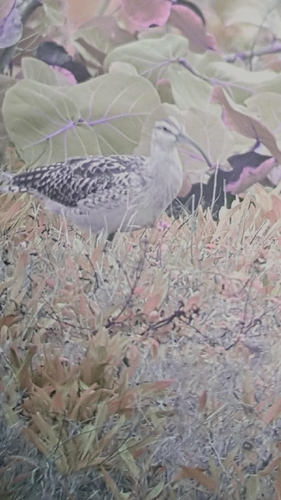
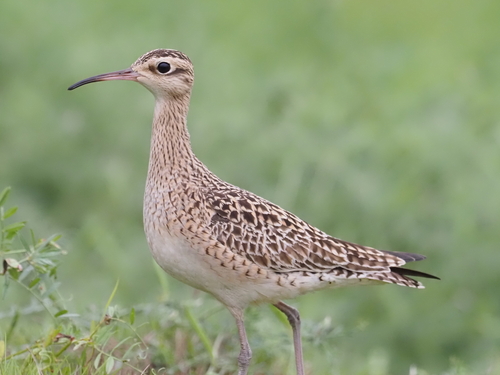
Bristle-thighed Curlew (Numenius tahitiensis) Bristle-thighed Curlew
Little Whimbrel (Numenius minutus) Little Whimbrel

Media

Loading…

In short

The Bristle-thighed Curlew and Little Whimbrel can be distinguished by their size and bill shape. The Bristle-thighed Curlew is larger with a longer, decurved bill, while the Little Whimbrel is smaller with a shorter, straighter bill. Both species have similar plumage tones, but the Bristle-thighed Curlew's unique elongated bare shafts on the thighs can be a distinguishing feature.

Identification tips

Size

The Bristle-thighed Curlew is larger than the Little Whimbrel.

Plumage

Both species have similar brown and buff plumage, but the Bristle-thighed Curlew has distinctive elongated bare shafts on the thighs.

Behaviour

The Bristle-thighed Curlew is known for its unique behavior of becoming flightless during molt and using tools when foraging, unlike the Little Whimbrel.

Habitat

The Bristle-thighed Curlew winters on oceanic islands, while the Little Whimbrel follows a narrow migration corridor through inland wetlands.

Submit a better description

Use the same sections as the comparison. Your text is published immediately.

The Bristle-thighed Curlew and Little Whimbrel can be distinguished by their size and bill shape. The Bristle-thighed Curlew is larger with a longer, decurved bill, while the Little Whimbrel is smaller with a shorter, straighter bill. Both species have similar plumage tones, but the Bristle-thighed Curlew's unique elongated bare shafts on the thighs can be a distinguishing feature.

  • Size and Bill Shape: Look for the larger size and longer, decurved bill of the Bristle-thighed Curlew compared to the smaller, straighter-billed Little Whimbrel.
  • Thigh Feathers: Check for the Bristle-thighed Curlew's unique elongated bare shafts on the thighs.
  • Behavior: Note any tool use or flightlessness during molt, indicative of the Bristle-thighed Curlew.
  • Habitat: Consider the habitat; Bristle-thighed Curlews are more likely found on oceanic islands during winter.

The Bristle-thighed Curlew is larger than the Little Whimbrel.

Both species have similar brown and buff plumage, but the Bristle-thighed Curlew has distinctive elongated bare shafts on the thighs.

The Bristle-thighed Curlew is known for its unique behavior of becoming flightless during molt and using tools when foraging, unlike the Little Whimbrel.

The Bristle-thighed Curlew winters on oceanic islands, while the Little Whimbrel follows a narrow migration corridor through inland wetlands.

Discard your changes?

You have unsaved edits. If you leave now, those changes will be lost.

Bristle-thighed Curlew · Little Whimbrel · My Tricky Birds