Birdr

Bristle-thighed Curlew vs Whimbrel

Numenius tahitiensis versus Numenius phaeopus

Play a quiz with Bristle-thighed Curlew and Whimbrel
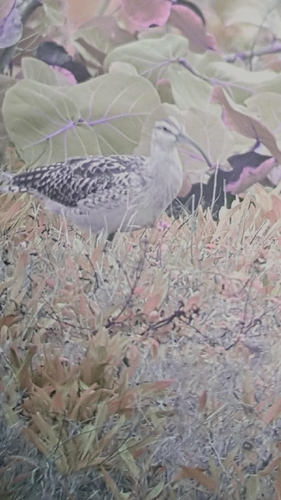
Bristle-thighed Curlew (Numenius tahitiensis) Bristle-thighed Curlew
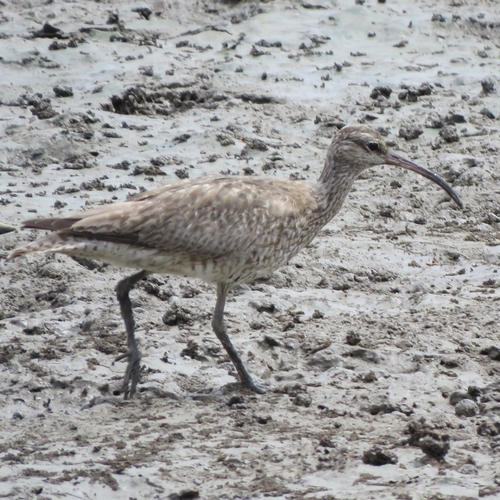
Whimbrel (Numenius phaeopus) Whimbrel

Media

Loading…

In short

The Bristle-thighed Curlew and the Whimbrel are similar in shape and size, but the Bristle-thighed Curlew can be distinguished by its unique bristle-like feathers on its thighs and a more buffy overall appearance. The Whimbrel has a more pronounced striped crown and a longer, more evenly curved bill.

Identification tips

  1. Look for the bristle-like feathers on the thighs of the Bristle-thighed Curlew. 2. Note the striped crown of the Whimbrel. 3. Compare the bill shape: the Whimbrel's is longer and more evenly curved. 4. Observe behavior: the Bristle-thighed Curlew may be flightless during molt. 5. Listen for vocalizations: the Whimbrel's call is a series of rapid whistles.

Size

Both species are similar in size, with the Bristle-thighed Curlew being slightly more robust.

Plumage

The Bristle-thighed Curlew has a buffy overall appearance with distinctive bristle-like feathers on its thighs, whereas the Whimbrel has a more pronounced striped crown and a generally grayer tone. Both have long, decurved bills, but the Whimbrel's is longer and more evenly curved.

Behaviour

The Bristle-thighed Curlew is unique for becoming flightless during molt and using tools when foraging, while the Whimbrel does not exhibit these behaviors.

Habitat

The Bristle-thighed Curlew winters exclusively on oceanic islands, while the Whimbrel is more widespread, found in various coastal and inland habitats during migration and winter.

Voice

Both species have similar calls, but the Whimbrel's call is a distinctive series of rapid whistles, which may help in distinguishing them.

Submit a better description

Use the same sections as the comparison. Your text is published immediately.

The Bristle-thighed Curlew and the Whimbrel are similar in shape and size, but the Bristle-thighed Curlew can be distinguished by its unique bristle-like feathers on its thighs and a more buffy overall appearance. The Whimbrel has a more pronounced striped crown and a longer, more evenly curved bill.

  1. Look for the bristle-like feathers on the thighs of the Bristle-thighed Curlew. 2. Note the striped crown of the Whimbrel. 3. Compare the bill shape: the Whimbrel's is longer and more evenly curved. 4. Observe behavior: the Bristle-thighed Curlew may be flightless during molt. 5. Listen for vocalizations: the Whimbrel's call is a series of rapid whistles.

Both species are similar in size, with the Bristle-thighed Curlew being slightly more robust.

The Bristle-thighed Curlew has a buffy overall appearance with distinctive bristle-like feathers on its thighs, whereas the Whimbrel has a more pronounced striped crown and a generally grayer tone. Both have long, decurved bills, but the Whimbrel's is longer and more evenly curved.

The Bristle-thighed Curlew is unique for becoming flightless during molt and using tools when foraging, while the Whimbrel does not exhibit these behaviors.

The Bristle-thighed Curlew winters exclusively on oceanic islands, while the Whimbrel is more widespread, found in various coastal and inland habitats during migration and winter.

Both species have similar calls, but the Whimbrel's call is a distinctive series of rapid whistles, which may help in distinguishing them.

Discard your changes?

You have unsaved edits. If you leave now, those changes will be lost.

Bristle-thighed Curlew · Whimbrel · My Tricky Birds