Birdr

Broad-billed Hummingbird vs Chestnut-collared Longspur

Cynanthus latirostris versus Calcarius ornatus

Play a quiz with Broad-billed Hummingbird and Chestnut-collared Longspur
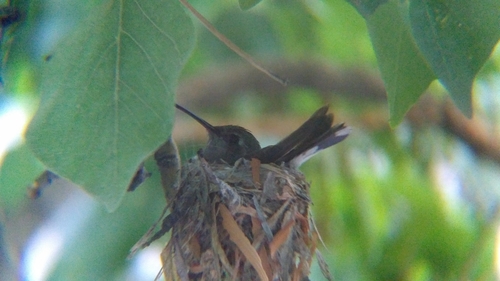
Broad-billed Hummingbird (Cynanthus latirostris) Broad-billed Hummingbird
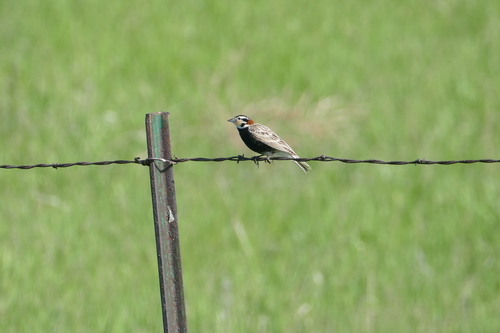
Chestnut-collared Longspur (Calcarius ornatus) Chestnut-collared Longspur

Media

Loading…

In short

The Broad-billed Hummingbird and Chestnut-collared Longspur are easily distinguished by their habitats and appearances. The hummingbird is a vibrant, small nectar feeder, while the longspur is a prairie-dwelling songbird with a striking chestnut collar and black belly.

Identification tips

Size

The Broad-billed Hummingbird is much smaller than the Chestnut-collared Longspur, typical of hummingbirds compared to passerines.

Plumage

The Broad-billed Hummingbird has iridescent green and blue plumage with a broad red bill, whereas the Chestnut-collared Longspur features a black belly, chestnut collar, and yellow cheek in males, with females being more buff-colored.

Behaviour

Broad-billed Hummingbirds are agile flyers, often seen hovering near flowers, while Chestnut-collared Longspurs perform aerial song displays and are ground foragers.

Habitat

Broad-billed Hummingbirds inhabit areas with abundant flowers, often in remote or semi-arid regions, whereas Chestnut-collared Longspurs prefer open grasslands and prairies.

Voice

The Broad-billed Hummingbird's vocalizations are not well-documented, while the Chestnut-collared Longspur is known for its melodic song during flight displays.

Submit a better description

Use the same sections as the comparison. Your text is published immediately.

The Broad-billed Hummingbird and Chestnut-collared Longspur are easily distinguished by their habitats and appearances. The hummingbird is a vibrant, small nectar feeder, while the longspur is a prairie-dwelling songbird with a striking chestnut collar and black belly.

  • Habitat: Look for Broad-billed Hummingbirds near flowers; Chestnut-collared Longspurs in open prairies.
  • Size and Shape: Broad-billed Hummingbirds are small with a long bill; Chestnut-collared Longspurs are larger with a more typical songbird shape.
  • Plumage: Note the iridescent colors and red bill of the hummingbird versus the distinct chestnut collar and black belly of the longspur.

The Broad-billed Hummingbird is much smaller than the Chestnut-collared Longspur, typical of hummingbirds compared to passerines.

The Broad-billed Hummingbird has iridescent green and blue plumage with a broad red bill, whereas the Chestnut-collared Longspur features a black belly, chestnut collar, and yellow cheek in males, with females being more buff-colored.

Broad-billed Hummingbirds are agile flyers, often seen hovering near flowers, while Chestnut-collared Longspurs perform aerial song displays and are ground foragers.

Broad-billed Hummingbirds inhabit areas with abundant flowers, often in remote or semi-arid regions, whereas Chestnut-collared Longspurs prefer open grasslands and prairies.

The Broad-billed Hummingbird's vocalizations are not well-documented, while the Chestnut-collared Longspur is known for its melodic song during flight displays.

Discard your changes?

You have unsaved edits. If you leave now, those changes will be lost.

Broad-billed Hummingbird · Chestnut-collared Longspur · My Tricky Birds