
Brown Accentor vs Black-throated Accentor
Prunella fulvescens versus Prunella atrogularis
Play a quiz with Brown Accentor and Black-throated Accentor
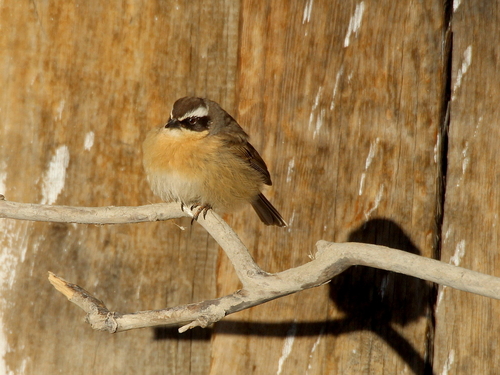 Brown Accentor
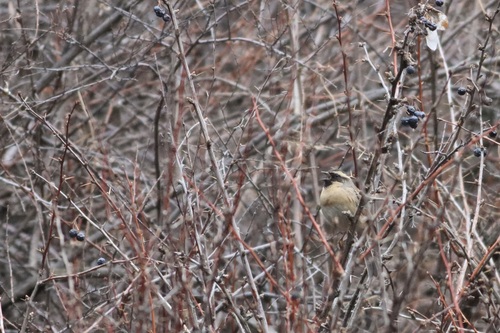 Black-throated Accentor
In short
The most reliable way to separate Brown Accentor from Black-throated Accentor is by head pattern and underpart color: Brown Accentor shows a broad white supercilium (especially behind the eye), a blackish-brown mask and ear-coverts, and yellowish breast and belly, while Black-throated Accentor has a black crown, face patch, and throat, with a white supercilium, orange breast, and white belly with orange streaks. Juvenile Black-throated Accentors may lack the dark throat, making them less contrasting, but their orange breast and belly streaking remain distinctive. Both species are similar in size and shape, but careful attention to face and underpart coloration will usually clinch the ID. Habitat overlap is possible, but Black-throated Accentor is more strictly montane and migratory.
Identification tips
- Supercilium shape and width: Brown Accentor shows a broad white supercilium, especially wide behind the eye, while Black-throated Accentor's is narrower and more even. This is a key mark in all plumages.
- Mask and ear-coverts: Brown Accentor has a blackish-brown mask and ear-coverts, giving the face a masked look; Black-throated Accentor has a black face patch but it is more extensive, including the crown and throat in adults.
- Crown color: Black-throated Accentor adults have a black crown, contrasting with the rest of the head; Brown Accentor lacks this feature, with a plainer crown.
- Throat patch: Adult Black-throated Accentor has a bold black throat; in juveniles and winter birds this may be faint or absent, but Brown Accentor never shows a black throat.
- Breast and belly color: Brown Accentor always has yellowish tones to the breast and belly; Black-throated Accentor shows a rich orange breast and a white belly with orange streaks (adults and immatures).
- Belly streaking: Black-throated Accentor has orange streaks on the white belly, which Brown Accentor lacks.
- Back pattern: Black-throated Accentor has a streaked dark brown back, somewhat sparrow-like; Brown Accentor's back is less streaked and more uniform.
- Bill shape: Both have fine, pointed bills; not a separator.
- Size: Both are similar in size, but Brown Accentor males may be slightly larger; this is not useful in the field.
- Sex differences: Both species are sexually similar in plumage; Brown Accentor males are slightly larger, but this is not visually obvious.
- Juvenile confusion: Juvenile Black-throated Accentor may lack a strong black throat, but the orange breast and belly streaking are still present; Brown Accentor juveniles retain yellowish underparts and lack streaking.
- Habitat context: If in strictly montane, coniferous or rocky highland habitat, Black-throated Accentor is more likely; in broader shrubby or Mediterranean-type vegetation, Brown Accentor is more likely, but overlap occurs.
- Voice: Only Black-throated Accentor's call and song are described; if you hear a fine 'ti-ti-ti' or dunnock-like twittering, suspect Black-throated.
- Flight views: No distinctive upperwing or flight pattern differences are described for either species; rely on head and underpart color even in flight.
- Season: Black-throated Accentor is migratory and may appear outside breeding range in winter; Brown Accentor is more resident, but both can occur together in some regions.
Size
Both species are similar in overall size and structure, being small, dunnock-like accentors. Black-throated Accentor is specifically described as 13.5–14 cm in length, which is typical for the group. Brown Accentor males are noted as slightly larger than females, but this difference is subtle and not a practical field mark. Bill shape is fine and pointed in both, adapted for insectivory. Size alone is not a reliable separator.
Plumage
Juvenile and winter Black-throated Accentors can be confusing, as their dark throat patch may be faint or absent, but they still show an orange breast and white belly with orange streaks. Brown Accentor, in all plumages, has a yellowish breast and belly, lacking the orange tones and streaking of Black-throated. The head pattern is key: Brown Accentor has a broad white supercilium (widest behind the eye), with a blackish-brown mask and ear-coverts, while Black-throated Accentor has a black crown, face patch, and throat (in adults), with a white supercilium. The back of Black-throated Accentor is streaked dark brown, resembling a sparrow, while Brown Accentor's back is less distinctly described but not noted as heavily streaked. Sexes are similar in both, but Brown Accentor males are slightly larger. No distinctive upperwing or flight pattern differences are described for either species.
Behaviour
Both species behave much like other accentors: they are typically skulking, foraging low in shrubby or rocky habitats, and may be seen perched or hopping on the ground. No behavioral differences are highlighted in the notes that would reliably separate them in the field.
Habitat
Habitat overlap is possible, especially in wintering grounds in Afghanistan and neighboring regions. Brown Accentor is found in a wider range, including shrubby Mediterranean-type vegetation across Central Asia, while Black-throated Accentor is more strictly associated with montane habitats (Ural, Tian Shan, Altai Mountains) and is migratory, moving to lower elevations or further south in winter. In areas where both occur, context may help, but is not diagnostic.
Voice
Black-throated Accentor's call is a fine 'ti-ti-ti', and its song is a pleasant twittering similar to the dunnock. No vocal description is provided for Brown Accentor, so voice is not a reliable separator unless Black-throated is singing.