
Birdr

Brown-breasted Flycatcher vs Brown-streaked Flycatcher

Muscicapa muttui versus Muscicapa williamsoni

Play a quiz with Brown-breasted Flycatcher and Brown-streaked Flycatcher
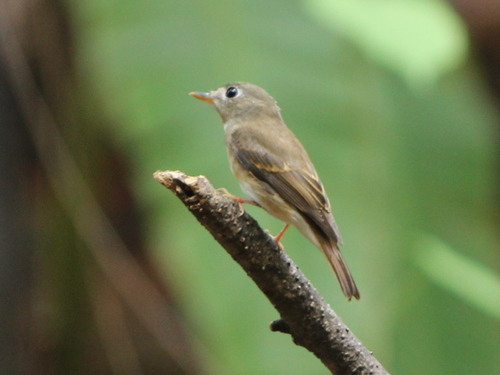
Brown-breasted Flycatcher (Muscicapa muttui) Brown-breasted Flycatcher
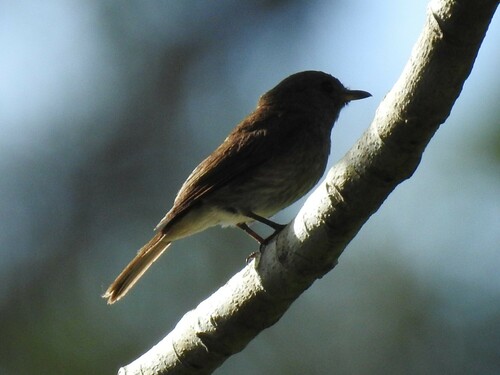
Brown-streaked Flycatcher (Muscicapa williamsoni) Brown-streaked Flycatcher

Media

Loading…

In short

The Brown-breasted Flycatcher and Brown-streaked Flycatcher are similar in appearance but can be distinguished by subtle differences in plumage and structure. The Brown-breasted Flycatcher typically has a more uniform brown breast, while the Brown-streaked Flycatcher shows streaking on its breast. Both species belong to the Old World Flycatchers family, making structural differences like bill shape and tail length important for identification.

Identification tips

  1. Check the breast: Look for streaking on the breast for Brown-streaked Flycatcher; Brown-breasted Flycatcher has a more uniform breast. 2. Observe structure: Note any subtle differences in bill shape or tail length if visible. 3. Consider location: While both are forest dwellers, knowing their specific range can assist in identification. 4. Use vocalizations cautiously: If known, they might help, but rely primarily on visual cues.

Size

Both species are similar in size, typical of small flycatchers, making size a less reliable distinguishing feature.

Plumage

The Brown-breasted Flycatcher has a more uniform brown breast, whereas the Brown-streaked Flycatcher exhibits noticeable streaking on the breast. Both have similar overall brownish tones, but the streaking is a key differentiator.

Behaviour

Both species exhibit typical flycatcher behavior, such as sallying from perches to catch insects. Behavior is not a reliable distinguishing feature between these two.

Habitat

Both species are found in forested areas, but specific habitat preferences might vary slightly depending on their range. This is not a primary distinguishing factor.

Voice

Vocalizations are not well-documented for field differentiation between these two species. Observers should rely on visual cues.

Submit a better description

Use the same sections as the comparison. Your text is published immediately.

The Brown-breasted Flycatcher and Brown-streaked Flycatcher are similar in appearance but can be distinguished by subtle differences in plumage and structure. The Brown-breasted Flycatcher typically has a more uniform brown breast, while the Brown-streaked Flycatcher shows streaking on its breast. Both species belong to the Old World Flycatchers family, making structural differences like bill shape and tail length important for identification.

  1. Check the breast: Look for streaking on the breast for Brown-streaked Flycatcher; Brown-breasted Flycatcher has a more uniform breast. 2. Observe structure: Note any subtle differences in bill shape or tail length if visible. 3. Consider location: While both are forest dwellers, knowing their specific range can assist in identification. 4. Use vocalizations cautiously: If known, they might help, but rely primarily on visual cues.

Both species are similar in size, typical of small flycatchers, making size a less reliable distinguishing feature.

The Brown-breasted Flycatcher has a more uniform brown breast, whereas the Brown-streaked Flycatcher exhibits noticeable streaking on the breast. Both have similar overall brownish tones, but the streaking is a key differentiator.

Both species exhibit typical flycatcher behavior, such as sallying from perches to catch insects. Behavior is not a reliable distinguishing feature between these two.

Both species are found in forested areas, but specific habitat preferences might vary slightly depending on their range. This is not a primary distinguishing factor.

Vocalizations are not well-documented for field differentiation between these two species. Observers should rely on visual cues.

Discard your changes?

You have unsaved edits. If you leave now, those changes will be lost.

Brown-breasted Flycatcher · Brown-streaked Flycatcher · My Tricky Birds