Birdr

Brown-headed Thrush vs Pale Thrush

Turdus chrysolaus versus Turdus pallidus

Play a quiz with Brown-headed Thrush and Pale Thrush
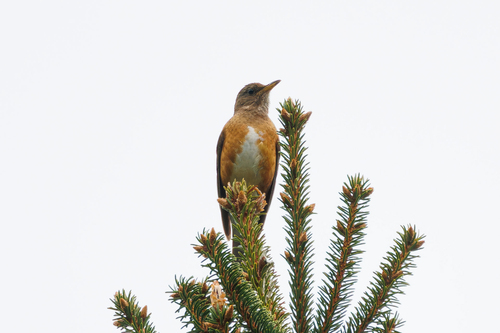
Brown-headed Thrush (Turdus chrysolaus) Brown-headed Thrush
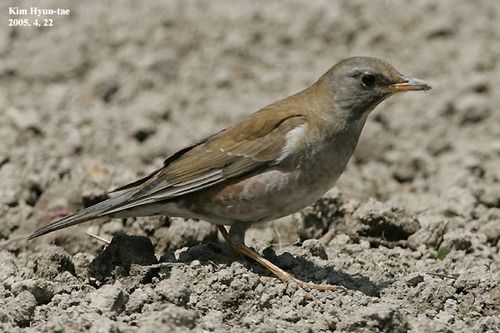
Pale Thrush (Turdus pallidus) Pale Thrush

Media

Loading…

In short

The most reliable field mark between Brown-headed Thrush and Pale Thrush is the head and throat coloration: Brown-headed Thrush shows a consistently brown head, while Pale Thrush males have a blue-grey head and throat, with females showing a duller, browner version. In flight or perched, Pale Thrush is paler below and shows a more contrasting tail with white tips to the outer feathers. Both species are similar in size and structure, but careful attention to head color, underpart tone, and tail pattern will separate most individuals, especially adults. Immature-specific wing patterns are not described in the available sources, so focus on these adult marks.

Identification tips

  1. Head and throat color (adults): Brown-headed Thrush always shows a brown head, while male Pale Thrush has a blue-grey head and throat. Female Pale Thrush is duller, with a browner head and pale throat, but still lacks the rich brown of Brown-headed. This is the single most reliable mark in good light.
  2. Underparts: Pale Thrush is noticeably paler below, with pale brown underparts, a whitish belly and undertail-coverts, and darker flanks. Brown-headed Thrush is more uniform below, lacking the strong contrast of Pale Thrush.
  3. Tail pattern in flight: Look for white tips to the outer tail feathers on Pale Thrush, especially when the bird is flying away or flicking its tail. Brown-headed Thrush lacks this feature.
  4. Wing and flight feather color: Pale Thrush has dark grey flight feathers and grey or white underwing-coverts. These may be visible in flight or when preening. Brown-headed Thrush does not show this strong contrast.
  5. Bill color: Pale Thrush has a two-toned bill: grey above and yellow below. Bill color is not described for Brown-headed Thrush, so this is only useful if you see the diagnostic pattern on Pale Thrush.
  6. Feet color: Pale Thrush has pale pinkish-brown feet. This is subtle and only useful at close range, but may help if seen well.
  7. Sex differences: Male Pale Thrush is more distinctly blue-grey on the head and throat, while the female is duller and browner. Brown-headed Thrush does not show this sexual dimorphism in the available notes.
  8. Age-specific marks: No distinctive juvenile or immature upperwing or flight marks are described for either species, so focus on adult plumage.
  9. Size and structure: Both are medium-sized Turdus thrushes, with only a minor difference in average mass (Pale Thrush slightly heavier). Structure is not a reliable separation point.
  10. Habitat and context: Both species occur in similar wooded habitats within their overlapping ranges, so do not rely on habitat for separation.
  11. Behavior: Both species behave like typical thrushes, foraging on the ground and perching in trees; no diagnostic behavioral differences are noted.
  12. Seasonal context: If you are in the breeding range of Brown-headed Thrush (Sakhalin, Kuril Islands, Japan) during the breeding season, this may support Brown-headed, but Pale Thrush can also occur in the region. Use plumage first.
  13. Pitfalls: Female Pale Thrush can appear browner and may be confused with Brown-headed, but the paler underparts and tail pattern should still separate them. Always check for the white tail tips and underpart contrast.
  14. Lighting: Head and throat color can look different in poor light; try to view the bird from multiple angles and in good light for best results.
  15. Multiple marks: Always use a combination of head color, underpart contrast, and tail pattern for the most confident identification, especially if the bird is not an obvious adult male Pale Thrush.

Size

Both species are very close in size, with Pale Thrush averaging slightly heavier (70g vs. 65g for Brown-headed Thrush) [wikidata]. In the field, this difference is negligible, and both appear as medium-sized thrushes with similar proportions. Length is only specified for Pale Thrush (23 cm), but this is typical for Turdus thrushes and not a useful separation point.

Plumage

For adults, head and throat color are the most useful: Brown-headed Thrush has a brown head, while male Pale Thrush shows a blue-grey head and throat, and females are duller but still paler and browner than Brown-headed. Underparts of Pale Thrush are pale brown, with a whitish belly and undertail-coverts, and darker flanks. Brown-headed Thrush is generally more uniformly colored below. In flight, Pale Thrush shows dark grey flight feathers and a tail with white tips to the outer feathers, which can be a good mark if seen well. Female Pale Thrush is duller than the male, with a browner head and pale throat, but still contrasts with the richer brown of Brown-headed. No age-specific juvenile or immature wing patterns are described for either species in the available sources.

Behaviour

Behavioral differences are not described in the available notes. Both species are typical Turdus thrushes, likely to be seen foraging on the ground or in low vegetation, and both may flush to trees when disturbed.

Habitat

Both species occupy similar habitats within their overlapping ranges. Brown-headed Thrush breeds in temperate forests of Sakhalin, the Kuril Islands, and Japan, wintering further south to the Ryukyu Islands, Taiwan, Hainan, and the northern Philippines [wikipedia]. Pale Thrush is also found in the eastern Palearctic, but specific habitat preferences are not detailed in the notes. In practice, both may be encountered in wooded areas, making habitat alone unreliable for separation.

Submit a better description

Use the same sections as the comparison. Your text is published immediately.

The most reliable field mark between Brown-headed Thrush and Pale Thrush is the head and throat coloration: Brown-headed Thrush shows a consistently brown head, while Pale Thrush males have a blue-grey head and throat, with females showing a duller, browner version. In flight or perched, Pale Thrush is paler below and shows a more contrasting tail with white tips to the outer feathers. Both species are similar in size and structure, but careful attention to head color, underpart tone, and tail pattern will separate most individuals, especially adults. Immature-specific wing patterns are not described in the available sources, so focus on these adult marks.

  1. Head and throat color (adults): Brown-headed Thrush always shows a brown head, while male Pale Thrush has a blue-grey head and throat. Female Pale Thrush is duller, with a browner head and pale throat, but still lacks the rich brown of Brown-headed. This is the single most reliable mark in good light.
  2. Underparts: Pale Thrush is noticeably paler below, with pale brown underparts, a whitish belly and undertail-coverts, and darker flanks. Brown-headed Thrush is more uniform below, lacking the strong contrast of Pale Thrush.
  3. Tail pattern in flight: Look for white tips to the outer tail feathers on Pale Thrush, especially when the bird is flying away or flicking its tail. Brown-headed Thrush lacks this feature.
  4. Wing and flight feather color: Pale Thrush has dark grey flight feathers and grey or white underwing-coverts. These may be visible in flight or when preening. Brown-headed Thrush does not show this strong contrast.
  5. Bill color: Pale Thrush has a two-toned bill: grey above and yellow below. Bill color is not described for Brown-headed Thrush, so this is only useful if you see the diagnostic pattern on Pale Thrush.
  6. Feet color: Pale Thrush has pale pinkish-brown feet. This is subtle and only useful at close range, but may help if seen well.
  7. Sex differences: Male Pale Thrush is more distinctly blue-grey on the head and throat, while the female is duller and browner. Brown-headed Thrush does not show this sexual dimorphism in the available notes.
  8. Age-specific marks: No distinctive juvenile or immature upperwing or flight marks are described for either species, so focus on adult plumage.
  9. Size and structure: Both are medium-sized Turdus thrushes, with only a minor difference in average mass (Pale Thrush slightly heavier). Structure is not a reliable separation point.
  10. Habitat and context: Both species occur in similar wooded habitats within their overlapping ranges, so do not rely on habitat for separation.
  11. Behavior: Both species behave like typical thrushes, foraging on the ground and perching in trees; no diagnostic behavioral differences are noted.
  12. Seasonal context: If you are in the breeding range of Brown-headed Thrush (Sakhalin, Kuril Islands, Japan) during the breeding season, this may support Brown-headed, but Pale Thrush can also occur in the region. Use plumage first.
  13. Pitfalls: Female Pale Thrush can appear browner and may be confused with Brown-headed, but the paler underparts and tail pattern should still separate them. Always check for the white tail tips and underpart contrast.
  14. Lighting: Head and throat color can look different in poor light; try to view the bird from multiple angles and in good light for best results.
  15. Multiple marks: Always use a combination of head color, underpart contrast, and tail pattern for the most confident identification, especially if the bird is not an obvious adult male Pale Thrush.

Both species are very close in size, with Pale Thrush averaging slightly heavier (70g vs. 65g for Brown-headed Thrush) [wikidata]. In the field, this difference is negligible, and both appear as medium-sized thrushes with similar proportions. Length is only specified for Pale Thrush (23 cm), but this is typical for Turdus thrushes and not a useful separation point.

For adults, head and throat color are the most useful: Brown-headed Thrush has a brown head, while male Pale Thrush shows a blue-grey head and throat, and females are duller but still paler and browner than Brown-headed. Underparts of Pale Thrush are pale brown, with a whitish belly and undertail-coverts, and darker flanks. Brown-headed Thrush is generally more uniformly colored below. In flight, Pale Thrush shows dark grey flight feathers and a tail with white tips to the outer feathers, which can be a good mark if seen well. Female Pale Thrush is duller than the male, with a browner head and pale throat, but still contrasts with the richer brown of Brown-headed. No age-specific juvenile or immature wing patterns are described for either species in the available sources.

Behavioral differences are not described in the available notes. Both species are typical Turdus thrushes, likely to be seen foraging on the ground or in low vegetation, and both may flush to trees when disturbed.

Both species occupy similar habitats within their overlapping ranges. Brown-headed Thrush breeds in temperate forests of Sakhalin, the Kuril Islands, and Japan, wintering further south to the Ryukyu Islands, Taiwan, Hainan, and the northern Philippines [wikipedia]. Pale Thrush is also found in the eastern Palearctic, but specific habitat preferences are not detailed in the notes. In practice, both may be encountered in wooded areas, making habitat alone unreliable for separation.

Discard your changes?

You have unsaved edits. If you leave now, those changes will be lost.

Brown-headed Thrush · Pale Thrush · My Tricky Birds