
Brown Shrike vs Long-tailed Shrike
Lanius cristatus versus Lanius schach
Play a quiz with Brown Shrike and Long-tailed Shrike
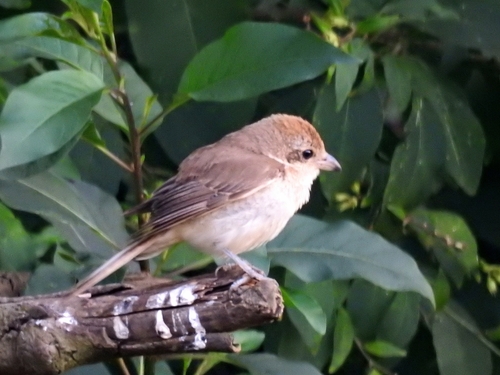 Brown Shrike
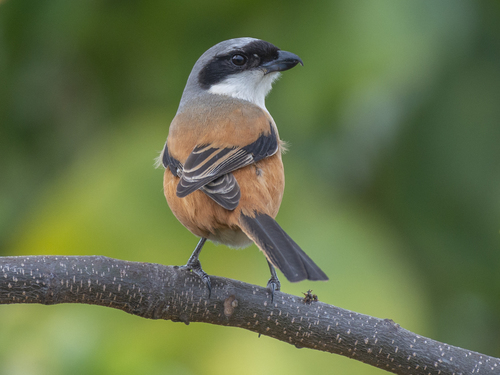 Long-tailed Shrike
In short
The most reliable field mark to separate Brown Shrike from Long-tailed Shrike is the tail: Brown Shrike has a shorter, rounded tail that is more brownish, while Long-tailed Shrike shows a distinctly longer, narrow, and graduated black tail with pale rufous outer feathers. In all ages, Brown Shrike lacks the white wing patch that is often visible on Long-tailed Shrike. The facial mask is narrower and less extensive in Brown Shrike, with a clear white brow, while Long-tailed Shrike's mask is broader and often extends across the forehead, sometimes with the entire head black in some subspecies. Both species perch conspicuously, but Long-tailed Shrike is bulkier and more upright, and its tail is much more prominent in the field.
Identification tips
- Tail length and shape: Long-tailed Shrike has a much longer, narrow, and graduated tail with pale rufous outer feathers; Brown Shrike's tail is shorter, more rounded, and brownish (all ages).
- Wing patch: Long-tailed Shrike shows a small white patch at the base of the primaries (shoulder), visible in most subspecies and ages, especially when perched or in flight; Brown Shrike always lacks this white wing patch.
- Facial mask: Brown Shrike has a narrow black mask with a distinct white brow (supercilium) above; Long-tailed Shrike's mask is broader, often covering the forehead, and in some subspecies (tricolor, nasutus) the whole head can be black.
- Supercilium: Brown Shrike (especially superciliosus) can show a broad, white supercilium; Long-tailed Shrike's supercilium is less distinct or absent due to the broader mask.
- Crown color: Brown Shrike subspecies lucionensis shows a grey crown, while superciliosus has a richer reddish crown; Long-tailed Shrike's crown is usually black or grey depending on subspecies, but the mask always dominates the face.
- Rump and flanks: Both have rufous flanks and rump, but Long-tailed Shrike's are more pronounced and the tail is always black with rufous outer feathers; Brown Shrike's rufous is more restricted and the tail is brownish.
- Sex differences: Brown Shrike females are duller with fine scalloping below and a less distinct mask; Long-tailed Shrike sexes are alike, so a dull, scalloped bird is more likely Brown Shrike.
- Posture and jizz: Long-tailed Shrike is bulkier, more upright, and the long tail is often cocked or drooped conspicuously; Brown Shrike is more compact and less upright.
- Flight: In flight, Long-tailed Shrike's long, narrow tail and white wing patch are visible; Brown Shrike lacks the white wing patch and has a shorter tail.
- Habitat context: In very open, dry country with prominent perches, Long-tailed Shrike is more likely; in migration or winter, Brown Shrike can be found in a wider range of habitats.
- Vocalizations: Both can mimic, but Long-tailed Shrike is louder and more varied; Brown Shrike's calls are softer and less distinctive.
- Size: Long-tailed Shrike is slightly heavier, but this is rarely useful in the field; the tail length is a much better cue.
- Subspecies confusion: Some Brown Shrike subspecies can show reddish crowns or greyer heads, but the tail and wing pattern remain reliable.
- Pitfalls: Immature or dull Brown Shrikes can be confused with Long-tailed Shrike, but always check for the white wing patch (present in Long-tailed, absent in Brown) and tail length.
- Season: Brown Shrike is migratory and may be more likely in migration or winter, while Long-tailed Shrike is resident in much of its range.
Size
Long-tailed Shrike is slightly heavier (35.5g vs 33.0g for Brown Shrike [wikidata]), but the difference is subtle and not easily judged in the field. However, Long-tailed Shrike appears larger due to its noticeably longer and narrower tail, which gives it a more elongated silhouette, especially when perched. Brown Shrike is more compact overall, with a shorter, rounder tail and a less upright posture.
Plumage
- Juvenile/immature/first-winter: No detailed age-specific upperwing pattern is described for either species in the sources, but Brown Shrike of all ages lacks any white patch on the wing, while Long-tailed Shrike typically shows a small white patch at the base of the primaries (shoulder), visible when perched or in flight.
- Adults: Brown Shrike is brown above with a rufous or brownish tail (not as red as Red-backed Shrike), creamy below with rufous flanks, and a black mask with a white brow. The mask is narrower and less extensive than Long-tailed Shrike. Females are duller with fine scalloping below and a less distinct mask. Subspecies variation can add a grey crown (lucionensis) or a richer reddish crown and broader white supercilium (superciliosus), but the tail remains relatively short and rounded. Long-tailed Shrike is more variable but always shows a long, narrow, black tail with pale rufous outer feathers, a broad black mask (sometimes extending over the whole head in tricolor/nasutus), rufous flanks and rump, and a small white patch at the wing base. The sexes are alike. Subspecies can show more rufous or grey on the mantle and upper back, but the overall pattern is consistent.
Behaviour
Both species perch conspicuously on bushes or wires and hunt by dropping to the ground for prey. Long-tailed Shrike is more upright and often appears bulkier due to its long tail. It is more likely to be seen gliding down at an angle from a high perch and is sometimes observed fighting over perches or engaging in play. Brown Shrike is more likely to be solitary and less aggressive in territorial displays. Both impale prey, but Long-tailed Shrike's feeding is more varied, including occasional fish and fruit, and it sometimes steals prey from other birds.
Habitat
Both shrikes are widespread across Asia and can overlap in open country, edges, and scrub. Long-tailed Shrike is more strongly associated with dry, open habitats and is often found in agricultural areas, grasslands, and prominent perches in open country. Brown Shrike is more migratory and can be found in a wider range of habitats during migration and winter, including forest edge, gardens, and semi-desert, but is less tied to open, dry habitats than Long-tailed Shrike. Habitat alone is not diagnostic where both occur.
Voice
Both species have harsh, chattering calls and are capable of mimicry. Brown Shrike's winter song is faint, with rattling notes and some mimicry, but is not a strong field mark. Long-tailed Shrike's calls are harsher, grating, and have been compared to a frog's squeal; its song is more varied and includes mimicry of other birds and even mammals. Vocalizations are not reliably diagnostic unless the observer is very familiar with both species.