Birdr

Brown-streaked Flycatcher vs Rufous-tailed Shama

Muscicapa williamsoni versus Copsychus pyrropygus

Play a quiz with Brown-streaked Flycatcher and Rufous-tailed Shama
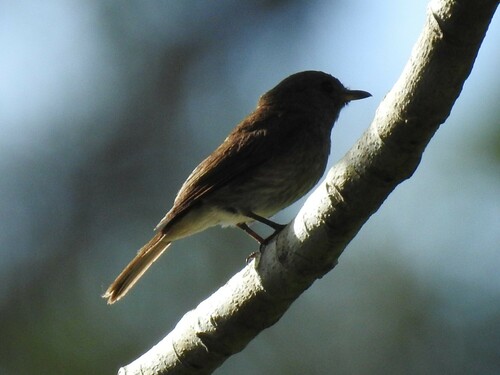
Brown-streaked Flycatcher (Muscicapa williamsoni) Brown-streaked Flycatcher
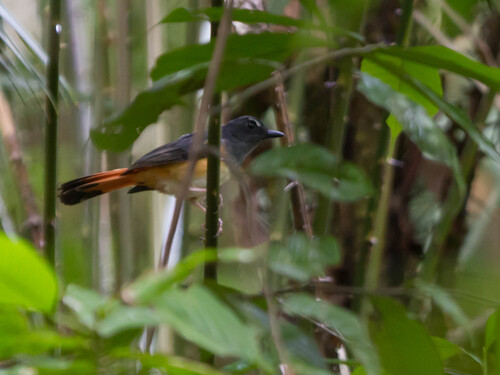
Rufous-tailed Shama (Copsychus pyrropygus) Rufous-tailed Shama

Media

Loading…

In short

The Brown-streaked Flycatcher and Rufous-tailed Shama are both small, Old World flycatchers, but they differ significantly in structure and plumage. The Brown-streaked Flycatcher is more compact with a streaked appearance, while the Rufous-tailed Shama is more slender with a distinctive rufous tail.

Identification tips

  1. Look for the rufous tail of the Rufous-tailed Shama as a key distinguishing feature. 2. Note the streaked plumage of the Brown-streaked Flycatcher. 3. Observe behavior: Shamas often stay lower in the forest, while Flycatchers are more active in the canopy. 4. Listen for the Shama's melodious song compared to the Flycatcher's simpler calls.

Size

The Brown-streaked Flycatcher is generally smaller and more compact compared to the larger, more elongated Rufous-tailed Shama.

Plumage

The Brown-streaked Flycatcher has a brown-streaked appearance with a more uniform color palette, while the Rufous-tailed Shama features a striking rufous tail and darker, more contrasting plumage.

Behaviour

Brown-streaked Flycatchers are typically more active in the canopy, while Rufous-tailed Shamas are often seen foraging closer to the ground or in lower vegetation.

Habitat

Brown-streaked Flycatchers are found in a variety of wooded habitats, often in more open areas, whereas Rufous-tailed Shamas prefer dense forest undergrowth.

Voice

The vocalizations of these species differ, with the Rufous-tailed Shama known for its melodious song, while the Brown-streaked Flycatcher's call is less musical and more subdued.

Submit a better description

Use the same sections as the comparison. Your text is published immediately.

The Brown-streaked Flycatcher and Rufous-tailed Shama are both small, Old World flycatchers, but they differ significantly in structure and plumage. The Brown-streaked Flycatcher is more compact with a streaked appearance, while the Rufous-tailed Shama is more slender with a distinctive rufous tail.

  1. Look for the rufous tail of the Rufous-tailed Shama as a key distinguishing feature. 2. Note the streaked plumage of the Brown-streaked Flycatcher. 3. Observe behavior: Shamas often stay lower in the forest, while Flycatchers are more active in the canopy. 4. Listen for the Shama's melodious song compared to the Flycatcher's simpler calls.

The Brown-streaked Flycatcher is generally smaller and more compact compared to the larger, more elongated Rufous-tailed Shama.

The Brown-streaked Flycatcher has a brown-streaked appearance with a more uniform color palette, while the Rufous-tailed Shama features a striking rufous tail and darker, more contrasting plumage.

Brown-streaked Flycatchers are typically more active in the canopy, while Rufous-tailed Shamas are often seen foraging closer to the ground or in lower vegetation.

Brown-streaked Flycatchers are found in a variety of wooded habitats, often in more open areas, whereas Rufous-tailed Shamas prefer dense forest undergrowth.

The vocalizations of these species differ, with the Rufous-tailed Shama known for its melodious song, while the Brown-streaked Flycatcher's call is less musical and more subdued.

Discard your changes?

You have unsaved edits. If you leave now, those changes will be lost.

Brown-streaked Flycatcher · Rufous-tailed Shama · My Tricky Birds