Birdr

Brownish Twistwing vs Dusky-capped Flycatcher

Cnipodectes subbrunneus versus Myiarchus tuberculifer

Play a quiz with Brownish Twistwing and Dusky-capped Flycatcher
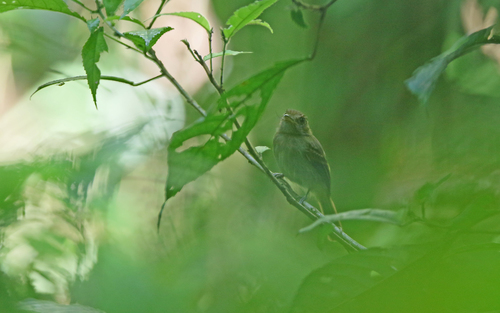
Brownish Twistwing (Cnipodectes subbrunneus) Brownish Twistwing
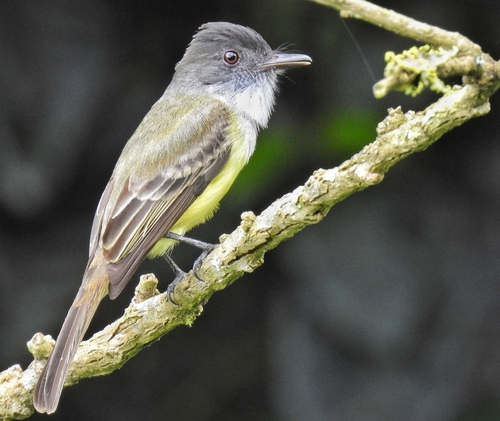
Dusky-capped Flycatcher (Myiarchus tuberculifer) Dusky-capped Flycatcher

Media

Loading…

In short

The Brownish Twistwing and Dusky-capped Flycatcher are both small, brownish flycatchers, but they differ notably in structure and habitat preference. The Brownish Twistwing has a distinctive wing structure with twisted primary feathers, while the Dusky-capped Flycatcher is more typical in form with a slightly crested head and a more uniform brown coloration.

Identification tips

  1. Wing Structure: Look for the twisted primary feathers of the Brownish Twistwing. 2. Head and Cap: Note the darker cap of the Dusky-capped Flycatcher. 3. Habitat: Observe the habitat; Brownish Twistwing is in dense undergrowth, Dusky-capped Flycatcher in open woodlands. 4. Vocalization: Listen for the Dusky-capped Flycatcher's mournful call.

Size

Both species are small flycatchers, but the Dusky-capped Flycatcher is generally slightly larger and more robust.

Plumage

The Brownish Twistwing has a more rufous tone on its wings and tail, with a less distinct head pattern. In contrast, the Dusky-capped Flycatcher has a more uniform brown plumage with a slightly darker cap and a pale throat.

Behaviour

The Brownish Twistwing is often seen in dense forest undergrowth, flicking its wings in a distinctive manner. The Dusky-capped Flycatcher is more arboreal, often perching in the mid to upper canopy and is less conspicuous in its movements.

Habitat

Brownish Twistwing prefers dense, humid forest undergrowth, while the Dusky-capped Flycatcher is found in more open woodlands and forest edges.

Voice

The Dusky-capped Flycatcher is known for its distinctive, mournful call, which is a key identification feature. The Brownish Twistwing's vocalizations are less well-documented and may not be as distinctive.

Submit a better description

Use the same sections as the comparison. Your text is published immediately.

The Brownish Twistwing and Dusky-capped Flycatcher are both small, brownish flycatchers, but they differ notably in structure and habitat preference. The Brownish Twistwing has a distinctive wing structure with twisted primary feathers, while the Dusky-capped Flycatcher is more typical in form with a slightly crested head and a more uniform brown coloration.

  1. Wing Structure: Look for the twisted primary feathers of the Brownish Twistwing. 2. Head and Cap: Note the darker cap of the Dusky-capped Flycatcher. 3. Habitat: Observe the habitat; Brownish Twistwing is in dense undergrowth, Dusky-capped Flycatcher in open woodlands. 4. Vocalization: Listen for the Dusky-capped Flycatcher's mournful call.

Both species are small flycatchers, but the Dusky-capped Flycatcher is generally slightly larger and more robust.

The Brownish Twistwing has a more rufous tone on its wings and tail, with a less distinct head pattern. In contrast, the Dusky-capped Flycatcher has a more uniform brown plumage with a slightly darker cap and a pale throat.

The Brownish Twistwing is often seen in dense forest undergrowth, flicking its wings in a distinctive manner. The Dusky-capped Flycatcher is more arboreal, often perching in the mid to upper canopy and is less conspicuous in its movements.

Brownish Twistwing prefers dense, humid forest undergrowth, while the Dusky-capped Flycatcher is found in more open woodlands and forest edges.

The Dusky-capped Flycatcher is known for its distinctive, mournful call, which is a key identification feature. The Brownish Twistwing's vocalizations are less well-documented and may not be as distinctive.

Discard your changes?

You have unsaved edits. If you leave now, those changes will be lost.

Brownish Twistwing · Dusky-capped Flycatcher · My Tricky Birds