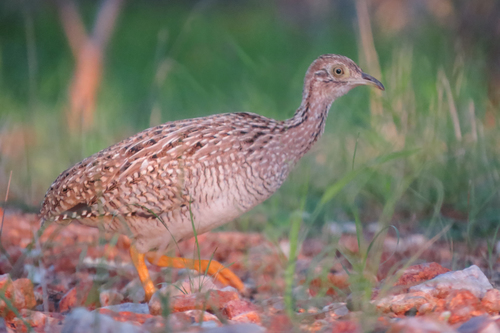
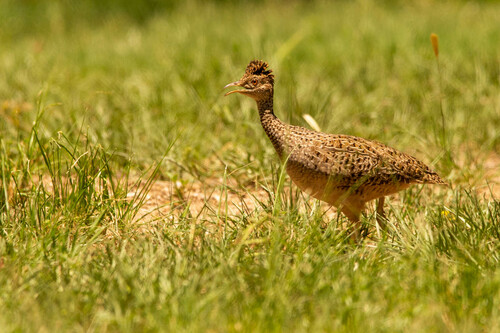
Brushland Tinamou vs White-bellied Nothura
Nothoprocta cinerascens versus Nothura boraquira
Play a quiz with Brushland Tinamou and White-bellied Nothura
Brushland Tinamou
White-bellied Nothura
In short
The Brushland Tinamou and White-bellied Nothura can be distinguished by their underparts and leg color: the Brushland Tinamou has barred flanks and grayish to whitish underparts, while the White-bellied Nothura has unpatterned whitish underparts and bright mustard-yellow legs. Both species inhabit open areas but differ in their specific habitat preferences and behaviors.
Identification tips
Look for the bright mustard-yellow legs of the White-bellied Nothura and its unpatterned whitish underparts. The Brushland Tinamou will have barred flanks and a blackish crest. Pay attention to habitat: Brushland Tinamous may be more widespread in open areas, while White-bellied Nothuras are often near roads or clearings.
Size
Both species are similar in size, typical of tinamous, with no significant size difference noted.
Plumage
The Brushland Tinamou has grayish to olive brown upperparts with darker barring and a blackish crest, while the White-bellied Nothura is distinctive for its unpatterned whitish underparts and lacks a crest. The Brushland Tinamou's flanks are barred, unlike the plain flanks of the White-bellied Nothura.
Behaviour
Brushland Tinamous are often solitary or in small groups, while White-bellied Nothuras can be elusive and sometimes take shelter in burrows. Both forage on the ground, but the White-bellied Nothura is more likely to be seen along secondary roads.
Habitat
Both species prefer open areas, but the Brushland Tinamou is more adaptable to various open habitats, while the White-bellied Nothura is often found in more specific open environments like secondary roads and clearings.