Birdr

Buff-breasted Sandpiper vs Sanderling

Calidris subruficollis versus Calidris alba

Play a quiz with Buff-breasted Sandpiper and Sanderling
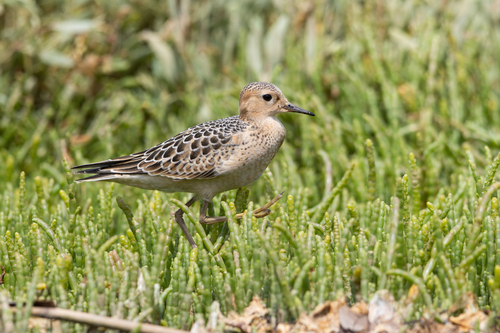
Buff-breasted Sandpiper (Calidris subruficollis) Buff-breasted Sandpiper
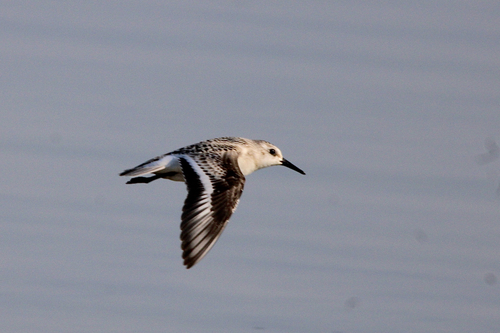
Sanderling (Calidris alba) Sanderling

Media

Loading…

In short

The Buff-breasted Sandpiper and Sanderling are both small shorebirds but differ in key field marks and behaviors. The Buff-breasted Sandpiper is known for its buffy, warm-toned plumage and terrestrial habits, while the Sanderling is more often seen on sandy beaches with a paler, grayish appearance.

Identification tips

Look for the buffy coloration and terrestrial behavior of the Buff-breasted Sandpiper versus the pale, grayish plumage and beach-running behavior of the Sanderling. Note the habitat: grassy fields for Buff-breasted Sandpiper and sandy beaches for Sanderling.

Size

Both species are similar in size, but the Sanderling is slightly more robust.

Plumage

The Buff-breasted Sandpiper has a distinctive buffy breast and face with a generally warm, sandy coloration. In contrast, the Sanderling is paler, with a grayish back and white underparts, especially in non-breeding plumage.

Behaviour

Buff-breasted Sandpipers are often found in grassy fields and exhibit a more terrestrial foraging style. Sanderlings are typically seen running along the surf line on sandy beaches, chasing waves.

Habitat

Buff-breasted Sandpipers prefer open grasslands and tundra during migration and breeding. Sanderlings are coastal birds, frequently found on sandy beaches and tidal flats.

Voice

Vocalizations are not a primary distinguishing feature in the field for these species.

Submit a better description

Use the same sections as the comparison. Your text is published immediately.

The Buff-breasted Sandpiper and Sanderling are both small shorebirds but differ in key field marks and behaviors. The Buff-breasted Sandpiper is known for its buffy, warm-toned plumage and terrestrial habits, while the Sanderling is more often seen on sandy beaches with a paler, grayish appearance.

Look for the buffy coloration and terrestrial behavior of the Buff-breasted Sandpiper versus the pale, grayish plumage and beach-running behavior of the Sanderling. Note the habitat: grassy fields for Buff-breasted Sandpiper and sandy beaches for Sanderling.

Both species are similar in size, but the Sanderling is slightly more robust.

The Buff-breasted Sandpiper has a distinctive buffy breast and face with a generally warm, sandy coloration. In contrast, the Sanderling is paler, with a grayish back and white underparts, especially in non-breeding plumage.

Buff-breasted Sandpipers are often found in grassy fields and exhibit a more terrestrial foraging style. Sanderlings are typically seen running along the surf line on sandy beaches, chasing waves.

Buff-breasted Sandpipers prefer open grasslands and tundra during migration and breeding. Sanderlings are coastal birds, frequently found on sandy beaches and tidal flats.

Vocalizations are not a primary distinguishing feature in the field for these species.

Discard your changes?

You have unsaved edits. If you leave now, those changes will be lost.

Buff-breasted Sandpiper · Sanderling · My Tricky Birds