Birdr

Burmese Yuhina vs Indian White-eye

Yuhina humilis versus Zosterops palpebrosus

Play a quiz with Burmese Yuhina and Indian White-eye
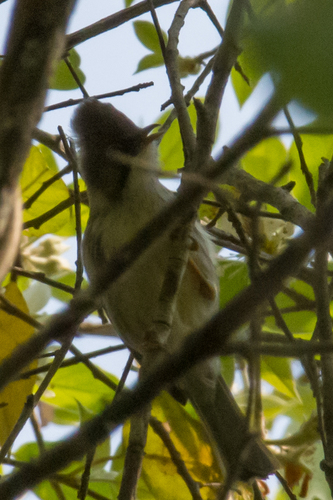
Burmese Yuhina (Yuhina humilis) Burmese Yuhina
Indian White-eye (Zosterops palpebrosus) Indian White-eye

Media

Loading…

In short

The Burmese Yuhina and Indian White-eye can be confused due to their similar size and habitat preferences, but key differences in plumage and behavior can help distinguish them. The Burmese Yuhina has a more subdued color palette, while the Indian White-eye is noted for its bright yellow throat and undertail coverts.

Identification tips

1. Look for the bright yellow throat and undertail coverts of the Indian White-eye. 2. Check for the white eye-ring, a key feature of the Indian White-eye. 3. Observe group behavior: flocks suggest Indian White-eye. 4. Note habitat: broader range suggests Indian White-eye. 5. Listen for vocalizations: warbling song indicates Indian White-eye.

Size

Both species are small passerines, but the Indian White-eye may appear slightly more compact due to its shorter tail.

Plumage

The Burmese Yuhina is generally duller, with a more uniform brownish-gray plumage, whereas the Indian White-eye is olive yellow above and gray below, with a bright yellow throat and undertail coverts. The Indian White-eye also has a distinctive white eye-ring, absent in the Yuhina.

Behaviour

The Indian White-eye is often seen in flocks, especially around flowering or fruiting trees, while the Burmese Yuhina may be observed in smaller groups or pairs.

Habitat

Both species inhabit broadleaved evergreen forests, but the Indian White-eye has a broader range, including mangroves and temperate hill forests, whereas the Burmese Yuhina is more restricted to specific forest types in its range.

Voice

Vocalizations are not well-documented for the Burmese Yuhina, while the Indian White-eye is known for its warbling song and high-pitched calls.

Submit a better description

Use the same sections as the comparison. Your text is published immediately.

The Burmese Yuhina and Indian White-eye can be confused due to their similar size and habitat preferences, but key differences in plumage and behavior can help distinguish them. The Burmese Yuhina has a more subdued color palette, while the Indian White-eye is noted for its bright yellow throat and undertail coverts.

1. Look for the bright yellow throat and undertail coverts of the Indian White-eye. 2. Check for the white eye-ring, a key feature of the Indian White-eye. 3. Observe group behavior: flocks suggest Indian White-eye. 4. Note habitat: broader range suggests Indian White-eye. 5. Listen for vocalizations: warbling song indicates Indian White-eye.

Both species are small passerines, but the Indian White-eye may appear slightly more compact due to its shorter tail.

The Burmese Yuhina is generally duller, with a more uniform brownish-gray plumage, whereas the Indian White-eye is olive yellow above and gray below, with a bright yellow throat and undertail coverts. The Indian White-eye also has a distinctive white eye-ring, absent in the Yuhina.

The Indian White-eye is often seen in flocks, especially around flowering or fruiting trees, while the Burmese Yuhina may be observed in smaller groups or pairs.

Both species inhabit broadleaved evergreen forests, but the Indian White-eye has a broader range, including mangroves and temperate hill forests, whereas the Burmese Yuhina is more restricted to specific forest types in its range.

Vocalizations are not well-documented for the Burmese Yuhina, while the Indian White-eye is known for its warbling song and high-pitched calls.

Discard your changes?

You have unsaved edits. If you leave now, those changes will be lost.

Burmese Yuhina · Indian White-eye · My Tricky Birds