Burrowing Owl vs Spotted Owl
Athene cunicularia versus Strix occidentalis
Play a quiz with Burrowing Owl and Spotted Owl
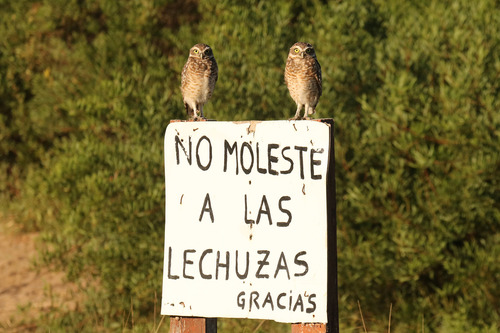
Burrowing Owl
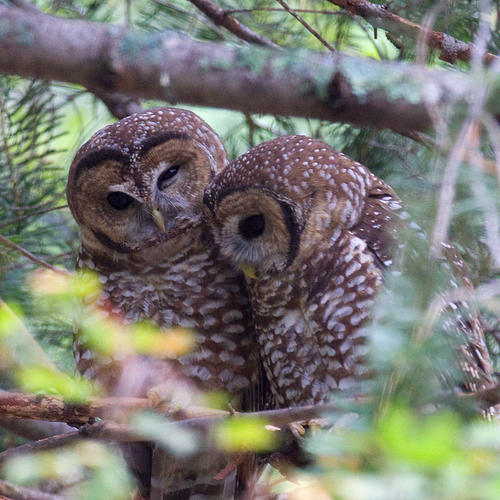
Spotted Owl
In short
The Burrowing Owl and Spotted Owl are distinct in both appearance and habitat preferences. The Burrowing Owl is smaller and often seen in open areas, while the larger Spotted Owl inhabits dense forests. Key differences include size, plumage patterns, and habitat choice.
Identification tips
1. Size: Look for the smaller size and ground-dwelling behavior of the Burrowing Owl. 2. Plumage: Note the white eyebrows and mottled pattern of the Burrowing Owl versus the darker, spotted appearance of the Spotted Owl. 3. Habitat: Consider the environment; Burrowing Owls are in open areas, while Spotted Owls are in dense forests. 4. Activity: Observe the time of activity; Burrowing Owls are often seen during the day, unlike the nocturnal Spotted Owl. 5. Vocalizations: Listen for the distinct calls; Burrowing Owls have a cooing sound, whereas Spotted Owls have a series of hoots.
Size
The Burrowing Owl is significantly smaller than the Spotted Owl, with a more compact body and shorter wingspan.
Plumage
Burrowing Owls have a mottled brown and white plumage with distinctive white eyebrows and a lack of ear tufts. Spotted Owls are darker with a more uniform brown coloration and white spots, lacking the prominent white eyebrows.
Behaviour
Burrowing Owls are often seen on the ground or perched low, frequently active during the day. Spotted Owls are more secretive and primarily nocturnal, often roosting in trees during the day.
Habitat
Burrowing Owls prefer open grasslands, deserts, and agricultural areas where they nest in burrows. In contrast, Spotted Owls inhabit dense, mature forests with a preference for old-growth stands.
Voice
Burrowing Owls produce a variety of calls, including a cooing sound, while Spotted Owls have a distinctive series of hoots. The vocalizations are quite different and can aid in identification.