Birdr

Burrowing Parakeet vs White-eyed Parakeet

Cyanoliseus patagonus versus Psittacara leucophthalmus

Play a quiz with Burrowing Parakeet and White-eyed Parakeet
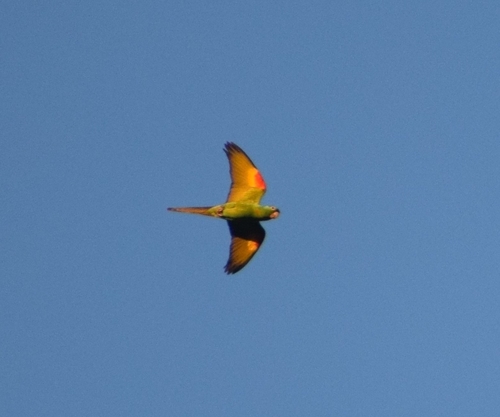
Burrowing Parakeet (Cyanoliseus patagonus) Burrowing Parakeet
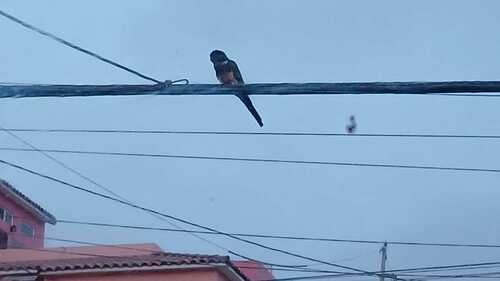
White-eyed Parakeet (Psittacara leucophthalmus) White-eyed Parakeet

Media

Loading…

In short

The Burrowing Parakeet and White-eyed Parakeet can be distinguished primarily by their eye and plumage features. The Burrowing Parakeet has a distinctive white eye ring and a more uniform green plumage, while the White-eyed Parakeet features a red patch on its shoulder and lacks the prominent eye ring.

Identification tips

  1. Look for the white eye ring on the Burrowing Parakeet. 2. Check for the red shoulder patch on the White-eyed Parakeet. 3. Consider the habitat: cliffs for Burrowing Parakeets, varied forests for White-eyed Parakeets. 4. Observe flock behavior and nesting sites for additional clues.

Size

Both species are similar in size, but the Burrowing Parakeet is slightly larger and more robust.

Plumage

The Burrowing Parakeet has a white eye ring and a generally green body with some yellowish tones on the chest. In contrast, the White-eyed Parakeet has a red patch on the shoulder and lacks a prominent eye ring, with a more uniform green plumage.

Behaviour

Burrowing Parakeets are known for their unique nesting in burrows on cliffs, often in large colonies. White-eyed Parakeets nest in tree cavities and are frequently seen in noisy flocks.

Habitat

Burrowing Parakeets are found in open areas with cliffs in Argentina and Chile, while White-eyed Parakeets inhabit a variety of forested and open habitats across a broader range in South America, including Venezuela and northern Argentina.

Voice

Both species are noisy, but specific vocal differences are not well-documented. Observers should listen for general parakeet calls and note any unique patterns.

Submit a better description

Use the same sections as the comparison. Your text is published immediately.

The Burrowing Parakeet and White-eyed Parakeet can be distinguished primarily by their eye and plumage features. The Burrowing Parakeet has a distinctive white eye ring and a more uniform green plumage, while the White-eyed Parakeet features a red patch on its shoulder and lacks the prominent eye ring.

  1. Look for the white eye ring on the Burrowing Parakeet. 2. Check for the red shoulder patch on the White-eyed Parakeet. 3. Consider the habitat: cliffs for Burrowing Parakeets, varied forests for White-eyed Parakeets. 4. Observe flock behavior and nesting sites for additional clues.

Both species are similar in size, but the Burrowing Parakeet is slightly larger and more robust.

The Burrowing Parakeet has a white eye ring and a generally green body with some yellowish tones on the chest. In contrast, the White-eyed Parakeet has a red patch on the shoulder and lacks a prominent eye ring, with a more uniform green plumage.

Burrowing Parakeets are known for their unique nesting in burrows on cliffs, often in large colonies. White-eyed Parakeets nest in tree cavities and are frequently seen in noisy flocks.

Burrowing Parakeets are found in open areas with cliffs in Argentina and Chile, while White-eyed Parakeets inhabit a variety of forested and open habitats across a broader range in South America, including Venezuela and northern Argentina.

Both species are noisy, but specific vocal differences are not well-documented. Observers should listen for general parakeet calls and note any unique patterns.

Discard your changes?

You have unsaved edits. If you leave now, those changes will be lost.

Burrowing Parakeet · White-eyed Parakeet · My Tricky Birds