Birdr

California Quail vs Greater Sage-Grouse

Callipepla californica versus Centrocercus urophasianus

Play a quiz with California Quail and Greater Sage-Grouse
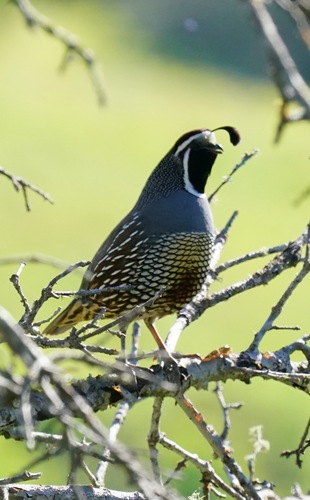
California Quail (Callipepla californica) California Quail
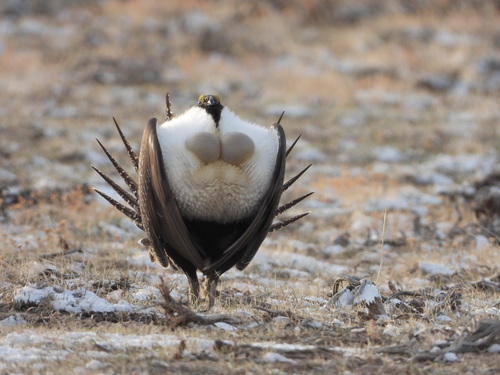
Greater Sage-Grouse (Centrocercus urophasianus) Greater Sage-Grouse

Media

Loading…

In short

The California Quail and Greater Sage-Grouse are both ground-dwelling birds, but they differ significantly in size and habitat preference. The California Quail is a small, social bird often found in brushy areas, while the Greater Sage-Grouse is much larger and associated with sagebrush habitats, known for its striking lekking displays.

Identification tips

Size

The California Quail is much smaller, about the size of a pigeon, whereas the Greater Sage-Grouse is significantly larger, closer to the size of a chicken.

Plumage

California Quail have a distinctive forward-curving black plume on their head and scaled patterning on their belly. Greater Sage-Grouse males have a striking display plumage with large, white chest patches and inflatable air sacs, while females are mottled brown and less conspicuous.

Behaviour

California Quail are often seen in coveys and are quite social. In contrast, Greater Sage-Grouse are known for their elaborate breeding displays on leks, where males perform strutting displays to attract females.

Habitat

California Quail prefer patchy habitats with cover, such as brushy areas and gardens. Greater Sage-Grouse are found in open sagebrush habitats and are highly dependent on this environment.

Voice

California Quail have a distinctive 'chi-ca-go' call. Greater Sage-Grouse are less vocal but are known for the unique popping sounds produced during their lekking displays.

Submit a better description

Use the same sections as the comparison. Your text is published immediately.

The California Quail and Greater Sage-Grouse are both ground-dwelling birds, but they differ significantly in size and habitat preference. The California Quail is a small, social bird often found in brushy areas, while the Greater Sage-Grouse is much larger and associated with sagebrush habitats, known for its striking lekking displays.

  • Size: Note the size difference; Greater Sage-Grouse are much larger.
  • Habitat: Check the habitat; California Quail are in brushy areas, Greater Sage-Grouse in sagebrush.
  • Head Plume: Look for the California Quail's forward-curving head plume.
  • Display Behavior: Observe any lekking behavior for Greater Sage-Grouse.
  • Vocalization: Listen for the California Quail's 'chi-ca-go' call.

The California Quail is much smaller, about the size of a pigeon, whereas the Greater Sage-Grouse is significantly larger, closer to the size of a chicken.

California Quail have a distinctive forward-curving black plume on their head and scaled patterning on their belly. Greater Sage-Grouse males have a striking display plumage with large, white chest patches and inflatable air sacs, while females are mottled brown and less conspicuous.

California Quail are often seen in coveys and are quite social. In contrast, Greater Sage-Grouse are known for their elaborate breeding displays on leks, where males perform strutting displays to attract females.

California Quail prefer patchy habitats with cover, such as brushy areas and gardens. Greater Sage-Grouse are found in open sagebrush habitats and are highly dependent on this environment.

California Quail have a distinctive 'chi-ca-go' call. Greater Sage-Grouse are less vocal but are known for the unique popping sounds produced during their lekking displays.

Discard your changes?

You have unsaved edits. If you leave now, those changes will be lost.

California Quail · Greater Sage-Grouse · My Tricky Birds