Birdr

Canada Goose vs Canada Jay

Branta canadensis versus Perisoreus canadensis

Play a quiz with Canada Goose and Canada Jay
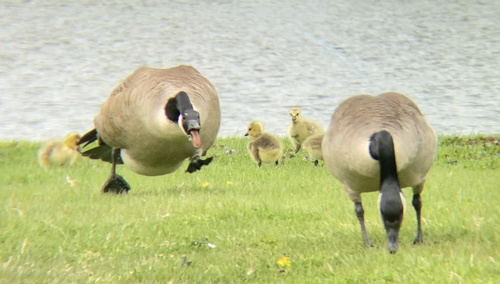
Canada Goose (Branta canadensis) Canada Goose
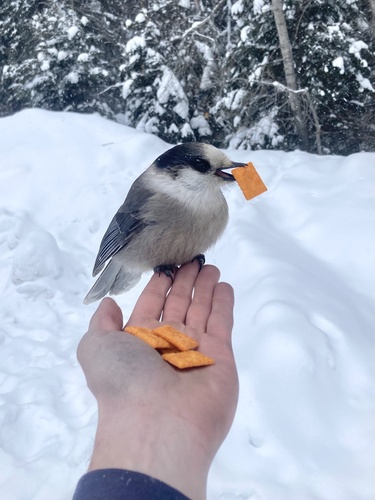
Canada Jay (Perisoreus canadensis) Canada Jay

Media

Loading…

In short

The Canada Goose and Canada Jay are distinct in size and habitat preferences, with the goose being a large waterfowl and the jay a smaller, forest-dwelling bird. Both species are found in Canada, but their behaviors and vocalizations differ significantly.

Identification tips

1. Size and Shape: Canada Goose is much larger with a long neck; Canada Jay is smaller and more rounded. 2. Habitat: Look for Canada Geese near water; Canada Jays are in forests. 3. Plumage: Canada Goose has a black head and neck with a white chinstrap; Canada Jay is gray with a white face. 4. Behavior: Canada Geese are often in flocks; Canada Jays are more solitary. 5. Vocalization: Listen for the loud honks of the goose versus the softer calls of the jay.

Size

The Canada Goose is significantly larger, with a long neck and hefty body, compared to the much smaller and more compact Canada Jay.

Plumage

Canada Geese have a distinctive black head and neck with a white chinstrap, while Canada Jays are gray with lighter underparts and a white face, lacking any bold patterns.

Behaviour

Canada Geese are often seen in large flocks, especially during migration, and are ground foragers. Canada Jays are more solitary or found in small groups, often seen flitting through trees and caching food.

Habitat

Canada Geese inhabit open areas near water bodies, such as lakes and rivers, while Canada Jays prefer boreal forests and are often found in coniferous woodlands.

Voice

Canada Geese are known for their loud honking calls, especially during flight. Canada Jays have a softer, more varied vocal array, including whistles and chatters.

Submit a better description

Use the same sections as the comparison. Your text is published immediately.

The Canada Goose and Canada Jay are distinct in size and habitat preferences, with the goose being a large waterfowl and the jay a smaller, forest-dwelling bird. Both species are found in Canada, but their behaviors and vocalizations differ significantly.

1. Size and Shape: Canada Goose is much larger with a long neck; Canada Jay is smaller and more rounded. 2. Habitat: Look for Canada Geese near water; Canada Jays are in forests. 3. Plumage: Canada Goose has a black head and neck with a white chinstrap; Canada Jay is gray with a white face. 4. Behavior: Canada Geese are often in flocks; Canada Jays are more solitary. 5. Vocalization: Listen for the loud honks of the goose versus the softer calls of the jay.

The Canada Goose is significantly larger, with a long neck and hefty body, compared to the much smaller and more compact Canada Jay.

Canada Geese have a distinctive black head and neck with a white chinstrap, while Canada Jays are gray with lighter underparts and a white face, lacking any bold patterns.

Canada Geese are often seen in large flocks, especially during migration, and are ground foragers. Canada Jays are more solitary or found in small groups, often seen flitting through trees and caching food.

Canada Geese inhabit open areas near water bodies, such as lakes and rivers, while Canada Jays prefer boreal forests and are often found in coniferous woodlands.

Canada Geese are known for their loud honking calls, especially during flight. Canada Jays have a softer, more varied vocal array, including whistles and chatters.

Discard your changes?

You have unsaved edits. If you leave now, those changes will be lost.

Canada Goose · Canada Jay · My Tricky Birds