Birdr

Canada Jay vs Snow Bunting

Perisoreus canadensis versus Plectrophenax nivalis

Play a quiz with Canada Jay and Snow Bunting
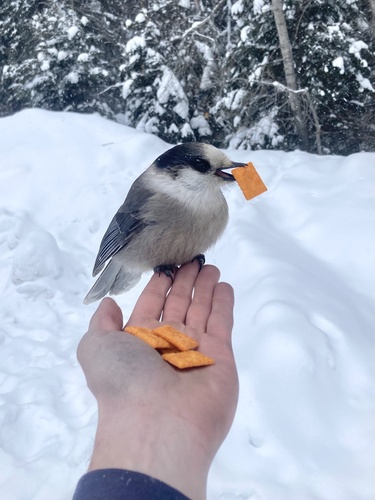
Canada Jay (Perisoreus canadensis) Canada Jay
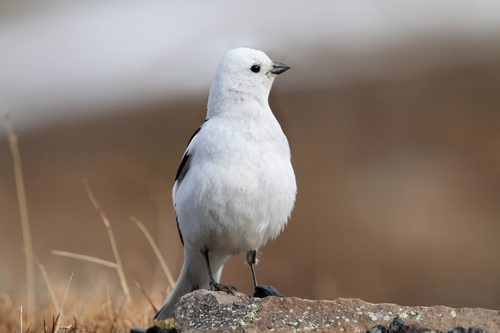
Snow Bunting (Plectrophenax nivalis) Snow Bunting

Media

Loading…

In short

The Canada Jay and Snow Bunting are unlikely to be confused in the field due to their distinct habitats and appearances. The Canada Jay is a medium-sized, gray bird often found in boreal forests, while the Snow Bunting is a smaller, predominantly white bird seen in open, snowy landscapes. Key differences in plumage and behavior make them distinguishable even at a distance.

Identification tips

  1. Habitat: Canada Jays are in forests; Snow Buntings are in open, snowy areas. 2. Plumage: Look for the Canada Jay's gray body and the Snow Bunting's white plumage with black wingtips. 3. Behavior: Canada Jays are often bold and curious, while Snow Buntings are typically seen in flocks on the ground.

Size

The Canada Jay is larger and more robust compared to the smaller, more delicate Snow Bunting.

Plumage

Canada Jays have a mostly gray plumage with a lighter face and darker cap, whereas Snow Buntings are predominantly white with black wingtips and back, especially in winter.

Behaviour

Canada Jays are often seen foraging in trees and are known for their boldness around humans, while Snow Buntings are ground foragers, often seen in flocks on open fields or snow-covered areas.

Habitat

Canada Jays inhabit boreal forests and are often found in coniferous woodlands. In contrast, Snow Buntings prefer open, snowy landscapes such as tundra or agricultural fields in winter.

Voice

The Canada Jay has a variety of soft, melodious calls, while the Snow Bunting's calls are more high-pitched and tinkling.

Submit a better description

Use the same sections as the comparison. Your text is published immediately.

The Canada Jay and Snow Bunting are unlikely to be confused in the field due to their distinct habitats and appearances. The Canada Jay is a medium-sized, gray bird often found in boreal forests, while the Snow Bunting is a smaller, predominantly white bird seen in open, snowy landscapes. Key differences in plumage and behavior make them distinguishable even at a distance.

  1. Habitat: Canada Jays are in forests; Snow Buntings are in open, snowy areas. 2. Plumage: Look for the Canada Jay's gray body and the Snow Bunting's white plumage with black wingtips. 3. Behavior: Canada Jays are often bold and curious, while Snow Buntings are typically seen in flocks on the ground.

The Canada Jay is larger and more robust compared to the smaller, more delicate Snow Bunting.

Canada Jays have a mostly gray plumage with a lighter face and darker cap, whereas Snow Buntings are predominantly white with black wingtips and back, especially in winter.

Canada Jays are often seen foraging in trees and are known for their boldness around humans, while Snow Buntings are ground foragers, often seen in flocks on open fields or snow-covered areas.

Canada Jays inhabit boreal forests and are often found in coniferous woodlands. In contrast, Snow Buntings prefer open, snowy landscapes such as tundra or agricultural fields in winter.

The Canada Jay has a variety of soft, melodious calls, while the Snow Bunting's calls are more high-pitched and tinkling.

Discard your changes?

You have unsaved edits. If you leave now, those changes will be lost.

Canada Jay · Snow Bunting · My Tricky Birds