Birdr

Canvasback vs Common Pochard

Aythya valisineria versus Aythya ferina

Play a quiz with Canvasback and Common Pochard
Canvasback (Aythya valisineria) Canvasback
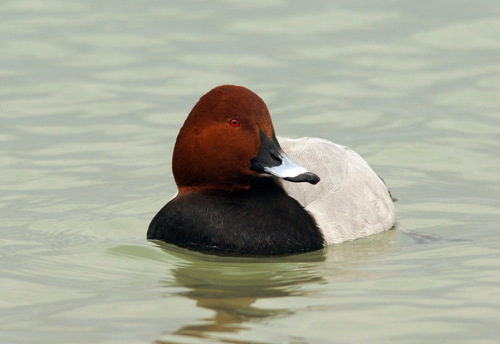
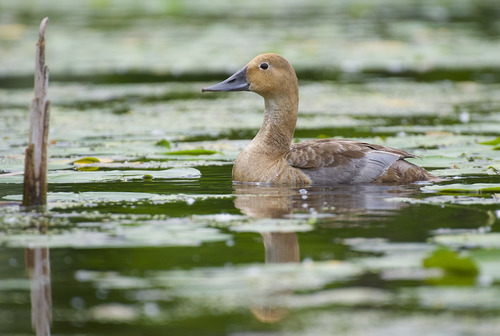
Common Pochard (Aythya ferina) Common Pochard

Media

Loading…

In short

The Canvasback and Common Pochard are both diving ducks with similar body shapes but can be distinguished by their head and bill profiles. The Canvasback has a distinctive sloping forehead and long black bill, while the Common Pochard has a more rounded head and a shorter, dark-tipped bill.

Identification tips

  1. Look for the sloping forehead and long black bill of the Canvasback. 2. Note the rounded head and shorter bill of the Common Pochard. 3. In males, check for the chestnut-red head of the Canvasback versus the uniformly reddish head of the Common Pochard. 4. Consider geographic location: Canvasbacks are primarily in North America, while Common Pochards are found in Europe and Asia.

Size

Both species are similar in size, but the Canvasback is slightly larger and more elongated.

Plumage

Male Canvasbacks have a chestnut-red head, black chest, and whitish body, while male Common Pochards have a more uniformly reddish head and neck with a grayish body. Females of both species are brown but the Canvasback female has a paler body compared to the Common Pochard.

Behaviour

Both species are diving ducks and exhibit similar feeding behaviors, diving to forage for aquatic plants and invertebrates.

Habitat

Canvasbacks are typically found in North American freshwater lakes and marshes, while Common Pochards are more widespread across Europe and Asia, often found in similar freshwater habitats.

Voice

Vocalizations are not a primary distinguishing feature in the field; both species are generally quiet, but the Canvasback may produce a low croaking sound.

Submit a better description

Use the same sections as the comparison. Your text is published immediately.

The Canvasback and Common Pochard are both diving ducks with similar body shapes but can be distinguished by their head and bill profiles. The Canvasback has a distinctive sloping forehead and long black bill, while the Common Pochard has a more rounded head and a shorter, dark-tipped bill.

  1. Look for the sloping forehead and long black bill of the Canvasback. 2. Note the rounded head and shorter bill of the Common Pochard. 3. In males, check for the chestnut-red head of the Canvasback versus the uniformly reddish head of the Common Pochard. 4. Consider geographic location: Canvasbacks are primarily in North America, while Common Pochards are found in Europe and Asia.

Both species are similar in size, but the Canvasback is slightly larger and more elongated.

Male Canvasbacks have a chestnut-red head, black chest, and whitish body, while male Common Pochards have a more uniformly reddish head and neck with a grayish body. Females of both species are brown but the Canvasback female has a paler body compared to the Common Pochard.

Both species are diving ducks and exhibit similar feeding behaviors, diving to forage for aquatic plants and invertebrates.

Canvasbacks are typically found in North American freshwater lakes and marshes, while Common Pochards are more widespread across Europe and Asia, often found in similar freshwater habitats.

Vocalizations are not a primary distinguishing feature in the field; both species are generally quiet, but the Canvasback may produce a low croaking sound.

Discard your changes?

You have unsaved edits. If you leave now, those changes will be lost.

Canvasback · Common Pochard · My Tricky Birds