Birdr

Canyon Wren vs Cactus Wren

Catherpes mexicanus versus Campylorhynchus brunneicapillus

Play a quiz with Canyon Wren and Cactus Wren
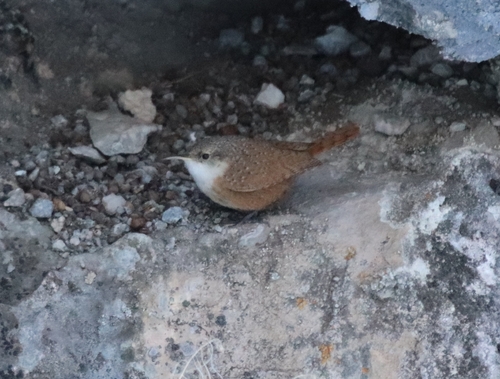
Canyon Wren (Catherpes mexicanus) Canyon Wren
Cactus Wren (Campylorhynchus brunneicapillus) Cactus Wren

Media

Loading…

In short

The Canyon Wren and Cactus Wren are both small, brown wrens found in arid environments, but they can be distinguished by their habitat preferences and vocalizations. The Canyon Wren is often found in rocky canyons and has a distinctive melodious song, while the Cactus Wren is more commonly seen in desert scrub and has a harsher, repetitive call.

Identification tips

  1. Habitat: Look for Canyon Wrens in rocky canyons and cliffs, and Cactus Wrens in desert scrub with cacti. 2. Vocalization: Listen for the Canyon Wren's melodious descending song versus the Cactus Wren's harsh, repetitive call. 3. Plumage: Note the Canyon Wren's white throat and rufous belly compared to the Cactus Wren's streaked brown appearance.

Size

Both species are similar in size, but the Cactus Wren is slightly larger and more robust than the Canyon Wren.

Plumage

The Canyon Wren has a strikingly white throat and breast with a rufous belly and flanks, while the Cactus Wren has a more uniformly brown and streaked appearance with a spotted breast.

Behaviour

Canyon Wrens are often seen clinging to vertical rock surfaces, using their long, decurved bills to probe for insects. Cactus Wrens are more terrestrial, often seen hopping around on the ground or perched on cacti.

Habitat

Canyon Wrens are typically found in rocky canyons and cliffs, whereas Cactus Wrens prefer desert scrub and areas with abundant cacti.

Voice

The Canyon Wren's song is a series of descending, melodious notes, often echoing in canyons. In contrast, the Cactus Wren's call is a harsh, repetitive series of notes.

Submit a better description

Use the same sections as the comparison. Your text is published immediately.

The Canyon Wren and Cactus Wren are both small, brown wrens found in arid environments, but they can be distinguished by their habitat preferences and vocalizations. The Canyon Wren is often found in rocky canyons and has a distinctive melodious song, while the Cactus Wren is more commonly seen in desert scrub and has a harsher, repetitive call.

  1. Habitat: Look for Canyon Wrens in rocky canyons and cliffs, and Cactus Wrens in desert scrub with cacti. 2. Vocalization: Listen for the Canyon Wren's melodious descending song versus the Cactus Wren's harsh, repetitive call. 3. Plumage: Note the Canyon Wren's white throat and rufous belly compared to the Cactus Wren's streaked brown appearance.

Both species are similar in size, but the Cactus Wren is slightly larger and more robust than the Canyon Wren.

The Canyon Wren has a strikingly white throat and breast with a rufous belly and flanks, while the Cactus Wren has a more uniformly brown and streaked appearance with a spotted breast.

Canyon Wrens are often seen clinging to vertical rock surfaces, using their long, decurved bills to probe for insects. Cactus Wrens are more terrestrial, often seen hopping around on the ground or perched on cacti.

Canyon Wrens are typically found in rocky canyons and cliffs, whereas Cactus Wrens prefer desert scrub and areas with abundant cacti.

The Canyon Wren's song is a series of descending, melodious notes, often echoing in canyons. In contrast, the Cactus Wren's call is a harsh, repetitive series of notes.

Discard your changes?

You have unsaved edits. If you leave now, those changes will be lost.

Canyon Wren · Cactus Wren · My Tricky Birds