Birdr

Cape Barren Goose vs Upland Goose

Cereopsis novaehollandiae versus Chloephaga picta

Play a quiz with Cape Barren Goose and Upland Goose
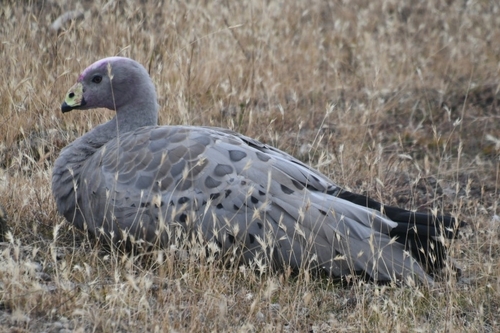
Cape Barren Goose (Cereopsis novaehollandiae) Cape Barren Goose
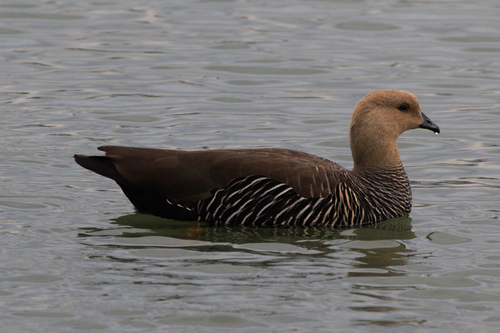
Upland Goose (Chloephaga picta) Upland Goose

Media

Loading…

In short

The Cape Barren Goose and the Upland Goose can be distinguished by their bill and plumage. The Cape Barren Goose has a distinctive greenish-yellow cere on its bill, while the Upland Goose lacks this feature. Plumage differences are also notable, with the Cape Barren Goose being predominantly grey and the Upland Goose showing more contrasting patterns, especially in males.

Identification tips

Look for the greenish-yellow cere on the Cape Barren Goose's bill, which is absent in the Upland Goose. Note the grey plumage with black spots on the Cape Barren Goose versus the contrasting plumage of the Upland Goose, especially the white and black-barred pattern in male Upland Geese. Listen for the low-pitched honk of the Cape Barren Goose compared to the higher-pitched call of the Upland Goose.

Size

Both species are large geese, but the Cape Barren Goose is generally bulkier and more robust compared to the Upland Goose.

Plumage

The Cape Barren Goose is mostly grey with black spots on its wings, whereas the Upland Goose has a more contrasting appearance; males are white with black-barred flanks, and females are brown with a barred pattern.

Behaviour

Both species are primarily ground-dwelling and graze on grasses, but the Cape Barren Goose is more likely to be seen in open, grassy areas, while the Upland Goose may be found in more varied habitats including upland regions.

Habitat

Cape Barren Geese are typically found in southern Australia, often on islands and coastal areas. Upland Geese inhabit southern South America, including grasslands and upland areas.

Voice

The Cape Barren Goose has a distinctive, low-pitched honking call, while the Upland Goose's call is higher-pitched and more melodious.

Submit a better description

Use the same sections as the comparison. Your text is published immediately.

The Cape Barren Goose and the Upland Goose can be distinguished by their bill and plumage. The Cape Barren Goose has a distinctive greenish-yellow cere on its bill, while the Upland Goose lacks this feature. Plumage differences are also notable, with the Cape Barren Goose being predominantly grey and the Upland Goose showing more contrasting patterns, especially in males.

Look for the greenish-yellow cere on the Cape Barren Goose's bill, which is absent in the Upland Goose. Note the grey plumage with black spots on the Cape Barren Goose versus the contrasting plumage of the Upland Goose, especially the white and black-barred pattern in male Upland Geese. Listen for the low-pitched honk of the Cape Barren Goose compared to the higher-pitched call of the Upland Goose.

Both species are large geese, but the Cape Barren Goose is generally bulkier and more robust compared to the Upland Goose.

The Cape Barren Goose is mostly grey with black spots on its wings, whereas the Upland Goose has a more contrasting appearance; males are white with black-barred flanks, and females are brown with a barred pattern.

Both species are primarily ground-dwelling and graze on grasses, but the Cape Barren Goose is more likely to be seen in open, grassy areas, while the Upland Goose may be found in more varied habitats including upland regions.

Cape Barren Geese are typically found in southern Australia, often on islands and coastal areas. Upland Geese inhabit southern South America, including grasslands and upland areas.

The Cape Barren Goose has a distinctive, low-pitched honking call, while the Upland Goose's call is higher-pitched and more melodious.

Discard your changes?

You have unsaved edits. If you leave now, those changes will be lost.

Cape Barren Goose · Upland Goose · My Tricky Birds