Birdr

Cape Cormorant vs Black-tailed Waxbill

Phalacrocorax capensis versus Glaucestrilda perreini

Play a quiz with Cape Cormorant and Black-tailed Waxbill

Cape Cormorant (Phalacrocorax capensis) Cape Cormorant
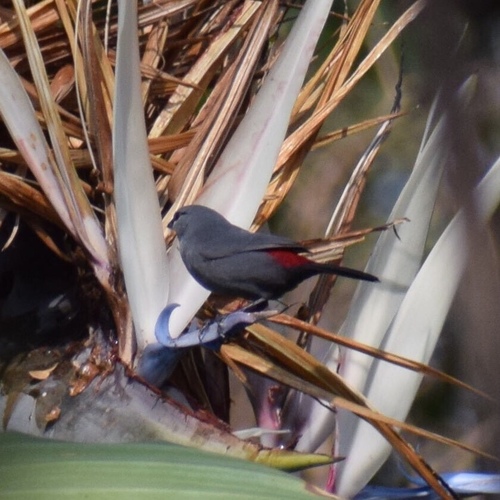
Black-tailed Waxbill (Glaucestrilda perreini) Black-tailed Waxbill

Media

Loading…

In short

The Cape Cormorant and Black-tailed Waxbill are easily distinguished by their size, habitat, and plumage. The Cape Cormorant is a large, aquatic bird, while the Black-tailed Waxbill is a small, terrestrial finch. Their habitats rarely overlap, making misidentification unlikely in the field.

Identification tips

  1. Size and Shape: Note the large size and aquatic nature of the Cape Cormorant versus the small, finch-like Black-tailed Waxbill. 2. Plumage: Look for the glossy dark plumage with an orange-yellow facial patch on the cormorant. 3. Habitat: Consider the environment; cormorants are coastal, waxbills are terrestrial. 4. Behavior: Observe behavior; cormorants dive for fish, waxbills forage on land.

Size

The Cape Cormorant is significantly larger, with a robust body and long neck, compared to the small, delicate Black-tailed Waxbill.

Plumage

Cape Cormorants have dark, glossy plumage with a distinctive orange-yellow patch at the base of the bill. Black-tailed Waxbills have a more subtle appearance with a grey body and black tail.

Behaviour

Cape Cormorants are often seen swimming or diving in water, while Black-tailed Waxbills are typically observed foraging on the ground or in low vegetation.

Habitat

Cape Cormorants are found in coastal and marine environments, whereas Black-tailed Waxbills inhabit grasslands and savannas.

Voice

Cape Cormorants are generally silent, while Black-tailed Waxbills produce soft, high-pitched calls.

Submit a better description

Use the same sections as the comparison. Your text is published immediately.

The Cape Cormorant and Black-tailed Waxbill are easily distinguished by their size, habitat, and plumage. The Cape Cormorant is a large, aquatic bird, while the Black-tailed Waxbill is a small, terrestrial finch. Their habitats rarely overlap, making misidentification unlikely in the field.

  1. Size and Shape: Note the large size and aquatic nature of the Cape Cormorant versus the small, finch-like Black-tailed Waxbill. 2. Plumage: Look for the glossy dark plumage with an orange-yellow facial patch on the cormorant. 3. Habitat: Consider the environment; cormorants are coastal, waxbills are terrestrial. 4. Behavior: Observe behavior; cormorants dive for fish, waxbills forage on land.

The Cape Cormorant is significantly larger, with a robust body and long neck, compared to the small, delicate Black-tailed Waxbill.

Cape Cormorants have dark, glossy plumage with a distinctive orange-yellow patch at the base of the bill. Black-tailed Waxbills have a more subtle appearance with a grey body and black tail.

Cape Cormorants are often seen swimming or diving in water, while Black-tailed Waxbills are typically observed foraging on the ground or in low vegetation.

Cape Cormorants are found in coastal and marine environments, whereas Black-tailed Waxbills inhabit grasslands and savannas.

Cape Cormorants are generally silent, while Black-tailed Waxbills produce soft, high-pitched calls.

Discard your changes?

You have unsaved edits. If you leave now, those changes will be lost.

Cape Cormorant · Black-tailed Waxbill · My Tricky Birds