Cape Cormorant vs Great Cormorant
Phalacrocorax capensis versus Phalacrocorax carbo
Play a quiz with Cape Cormorant and Great Cormorant
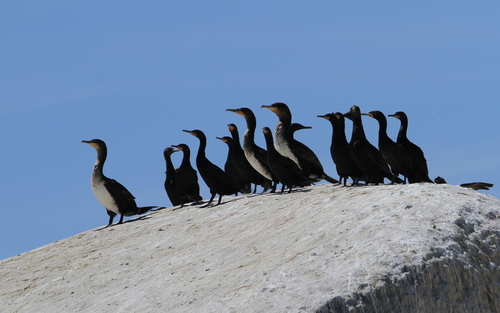
Cape Cormorant
Great Cormorant
In short
The Cape Cormorant and Great Cormorant can be distinguished by size and plumage details. Cape Cormorants are smaller with a more slender build, while Great Cormorants are larger and bulkier. Observing the color of the bare skin around the face and throat can also help in identification.
Identification tips
1. Size and Build: Look for the smaller, more slender Cape Cormorant versus the larger, bulkier Great Cormorant. 2. Bare Skin Color: Check for the orange-yellow patch on the Cape Cormorant's face compared to the white throat patch on the Great Cormorant. 3. Plumage Contrast: Note the more uniform dark plumage of the Cape Cormorant against the contrasting plumage of the Great Cormorant, especially in breeding season.
Size
The Cape Cormorant is smaller and more slender compared to the larger and bulkier Great Cormorant.
Plumage
Cape Cormorants have a more uniform dark plumage with a distinctive orange-yellow bare skin patch at the base of the bill, while Great Cormorants have a white throat patch and more contrast in their plumage, especially during breeding season.
Behaviour
Both species are proficient divers, but Great Cormorants are known to dive deeper and catch larger fish. Cape Cormorants often feed in flocks on schooling fish.
Habitat
Cape Cormorants are typically found along the coast of southern Africa, while Great Cormorants have a wider range, including inland waters in Europe and Asia.
Voice
Vocalizations are not a reliable distinguishing feature in the field as both species have similar guttural calls.