Birdr

Cape Cormorant vs Socotra Cormorant

Phalacrocorax capensis versus Phalacrocorax nigrogularis

Play a quiz with Cape Cormorant and Socotra Cormorant
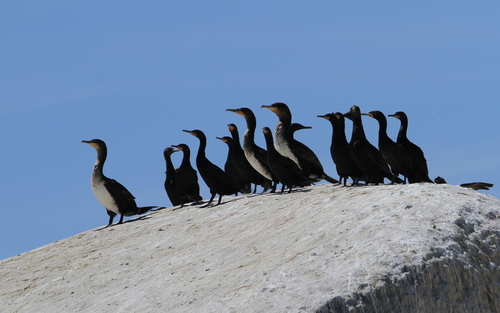
Cape Cormorant (Phalacrocorax capensis) Cape Cormorant
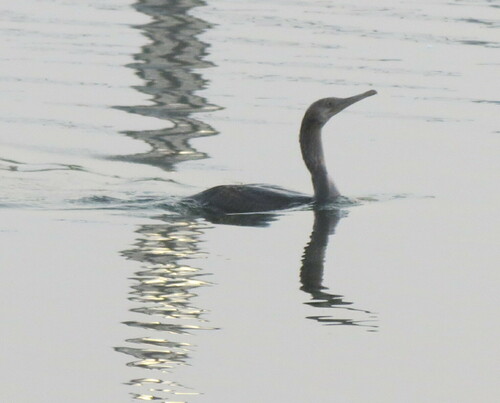
Socotra Cormorant (Phalacrocorax nigrogularis) Socotra Cormorant

Media

Loading…

In short

The Cape Cormorant and Socotra Cormorant are both medium-sized cormorants with similar overall structure, but they can be distinguished by their plumage and geographic range. Cape Cormorants have a more restricted range along the southern African coast, while Socotra Cormorants are found around the Arabian Peninsula.

Identification tips

  1. Range: Check the geographic location; Cape Cormorants are in southern Africa, while Socotra Cormorants are around the Arabian Peninsula. 2. Gular Patch: Look for the orange-yellow gular patch on Cape Cormorants, absent in Socotra Cormorants. 3. Plumage: Note the iridescence in Cape Cormorants, especially in good lighting conditions.

Size

Both species are similar in size, with no significant differences to note in the field.

Plumage

Cape Cormorants typically have a glossy black plumage with a distinctive orange-yellow gular patch, while Socotra Cormorants are more uniformly dark without the bright gular patch. The Cape Cormorant's plumage can appear more iridescent in good light.

Behaviour

Both species exhibit typical cormorant behavior such as diving for fish and drying their wings, with no notable behavioral differences for field identification.

Habitat

Cape Cormorants are found along the southern African coast, often in coastal waters and estuaries. Socotra Cormorants are restricted to the Arabian Peninsula, primarily around the Persian Gulf and the Gulf of Oman, often in marine environments.

Voice

Vocalizations are not a reliable field mark for distinguishing these species, as both have similar calls typical of cormorants.

Submit a better description

Use the same sections as the comparison. Your text is published immediately.

The Cape Cormorant and Socotra Cormorant are both medium-sized cormorants with similar overall structure, but they can be distinguished by their plumage and geographic range. Cape Cormorants have a more restricted range along the southern African coast, while Socotra Cormorants are found around the Arabian Peninsula.

  1. Range: Check the geographic location; Cape Cormorants are in southern Africa, while Socotra Cormorants are around the Arabian Peninsula. 2. Gular Patch: Look for the orange-yellow gular patch on Cape Cormorants, absent in Socotra Cormorants. 3. Plumage: Note the iridescence in Cape Cormorants, especially in good lighting conditions.

Both species are similar in size, with no significant differences to note in the field.

Cape Cormorants typically have a glossy black plumage with a distinctive orange-yellow gular patch, while Socotra Cormorants are more uniformly dark without the bright gular patch. The Cape Cormorant's plumage can appear more iridescent in good light.

Both species exhibit typical cormorant behavior such as diving for fish and drying their wings, with no notable behavioral differences for field identification.

Cape Cormorants are found along the southern African coast, often in coastal waters and estuaries. Socotra Cormorants are restricted to the Arabian Peninsula, primarily around the Persian Gulf and the Gulf of Oman, often in marine environments.

Vocalizations are not a reliable field mark for distinguishing these species, as both have similar calls typical of cormorants.

Discard your changes?

You have unsaved edits. If you leave now, those changes will be lost.

Cape Cormorant · Socotra Cormorant · My Tricky Birds