Birdr

Cape Grassbird vs Green-capped Eremomela

Sphenoeacus afer versus Eremomela scotops

Play a quiz with Cape Grassbird and Green-capped Eremomela
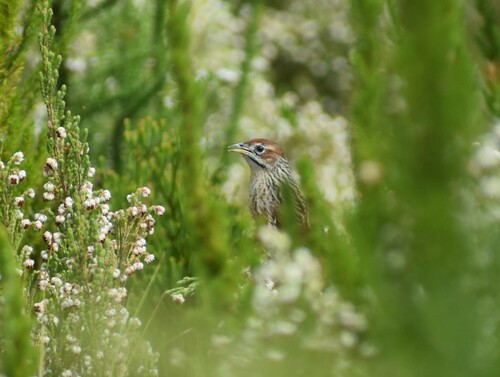
Cape Grassbird (Sphenoeacus afer) Cape Grassbird
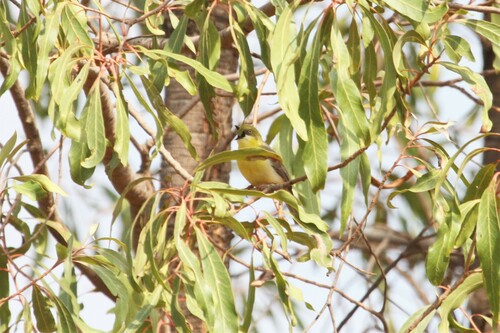
Green-capped Eremomela (Eremomela scotops) Green-capped Eremomela

Media

Loading…

In short

The Cape Grassbird and Green-capped Eremomela can be distinguished primarily by their habitat preferences and plumage details. The Cape Grassbird is typically found in grasslands and fynbos, while the Green-capped Eremomela prefers woodland and savanna. In terms of appearance, the Cape Grassbird has a more streaked and rufous plumage, whereas the Green-capped Eremomela is notable for its greenish cap and more uniform coloration.

Identification tips

  1. Habitat: Check the surrounding environment; grasslands suggest Cape Grassbird, while woodlands suggest Green-capped Eremomela. 2. Plumage: Look for the greenish cap of the Green-capped Eremomela. 3. Size and Shape: Note the larger size and longer tail of the Cape Grassbird. 4. Behavior: Observe the bird's activity; skulking indicates Cape Grassbird, active foraging suggests Green-capped Eremomela.

Size

The Cape Grassbird is generally larger and more elongated than the Green-capped Eremomela.

Plumage

The Cape Grassbird features a streaked and rufous plumage with a distinctive long tail, while the Green-capped Eremomela has a greenish cap and a more uniform olive-green body.

Behaviour

Cape Grassbirds are often seen skulking in dense vegetation, whereas Green-capped Eremomelas are more active and often seen foraging in small groups.

Habitat

Cape Grassbirds prefer grasslands and fynbos, while Green-capped Eremomelas are found in woodlands and savanna.

Voice

Cape Grassbirds have a varied and melodious song, while Green-capped Eremomelas produce a series of high-pitched calls. Specific song details are less documented.

Submit a better description

Use the same sections as the comparison. Your text is published immediately.

The Cape Grassbird and Green-capped Eremomela can be distinguished primarily by their habitat preferences and plumage details. The Cape Grassbird is typically found in grasslands and fynbos, while the Green-capped Eremomela prefers woodland and savanna. In terms of appearance, the Cape Grassbird has a more streaked and rufous plumage, whereas the Green-capped Eremomela is notable for its greenish cap and more uniform coloration.

  1. Habitat: Check the surrounding environment; grasslands suggest Cape Grassbird, while woodlands suggest Green-capped Eremomela. 2. Plumage: Look for the greenish cap of the Green-capped Eremomela. 3. Size and Shape: Note the larger size and longer tail of the Cape Grassbird. 4. Behavior: Observe the bird's activity; skulking indicates Cape Grassbird, active foraging suggests Green-capped Eremomela.

The Cape Grassbird is generally larger and more elongated than the Green-capped Eremomela.

The Cape Grassbird features a streaked and rufous plumage with a distinctive long tail, while the Green-capped Eremomela has a greenish cap and a more uniform olive-green body.

Cape Grassbirds are often seen skulking in dense vegetation, whereas Green-capped Eremomelas are more active and often seen foraging in small groups.

Cape Grassbirds prefer grasslands and fynbos, while Green-capped Eremomelas are found in woodlands and savanna.

Cape Grassbirds have a varied and melodious song, while Green-capped Eremomelas produce a series of high-pitched calls. Specific song details are less documented.

Discard your changes?

You have unsaved edits. If you leave now, those changes will be lost.

Cape Grassbird · Green-capped Eremomela · My Tricky Birds