
Cape May Warbler vs Northern Parula
Setophaga tigrina versus Setophaga americana
Play a quiz with Cape May Warbler and Northern Parula
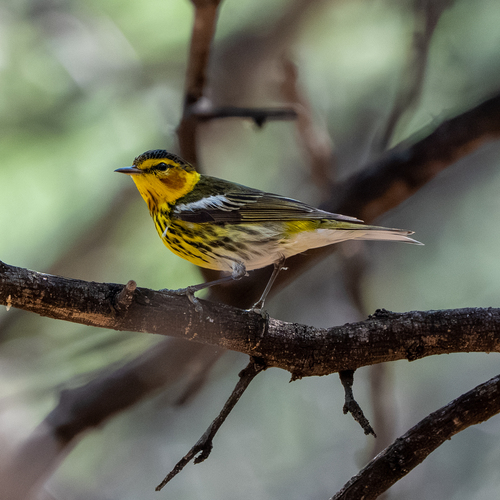 Cape May Warbler
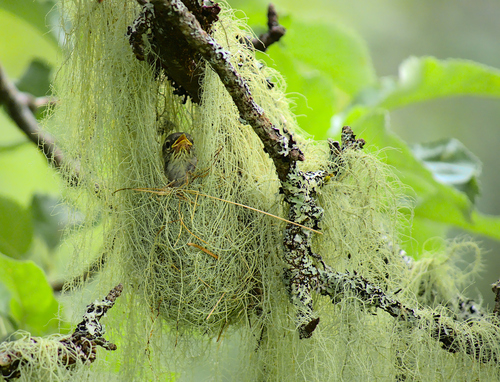 Northern Parula
In short
The most reliable field mark to separate Cape May Warbler from Northern Parula is the presence of a single narrow white wing bar on Cape May (all ages), versus two bold white wing bars on Northern Parula. In adult males, Cape May also shows a chestnut cheek patch and heavy black streaking below, while Northern Parula males have a blue-gray back with a greenish patch and a unique bluish and rufous breast band. Females and immatures of both species are duller, but the wing bar count and rump color (yellowish on Cape May, greenish on Parula) remain useful. Both are small warblers, but Cape May averages slightly larger and longer-winged. Watch for these marks especially in mixed flocks or during migration, when both species may appear together.
Identification tips
- Wing bars: Cape May Warbler always shows a single narrow white wing bar (all ages), while Northern Parula has two bold white wing bars. This is the fastest field check, especially in flight or on perched birds with wings folded.
- Rump color: Cape May has a yellowish rump, often visible in flight or when foraging; Northern Parula's rump is greenish and blends with the back.
- Underpart streaking: Cape May (especially adult males) has heavy black streaks on yellow underparts; Northern Parula lacks streaking, showing a clean yellow breast fading to a white belly.
- Face pattern (adult males): Cape May males have a chestnut cheek patch framed in yellow with a black eyestripe; Northern Parula males have white eye crescents and no chestnut cheek.
- Breast band (Parula only): Adult male Northern Parula shows a bluish and rufous breast band across the yellow chest, unique among warblers. This band fades or disappears in females and non-breeding birds.
- Back color: Cape May has a brown back; Parula is blue-gray with a greenish patch in the middle of the back.
- Size and structure: Cape May is slightly larger and longer-winged, but this is subtle. Parula may look more compact and short-tailed.
- Bill: Cape May's bill is slightly longer and finer; Parula's is shorter and stubbier, but this is hard to judge unless side-by-side.
- Habitat context: In breeding season, Cape May is in northern coniferous forests; Parula is in humid, lichen/moss-rich woods, often near water. During migration, both may overlap in mixed woodlands.
- Behavior: Cape May often feeds at conifer tips or sallies for insects; Parula is more likely to be seen creeping in moss or lichen clumps.
- Sex/age pitfalls: Female and immature Cape Mays are duller but still show the single wing bar and yellowish rump; female/immature Parulas are duller, may lack breast band, but always have two wing bars and greenish back patch.
- Flight views: In mixed flocks or during migration, focus on wing bar count and rump color for quick separation.
- Voice: If heard, Cape May gives high 'tsi' notes and a thin 'sip' call; Parula's song is not described here, so do not rely on voice unless confident.
- Seasonal change: Both species become duller after breeding, but the structural marks (wing bars, rump color) remain reliable.
- Common pitfalls: Do not rely on overall brightness or 'yellowness,' as both can appear quite yellowish in some lights. Always check wing bars and rump color first, then look for face and underpart details if needed.
Size
Cape May Warbler is slightly larger and heavier than Northern Parula. Cape May averages about 10.7 g in body mass, with a length of 12–14 cm and a wingspan of 19–22 cm. Northern Parula is lighter (5–11 g), shorter (10.8–12.4 cm), and has a smaller wingspan (16–18 cm). In the field, this difference is subtle, but Cape May may look a bit longer and more robust, especially in direct comparison.
Plumage
Juvenile and immature Cape May Warblers always show a single narrow white wing bar and a yellowish rump, even when overall coloration is dull. Immature and female Northern Parulas have two distinct white wing bars and a greenish back patch, with a yellowish breast and white belly but lacking the Cape May's streaked underparts. Adult male Cape Mays are striking with a chestnut cheek, black crown, and bold black streaks on yellow underparts, while adult male Parulas have a blue-gray back, greenish patch, two white wing bars, and a bluish and rufous breast band (which fades or disappears in females and non-breeding birds). In flight, the wing bar count is a quick check for all ages. Cape May's yellowish rump is often visible, while Parula's rump blends with the greenish back.
Behaviour
Both species are active foragers in the canopy, but Cape May Warbler often feeds at the tips of conifer branches and may sally for insects or seek nectar and berry juice in winter. Northern Parula forages in humid woodlands, frequently in clumps of lichen or Spanish moss, and is often seen hanging or creeping along branches. Both can join mixed flocks, but Parula is more likely to be seen in humid, mossy habitats, sometimes near water.
Habitat
Cape May Warbler breeds in northern North America, favoring the edges of coniferous woodlands, especially spruce. Northern Parula breeds in eastern North America, from southern Canada to Florida, preferring humid forests with abundant lichen (Old Man's Beard) or Spanish moss, often near water. During migration, both may be found together in a wider range of wooded habitats, but Cape May is more closely tied to conifers, while Parula seeks mossy, humid woods.
Voice
Cape May Warbler's song is a simple, high-pitched repetition of 'tsi' notes, with a thin 'sip' call. Northern Parula's voice is not described in the provided notes, so vocalization is not a reliable separator here.