Birdr

Capuchinbird vs Plum-throated Cotinga

Perissocephalus tricolor versus Cotinga maynana

Play a quiz with Capuchinbird and Plum-throated Cotinga
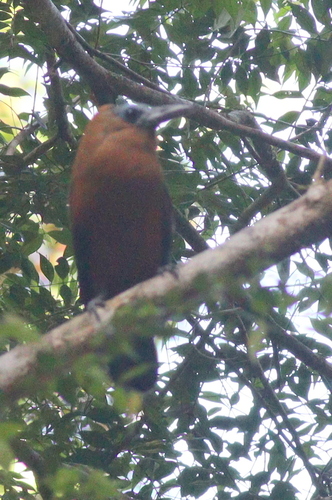
Capuchinbird (Perissocephalus tricolor) Capuchinbird
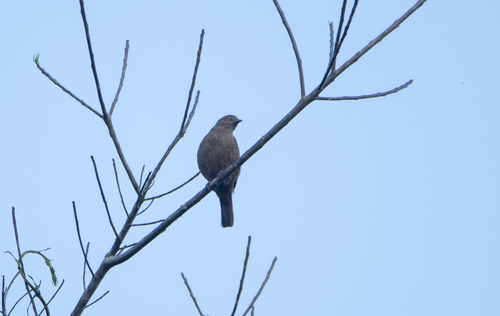
Plum-throated Cotinga (Cotinga maynana) Plum-throated Cotinga

Media

Loading…

In short

The Capuchinbird (Perissocephalus tricolor) and Plum-throated Cotinga (Cotinga maynana) are both members of the Cotingidae family but can be distinguished by their plumage and behavior. The Capuchinbird is notable for its unique bald head and orange-brown body, while the Plum-throated Cotinga is characterized by its striking turquoise-blue plumage.

Identification tips

Look for the bald head and orange-brown plumage to identify the Capuchinbird. For the Plum-throated Cotinga, note the turquoise-blue color and listen for mechanical wing sounds during flight. Observe behavior: Capuchinbirds display on leks, while Plum-throated Cotingas perch high or near fruiting trees.

Size

Capuchinbird is generally larger and more robust compared to the more compact Plum-throated Cotinga.

Plumage

Capuchinbird has a distinctive bald head and orange-brown plumage. In contrast, the male Plum-throated Cotinga is uniformly turquoise-blue with minimal black markings.

Behaviour

Capuchinbirds are often seen displaying on leks, while Plum-throated Cotingas are more frequently observed perched high on exposed branches or around fruiting trees.

Habitat

Capuchinbirds are typically found in humid lowland forests, whereas Plum-throated Cotingas are more often seen in seasonally flooded forests and terra firme.

Voice

Capuchinbirds are known for their unusual, cow-like calls. Plum-throated Cotingas do not have a distinctive vocalization but produce mechanical wing sounds in flight.

Submit a better description

Use the same sections as the comparison. Your text is published immediately.

The Capuchinbird (Perissocephalus tricolor) and Plum-throated Cotinga (Cotinga maynana) are both members of the Cotingidae family but can be distinguished by their plumage and behavior. The Capuchinbird is notable for its unique bald head and orange-brown body, while the Plum-throated Cotinga is characterized by its striking turquoise-blue plumage.

Look for the bald head and orange-brown plumage to identify the Capuchinbird. For the Plum-throated Cotinga, note the turquoise-blue color and listen for mechanical wing sounds during flight. Observe behavior: Capuchinbirds display on leks, while Plum-throated Cotingas perch high or near fruiting trees.

Capuchinbird is generally larger and more robust compared to the more compact Plum-throated Cotinga.

Capuchinbird has a distinctive bald head and orange-brown plumage. In contrast, the male Plum-throated Cotinga is uniformly turquoise-blue with minimal black markings.

Capuchinbirds are often seen displaying on leks, while Plum-throated Cotingas are more frequently observed perched high on exposed branches or around fruiting trees.

Capuchinbirds are typically found in humid lowland forests, whereas Plum-throated Cotingas are more often seen in seasonally flooded forests and terra firme.

Capuchinbirds are known for their unusual, cow-like calls. Plum-throated Cotingas do not have a distinctive vocalization but produce mechanical wing sounds in flight.

Discard your changes?

You have unsaved edits. If you leave now, those changes will be lost.

Capuchinbird · Plum-throated Cotinga · My Tricky Birds