Birdr

Carolina Chickadee vs Black-capped Chickadee

Poecile carolinensis versus Poecile atricapillus

Play a quiz with Carolina Chickadee and Black-capped Chickadee
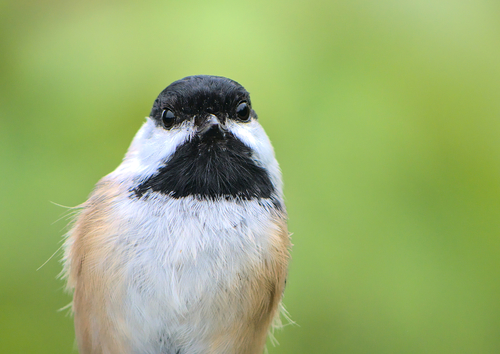
Carolina Chickadee (Poecile carolinensis) Carolina Chickadee
Black-capped Chickadee (Poecile atricapillus) Black-capped Chickadee

Media

Loading…

In short

Carolina Chickadee and Black-capped Chickadee are very similar, often confused species. The most reliable field mark is their vocalizations, which differ distinctly. In areas where their ranges overlap, hybridization can occur, making identification challenging.

Identification tips

Size

Both species are similar in size, but the Black-capped Chickadee is slightly larger and bulkier.

Plumage

Both have black caps and bibs with white cheeks, but the Black-capped Chickadee typically has a more contrasting white edge on the wings and a longer tail. The Carolina Chickadee's plumage is generally less contrasting.

Behaviour

Both species form winter flocks and have similar social structures, with dominance hierarchies influencing breeding.

Habitat

Both species can be found in mixed forests and are frequent visitors to backyard feeders. They overlap in a narrow zone in the eastern United States.

Voice

Carolina Chickadee has a faster, higher-pitched 'chick-a-dee-dee-dee' call, while the Black-capped Chickadee's call is slower and more variable. Their songs also differ, with the Carolina Chickadee's song being a four-note 'fee-bee fee-bay' and the Black-capped's a two-note 'fee-bee'.

Submit a better description

Use the same sections as the comparison. Your text is published immediately.

Carolina Chickadee and Black-capped Chickadee are very similar, often confused species. The most reliable field mark is their vocalizations, which differ distinctly. In areas where their ranges overlap, hybridization can occur, making identification challenging.

  • Vocalizations: Listen for the distinct calls and songs; Carolina's is faster and higher-pitched.
  • Plumage: Look for the more contrasting wing edges and longer tail of the Black-capped.
  • Size: Note the slightly larger size of the Black-capped.
  • Location: Be aware of the hybrid zone in the eastern U.S. where identification can be particularly tricky.

Both species are similar in size, but the Black-capped Chickadee is slightly larger and bulkier.

Both have black caps and bibs with white cheeks, but the Black-capped Chickadee typically has a more contrasting white edge on the wings and a longer tail. The Carolina Chickadee's plumage is generally less contrasting.

Both species form winter flocks and have similar social structures, with dominance hierarchies influencing breeding.

Both species can be found in mixed forests and are frequent visitors to backyard feeders. They overlap in a narrow zone in the eastern United States.

Carolina Chickadee has a faster, higher-pitched 'chick-a-dee-dee-dee' call, while the Black-capped Chickadee's call is slower and more variable. Their songs also differ, with the Carolina Chickadee's song being a four-note 'fee-bee fee-bay' and the Black-capped's a two-note 'fee-bee'.

Discard your changes?

You have unsaved edits. If you leave now, those changes will be lost.

Carolina Chickadee · Black-capped Chickadee · My Tricky Birds