Birdr

Carolina Chickadee vs Western Meadowlark

Poecile carolinensis versus Sturnella neglecta

Play a quiz with Carolina Chickadee and Western Meadowlark
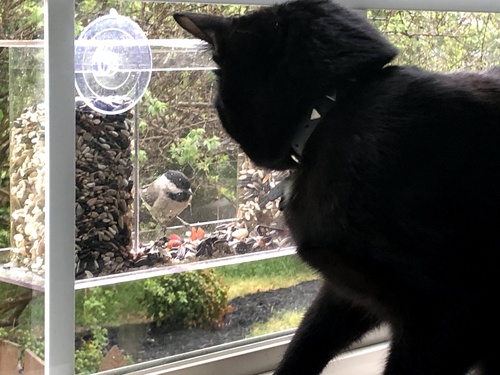
Carolina Chickadee (Poecile carolinensis) Carolina Chickadee
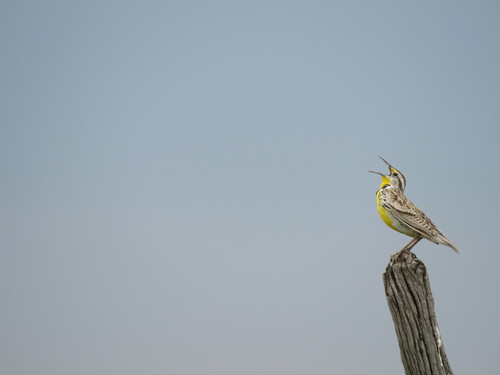
Western Meadowlark (Sturnella neglecta) Western Meadowlark

Media

Loading…

In short

The Carolina Chickadee and Western Meadowlark are easily distinguished by their size and habitat preferences. The chickadee is a small, agile bird found in wooded areas, while the meadowlark is a larger grassland bird with distinctive plumage and song.

Identification tips

1. Size and Habitat: Note the size difference and habitat; chickadees are smaller and in wooded areas, meadowlarks are larger and in open fields. 2. Plumage: Look for the chickadee's black cap and the meadowlark's yellow breast with a black V. 3. Vocalization: Listen for the chickadee's 'chick-a-dee' call versus the meadowlark's melodious song.

Size

The Carolina Chickadee is much smaller than the Western Meadowlark, which is a medium-sized bird.

Plumage

Carolina Chickadees have a black cap and bib with white cheeks, while Western Meadowlarks have a striking yellow breast with a black V-shaped bib and white tail margins.

Behaviour

Carolina Chickadees are often seen in flocks, foraging actively in trees. Western Meadowlarks are more solitary or found in loose groups, often seen on the ground or perched on fence posts.

Habitat

Carolina Chickadees inhabit wooded areas, including forests and suburban areas with trees. Western Meadowlarks prefer open grasslands and fields.

Voice

Carolina Chickadees have a distinctive 'chick-a-dee-dee-dee' call, while Western Meadowlarks are known for their melodious, flute-like song.

Submit a better description

Use the same sections as the comparison. Your text is published immediately.

The Carolina Chickadee and Western Meadowlark are easily distinguished by their size and habitat preferences. The chickadee is a small, agile bird found in wooded areas, while the meadowlark is a larger grassland bird with distinctive plumage and song.

1. Size and Habitat: Note the size difference and habitat; chickadees are smaller and in wooded areas, meadowlarks are larger and in open fields. 2. Plumage: Look for the chickadee's black cap and the meadowlark's yellow breast with a black V. 3. Vocalization: Listen for the chickadee's 'chick-a-dee' call versus the meadowlark's melodious song.

The Carolina Chickadee is much smaller than the Western Meadowlark, which is a medium-sized bird.

Carolina Chickadees have a black cap and bib with white cheeks, while Western Meadowlarks have a striking yellow breast with a black V-shaped bib and white tail margins.

Carolina Chickadees are often seen in flocks, foraging actively in trees. Western Meadowlarks are more solitary or found in loose groups, often seen on the ground or perched on fence posts.

Carolina Chickadees inhabit wooded areas, including forests and suburban areas with trees. Western Meadowlarks prefer open grasslands and fields.

Carolina Chickadees have a distinctive 'chick-a-dee-dee-dee' call, while Western Meadowlarks are known for their melodious, flute-like song.

Discard your changes?

You have unsaved edits. If you leave now, those changes will be lost.

Carolina Chickadee · Western Meadowlark · My Tricky Birds