Birdr

Caspian Gull vs Yellow-legged Gull

Larus cachinnans versus Larus michahellis

Play a quiz with Caspian Gull and Yellow-legged Gull
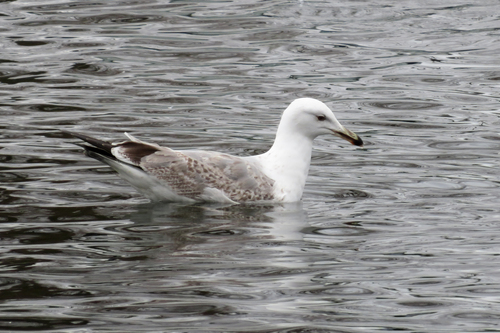
Caspian Gull (Larus cachinnans) Caspian Gull
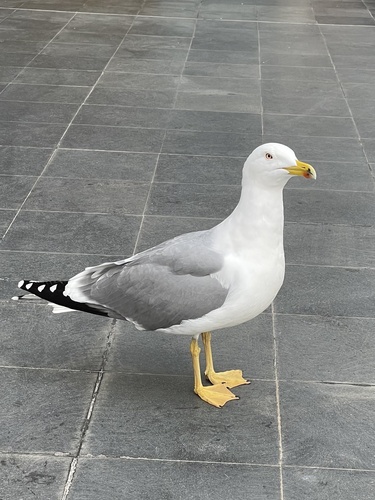
Yellow-legged Gull (Larus michahellis) Yellow-legged Gull

Media

Loading…

In short

The Yellow-legged Gull (Larus michahellis) and the Caspian Gull (Larus cachinnans) are two large gull species that can be challenging to distinguish in the field due to their similar overall appearance. However, key differences in size, plumage coloration, and habitat preferences can aid birdwatchers in accurate identification.

Identification tips

  1. Birds of the World Similar-Species Diagnostics:
  2. The Yellow-legged Gull is known for having a "pale gray mantle," while the Caspian Gull has a "darker mantle that can appear more slate gray." This comparison is critical when identifying these two species, as the color of the mantle can be a key field characteristic. Additionally, the Caspian Gull has a "longer and more slender bill" compared to the Yellow-legged Gull's "robust bill," which is another distinguishing feature noted by expert sources.

  3. AI Field Diagnostics:

  4. Size: Look for size differences; the Caspian Gull is generally larger than the Yellow-legged Gull. When in the field, observing the overall bulkiness can help differentiate them.
  5. Plumage: Pay close attention to the mantle color; if it appears darker (slate gray), it is likely a Caspian Gull. The Yellow-legged Gull's bright yellow legs are a good field mark, but remember that both species have yellow legs, so focus on the bill shape and the mantle color as well.
  6. Behavior: Observe feeding habits; if a gull is scavenging aggressively in urban areas, it is likely a Yellow-legged Gull. If it is seen foraging quietly near water bodies, it could be a Caspian Gull.
  7. Vocalization: Listen for the calls; the Yellow-legged Gull has a harsher and more raucous call compared to the Caspian Gull, which has a more varied set of calls.
  8. Habitat: Be aware of habitat preferences. A gull in a coastal urban area is likely a Yellow-legged Gull, while those in rural water bodies might be Caspian Gulls.

By focusing on these distinguishing features—size, mantle color, bill shape, feeding behavior, vocalizations, and habitat preferences—birdwatchers can more accurately identify Yellow-legged and Caspian Gulls in the field.

Size

Plumage

Behaviour

Habitat

Voice

Submit a better description

Use the same sections as the comparison. Your text is published immediately.

The Yellow-legged Gull (Larus michahellis) and the Caspian Gull (Larus cachinnans) are two large gull species that can be challenging to distinguish in the field due to their similar overall appearance. However, key differences in size, plumage coloration, and habitat preferences can aid birdwatchers in accurate identification.

  1. Birds of the World Similar-Species Diagnostics:
  2. The Yellow-legged Gull is known for having a "pale gray mantle," while the Caspian Gull has a "darker mantle that can appear more slate gray." This comparison is critical when identifying these two species, as the color of the mantle can be a key field characteristic. Additionally, the Caspian Gull has a "longer and more slender bill" compared to the Yellow-legged Gull's "robust bill," which is another distinguishing feature noted by expert sources.

  3. AI Field Diagnostics:

  4. Size: Look for size differences; the Caspian Gull is generally larger than the Yellow-legged Gull. When in the field, observing the overall bulkiness can help differentiate them.
  5. Plumage: Pay close attention to the mantle color; if it appears darker (slate gray), it is likely a Caspian Gull. The Yellow-legged Gull's bright yellow legs are a good field mark, but remember that both species have yellow legs, so focus on the bill shape and the mantle color as well.
  6. Behavior: Observe feeding habits; if a gull is scavenging aggressively in urban areas, it is likely a Yellow-legged Gull. If it is seen foraging quietly near water bodies, it could be a Caspian Gull.
  7. Vocalization: Listen for the calls; the Yellow-legged Gull has a harsher and more raucous call compared to the Caspian Gull, which has a more varied set of calls.
  8. Habitat: Be aware of habitat preferences. A gull in a coastal urban area is likely a Yellow-legged Gull, while those in rural water bodies might be Caspian Gulls.

By focusing on these distinguishing features—size, mantle color, bill shape, feeding behavior, vocalizations, and habitat preferences—birdwatchers can more accurately identify Yellow-legged and Caspian Gulls in the field.

  • Yellow-legged Gull: Typically measures between 55-66 cm in length with a wingspan of approximately 142-155 cm. It has a robust body and a relatively long wingspan, which contributes to its powerful flight.
  • Caspian Gull: Slightly larger than the Yellow-legged Gull, measuring about 60-70 cm in length and a wingspan reaching up to 152-172 cm. Its larger size is typically noticeable, especially when observed alongside the Yellow-legged Gull.
  • Yellow-legged Gull: Adult birds have a pale gray mantle with white head and underparts. The legs are bright yellow, which is a key identification feature. The bill is robust with a distinct yellow color and a red spot on the lower mandible.
  • Caspian Gull: Similar in general appearance but tends to have a darker mantle that can appear more slate gray compared to the Yellow-legged Gull. Its legs are also yellow, but often paler. The bill is longer and more slender, and although it also has a red spot, it is often less prominent than that of the Yellow-legged Gull.
  • Yellow-legged Gull: Known for its opportunistic feeding behavior, it often scavenges in urban areas and is adept at kleptoparasitism. It is frequently seen predating on the eggs and chicks of other seabirds, showcasing a bold and aggressive feeding style.
  • Caspian Gull: Also an opportunistic feeder but tends to be less aggressive than the Yellow-legged Gull. It may display more patience while foraging and can often be seen foraging in water bodies rather than scavenging for scraps in urban environments.
  • Yellow-legged Gull: Prefers coastal areas, including rocky shores and man-made structures like rooftops in urban settings. It has adapted well to human environments and is commonly found in large cities along the Mediterranean.
  • Caspian Gull: Generally prefers more open habitats, including large water bodies like lakes and rivers. It is less frequently found in urban settings compared to the Yellow-legged Gull and is more associated with rural habitats near water.
  • Yellow-legged Gull: Its call is a distinctive, loud, and harsh "kree-kree-kree" or "kaw-kaw" sound, which can be quite raucous and is often heard during aggressive encounters or while foraging.
  • Caspian Gull: Produces a more varied set of calls, often described as a series of short, sharp "kak" sounds that can be less harsh than the Yellow-legged Gull's calls.

Discard your changes?

You have unsaved edits. If you leave now, those changes will be lost.

Caspian Gull · Yellow-legged Gull · My Tricky Birds