Birdr

Caspian Plover vs Greater Sand Plover

Anarhynchus asiaticus versus Anarhynchus leschenaultii

Play a quiz with Caspian Plover and Greater Sand Plover
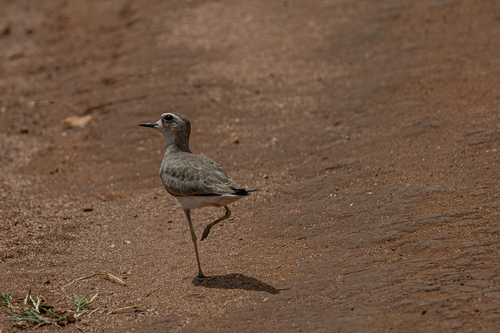
Caspian Plover (Anarhynchus asiaticus) Caspian Plover
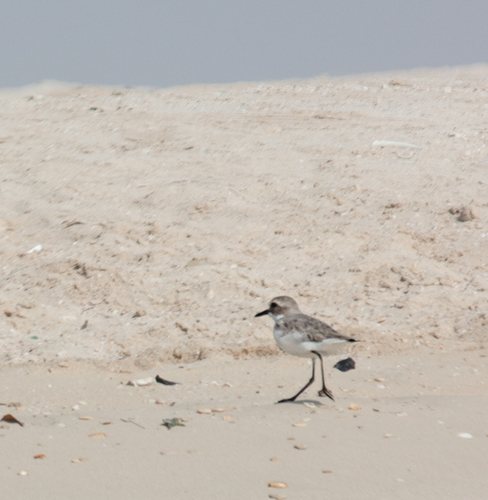
Greater Sand Plover (Anarhynchus leschenaultii) Greater Sand Plover

Media

Loading…

In short

The Caspian Plover and Greater Sand Plover can be challenging to distinguish, but key differences in structure and plumage help. The Caspian Plover is generally slimmer with a longer neck and legs, while the Greater Sand Plover is more robust with a thicker bill. Plumage differences are subtle but notable in breeding males.

Identification tips

  1. Structure: Look for the Caspian Plover's longer legs and neck. 2. Bill: Greater Sand Plover has a thicker bill. 3. Breeding Plumage: Note the chestnut breast band in male Caspian Plovers. 4. Habitat: Consider the habitat; Caspian Plovers are more likely in dry, open areas, while Greater Sand Plovers are in coastal regions. 5. Behavior: Caspian Plovers may appear more upright when foraging.

Size

Caspian Plover is slightly smaller and more slender compared to the more robust Greater Sand Plover.

Plumage

In breeding plumage, male Caspian Plovers have a distinct chestnut breast band, whereas male Greater Sand Plovers have a more muted or absent breast band. Non-breeding plumages are more similar, with both species showing grayish-brown upperparts and whitish underparts.

Behaviour

Both species exhibit similar behaviors, such as running and stopping frequently while foraging. However, the Caspian Plover may appear more upright due to its longer legs.

Habitat

Caspian Plovers are often found in drier, more open habitats, while Greater Sand Plovers prefer coastal areas, mudflats, and sandy beaches.

Voice

Vocalizations are not a reliable distinguishing feature in the field, as both species have similar calls.

Submit a better description

Use the same sections as the comparison. Your text is published immediately.

The Caspian Plover and Greater Sand Plover can be challenging to distinguish, but key differences in structure and plumage help. The Caspian Plover is generally slimmer with a longer neck and legs, while the Greater Sand Plover is more robust with a thicker bill. Plumage differences are subtle but notable in breeding males.

  1. Structure: Look for the Caspian Plover's longer legs and neck. 2. Bill: Greater Sand Plover has a thicker bill. 3. Breeding Plumage: Note the chestnut breast band in male Caspian Plovers. 4. Habitat: Consider the habitat; Caspian Plovers are more likely in dry, open areas, while Greater Sand Plovers are in coastal regions. 5. Behavior: Caspian Plovers may appear more upright when foraging.

Caspian Plover is slightly smaller and more slender compared to the more robust Greater Sand Plover.

In breeding plumage, male Caspian Plovers have a distinct chestnut breast band, whereas male Greater Sand Plovers have a more muted or absent breast band. Non-breeding plumages are more similar, with both species showing grayish-brown upperparts and whitish underparts.

Both species exhibit similar behaviors, such as running and stopping frequently while foraging. However, the Caspian Plover may appear more upright due to its longer legs.

Caspian Plovers are often found in drier, more open habitats, while Greater Sand Plovers prefer coastal areas, mudflats, and sandy beaches.

Vocalizations are not a reliable distinguishing feature in the field, as both species have similar calls.

Discard your changes?

You have unsaved edits. If you leave now, those changes will be lost.

Caspian Plover · Greater Sand Plover · My Tricky Birds