Birdr

Caspian Tern vs Lesser Frigatebird

Hydroprogne caspia versus Fregata ariel

Play a quiz with Caspian Tern and Lesser Frigatebird
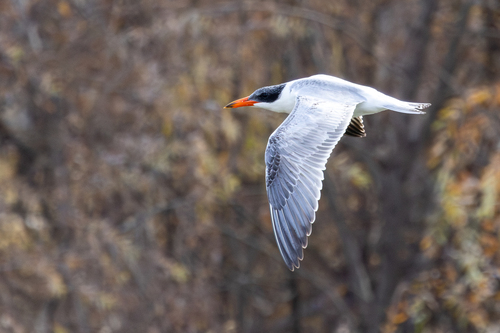
Caspian Tern (Hydroprogne caspia) Caspian Tern
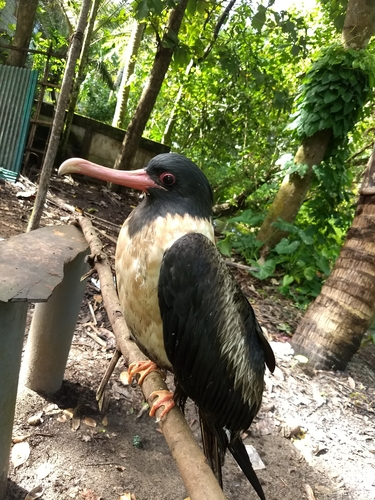
Lesser Frigatebird (Fregata ariel) Lesser Frigatebird

Media

Loading…

In short

The Caspian Tern and Lesser Frigatebird are both large, seabird-like species, but they differ significantly in structure and behavior. The Caspian Tern is robust with a strong, straight bill and a more gull-like flight, while the Lesser Frigatebird is more slender with a deeply forked tail and long, hooked bill, often seen soaring with minimal wingbeats.

Identification tips

Size

The Caspian Tern is large for a tern but smaller than the Lesser Frigatebird, which, despite being the smallest frigatebird, still has a longer wingspan and body length.

Plumage

Caspian Terns have a distinctive black cap and a bright red bill, while Lesser Frigatebirds are mostly dark with a white belly and a long, hooked bill. Frigatebirds also have a deeply forked tail, unlike the tern's more typical tail shape.

Behaviour

Caspian Terns are often seen plunge-diving for fish, whereas Lesser Frigatebirds are known for their aerial agility, often seen soaring and kleptoparasitizing other birds.

Habitat

Caspian Terns are found near coastlines, rivers, and lakes, nesting on flat, open areas. Lesser Frigatebirds are more oceanic, often seen far from land, nesting in trees or shrubs on remote islands.

Voice

Caspian Terns have a loud, raucous call, often heard in colonies. Lesser Frigatebirds are generally silent, with occasional guttural sounds during breeding displays.

Submit a better description

Use the same sections as the comparison. Your text is published immediately.

The Caspian Tern and Lesser Frigatebird are both large, seabird-like species, but they differ significantly in structure and behavior. The Caspian Tern is robust with a strong, straight bill and a more gull-like flight, while the Lesser Frigatebird is more slender with a deeply forked tail and long, hooked bill, often seen soaring with minimal wingbeats.

  • Bill Shape: Caspian Tern has a straight, robust red bill; Lesser Frigatebird has a long, hooked bill.
  • Tail Shape: Look for the deeply forked tail of the Lesser Frigatebird.
  • Flight Style: Caspian Terns have strong, slow wingbeats; Lesser Frigatebirds soar effortlessly with minimal wingbeats.
  • Plumage: Caspian Terns have a black cap and white body; Lesser Frigatebirds are mostly dark with a white belly.
  • Habitat: Caspian Terns are more likely near freshwater; Lesser Frigatebirds are typically over open ocean.

The Caspian Tern is large for a tern but smaller than the Lesser Frigatebird, which, despite being the smallest frigatebird, still has a longer wingspan and body length.

Caspian Terns have a distinctive black cap and a bright red bill, while Lesser Frigatebirds are mostly dark with a white belly and a long, hooked bill. Frigatebirds also have a deeply forked tail, unlike the tern's more typical tail shape.

Caspian Terns are often seen plunge-diving for fish, whereas Lesser Frigatebirds are known for their aerial agility, often seen soaring and kleptoparasitizing other birds.

Caspian Terns are found near coastlines, rivers, and lakes, nesting on flat, open areas. Lesser Frigatebirds are more oceanic, often seen far from land, nesting in trees or shrubs on remote islands.

Caspian Terns have a loud, raucous call, often heard in colonies. Lesser Frigatebirds are generally silent, with occasional guttural sounds during breeding displays.

Discard your changes?

You have unsaved edits. If you leave now, those changes will be lost.

Caspian Tern · Lesser Frigatebird · My Tricky Birds