Birdr

Caspian Tern vs Sickle-winged Chat

Hydroprogne caspia versus Emarginata sinuata

Play a quiz with Caspian Tern and Sickle-winged Chat
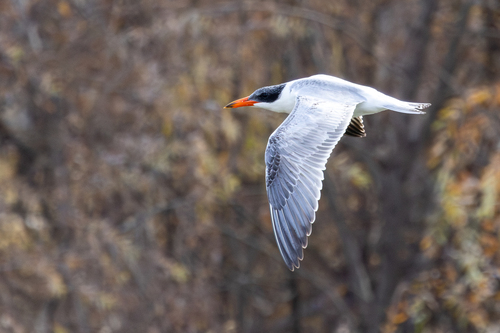
Caspian Tern (Hydroprogne caspia) Caspian Tern
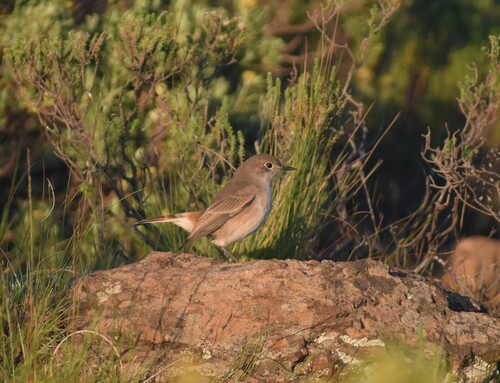
Sickle-winged Chat (Emarginata sinuata) Sickle-winged Chat

Media

Loading…

In short

The Caspian Tern is a large, powerful tern with a distinctive red bill, while the Sickle-winged Chat is a small, terrestrial passerine with a subtle plumage. These species are not closely related, making their differences in size, habitat, and behavior quite pronounced.

Identification tips

Size

The Caspian Tern is significantly larger than the Sickle-winged Chat, with a wingspan that allows it to soar like a gull, whereas the chat is a small, ground-dwelling bird.

Plumage

The Caspian Tern has a striking black cap and a large red bill, contrasting with its white body and gray wings. The Sickle-winged Chat has a more muted plumage, with browns and grays that blend into its terrestrial environment.

Behaviour

Caspian Terns are often seen flying over water, plunge-diving for fish, while Sickle-winged Chats are more likely to be observed hopping on the ground or low vegetation, searching for insects.

Habitat

Caspian Terns are found near large bodies of water, including coasts and lakes, whereas Sickle-winged Chats inhabit dry, open areas with sparse vegetation.

Voice

Caspian Terns have a loud, raucous call often heard in colonies, while Sickle-winged Chats have a more subdued song typical of chats.

Submit a better description

Use the same sections as the comparison. Your text is published immediately.

The Caspian Tern is a large, powerful tern with a distinctive red bill, while the Sickle-winged Chat is a small, terrestrial passerine with a subtle plumage. These species are not closely related, making their differences in size, habitat, and behavior quite pronounced.

  • Size and Shape: Caspian Tern is much larger with long wings and a heavy body; Sickle-winged Chat is small and slender.
  • Bill: Look for the Caspian Tern's large red bill versus the chat's small, dark bill.
  • Habitat: Observe the surroundings; terns are near water, chats in dry, open areas.
  • Behavior: Note the tern's flight and diving behavior compared to the chat's ground foraging.
  • Vocalization: Listen for the tern's loud calls versus the chat's quieter song.

The Caspian Tern is significantly larger than the Sickle-winged Chat, with a wingspan that allows it to soar like a gull, whereas the chat is a small, ground-dwelling bird.

The Caspian Tern has a striking black cap and a large red bill, contrasting with its white body and gray wings. The Sickle-winged Chat has a more muted plumage, with browns and grays that blend into its terrestrial environment.

Caspian Terns are often seen flying over water, plunge-diving for fish, while Sickle-winged Chats are more likely to be observed hopping on the ground or low vegetation, searching for insects.

Caspian Terns are found near large bodies of water, including coasts and lakes, whereas Sickle-winged Chats inhabit dry, open areas with sparse vegetation.

Caspian Terns have a loud, raucous call often heard in colonies, while Sickle-winged Chats have a more subdued song typical of chats.

Discard your changes?

You have unsaved edits. If you leave now, those changes will be lost.

Caspian Tern · Sickle-winged Chat · My Tricky Birds