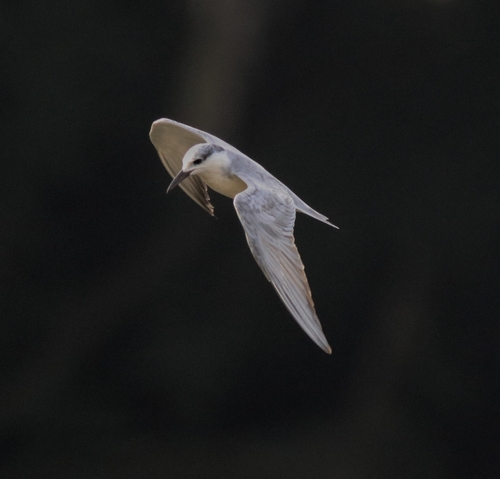
Caspian Tern vs Whiskered Tern
Hydroprogne caspia versus Chlidonias hybrida
Play a quiz with Caspian Tern and Whiskered Tern
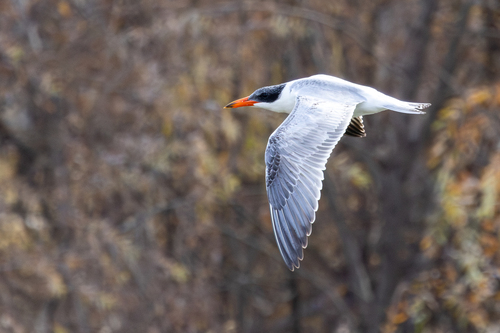
Caspian Tern
Whiskered Tern
In short
The Caspian Tern is the largest and most powerful of the terns, easily distinguished by its size and robust build. The Whiskered Tern is smaller, with a more delicate structure and distinctive plumage differences, especially in breeding season. Both species have different vocalizations and feeding behaviors, aiding in identification.
Identification tips
- Size: Caspian Tern is much larger.
- Bill: Caspian Tern has a thicker, bright red bill; Whiskered Tern's bill is dark reddish.
- Plumage: Look for the black cap and white cheeks in Whiskered Tern during breeding.
- Behavior: Caspian Tern plunge-dives; Whiskered Tern aerial-dips.
- Habitat: Caspian Tern favors coastal and large inland waters; Whiskered Tern is more common in marshes and wetlands.
- Calls: Listen for the Caspian's loud calls versus the Whiskered's rasping sounds.
Size
Caspian Tern is significantly larger, with a wingspan that can exceed 130 cm, compared to the Whiskered Tern's 64–70 cm.
Plumage
In breeding plumage, Caspian Tern has a black cap and a large, bright red bill, while Whiskered Tern shows a black cap extending to the nape with contrasting white cheeks and a dark reddish bill. Non-breeding Whiskered Terns have a pale crown with a black patch behind the eye, unlike the Caspian Tern.
Behaviour
Caspian Terns are powerful fliers with slow wing beats, often seen plunge-diving for fish. Whiskered Terns flutter above water, engaging in aerial-dipping for insects and small prey.
Habitat
Caspian Terns are found along coastlines and large inland water bodies, often nesting on flat, sparsely vegetated islands. Whiskered Terns prefer freshwater wetlands and marshes.
Voice
Caspian Tern has a loud, raucous call, while the Whiskered Tern's calls are harsher, with a rasping 'kyick' or 'cherk'.