Birdr

Cedar Waxwing vs Black-and-yellow Silky-flycatcher

Bombycilla cedrorum versus Phainoptila melanoxantha

Play a quiz with Cedar Waxwing and Black-and-yellow Silky-flycatcher

Cedar Waxwing (Bombycilla cedrorum) Cedar Waxwing
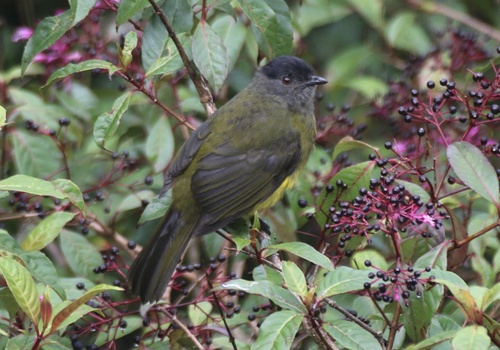
Black-and-yellow Silky-flycatcher (Phainoptila melanoxantha) Black-and-yellow Silky-flycatcher

Media

Loading…

In short

The Cedar Waxwing and Black-and-yellow Silky-flycatcher are distinct in both appearance and habitat preference. Cedar Waxwings are sleek with a distinctive crest and waxy red tips on their wings, while Black-and-yellow Silky-flycatchers have a more robust build with striking black and yellow plumage. Their habitats rarely overlap, with Cedar Waxwings favoring fruiting trees in North America and Black-and-yellow Silky-flycatchers residing in highland forests of Central America.

Identification tips

Size

Cedar Waxwings are slightly smaller and more slender compared to the more robust Black-and-yellow Silky-flycatcher.

Plumage

Cedar Waxwings have a smooth, silky appearance with a brownish head, pale yellow belly, and distinctive waxy red tips on their secondary feathers. In contrast, Black-and-yellow Silky-flycatchers are notable for their black head and back, with bright yellow underparts and a less pronounced crest.

Behaviour

Cedar Waxwings are often seen in flocks, feeding on berries and flying with a smooth, undulating flight. Black-and-yellow Silky-flycatchers are more solitary or in pairs, often seen sallying for insects.

Habitat

Cedar Waxwings are found in open woodlands, orchards, and suburban areas with fruiting trees across North America. Black-and-yellow Silky-flycatchers inhabit highland forests and edges in Central America.

Voice

Cedar Waxwings produce high-pitched, thin whistles, often in flight or while perched. Black-and-yellow Silky-flycatchers have a more varied song, but specific vocal details are less documented.

Submit a better description

Use the same sections as the comparison. Your text is published immediately.

The Cedar Waxwing and Black-and-yellow Silky-flycatcher are distinct in both appearance and habitat preference. Cedar Waxwings are sleek with a distinctive crest and waxy red tips on their wings, while Black-and-yellow Silky-flycatchers have a more robust build with striking black and yellow plumage. Their habitats rarely overlap, with Cedar Waxwings favoring fruiting trees in North America and Black-and-yellow Silky-flycatchers residing in highland forests of Central America.

  • Crest and Wing Tips: Look for the sleek crest and red waxy wing tips on Cedar Waxwings.
  • Plumage Color: Note the black and yellow contrast on Black-and-yellow Silky-flycatchers.
  • Habitat: Consider the location; Cedar Waxwings are in North America, while Black-and-yellow Silky-flycatchers are in Central American highlands.
  • Behavior: Cedar Waxwings often seen in flocks; Black-and-yellow Silky-flycatchers are more solitary.

Cedar Waxwings are slightly smaller and more slender compared to the more robust Black-and-yellow Silky-flycatcher.

Cedar Waxwings have a smooth, silky appearance with a brownish head, pale yellow belly, and distinctive waxy red tips on their secondary feathers. In contrast, Black-and-yellow Silky-flycatchers are notable for their black head and back, with bright yellow underparts and a less pronounced crest.

Cedar Waxwings are often seen in flocks, feeding on berries and flying with a smooth, undulating flight. Black-and-yellow Silky-flycatchers are more solitary or in pairs, often seen sallying for insects.

Cedar Waxwings are found in open woodlands, orchards, and suburban areas with fruiting trees across North America. Black-and-yellow Silky-flycatchers inhabit highland forests and edges in Central America.

Cedar Waxwings produce high-pitched, thin whistles, often in flight or while perched. Black-and-yellow Silky-flycatchers have a more varied song, but specific vocal details are less documented.

Discard your changes?

You have unsaved edits. If you leave now, those changes will be lost.

Cedar Waxwing · Black-and-yellow Silky-flycatcher · My Tricky Birds