Birdr

Cedar Waxwing vs Grey Silky-flycatcher

Bombycilla cedrorum versus Ptiliogonys cinereus

Play a quiz with Cedar Waxwing and Grey Silky-flycatcher

Cedar Waxwing (Bombycilla cedrorum) Cedar Waxwing
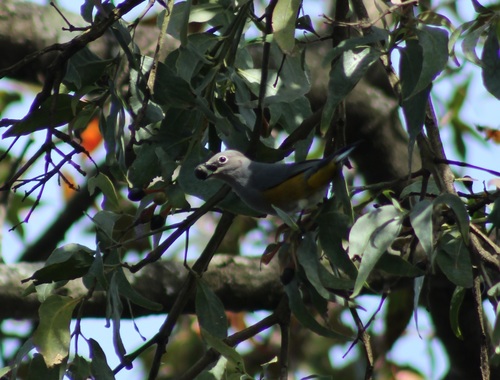
Grey Silky-flycatcher (Ptiliogonys cinereus) Grey Silky-flycatcher

Media

Loading…

In short

Cedar Waxwing and Grey Silky-flycatcher can be distinguished by their overall color and tail features. Cedar Waxwings have a distinctive yellow-tipped tail and a sleek, silky appearance, while Grey Silky-flycatchers are more uniformly grey with a less prominent tail tip. Both species are similar in size but differ in habitat preferences.

Identification tips

1. Tail Tips: Look for the yellow-tipped tail in Cedar Waxwings, absent in Grey Silky-flycatchers. 2. Head and Mask: Cedar Waxwings have a black mask and brownish head, while Grey Silky-flycatchers are uniformly grey. 3. Habitat: Consider the habitat; Cedar Waxwings are more likely in areas with fruiting trees, while Grey Silky-flycatchers are in montane forests. 4. Behavior: Observe feeding behavior; Cedar Waxwings often feed on fruits in flocks, whereas Grey Silky-flycatchers sally for insects.

Size

Both species are similar in size, medium-sized passerines with a sleek appearance.

Plumage

Cedar Waxwing has a sleek, silky appearance with a brownish head, black mask, and yellow-tipped tail. Grey Silky-flycatcher is uniformly grey with no yellow tail tips and lacks the black mask.

Behaviour

Cedar Waxwings often travel in flocks and are seen feeding on fruits, while Grey Silky-flycatchers are more solitary or in small groups, often seen sallying for insects.

Habitat

Cedar Waxwings prefer areas with fruiting trees and shrubs, often in regenerating farmlands or urban areas. Grey Silky-flycatchers are found in montane forests and edges, preferring higher elevations.

Voice

Cedar Waxwings have a high-pitched, thin call, often described as a 'sree' sound. Grey Silky-flycatchers have a more varied call, including whistles and trills.

Submit a better description

Use the same sections as the comparison. Your text is published immediately.

Cedar Waxwing and Grey Silky-flycatcher can be distinguished by their overall color and tail features. Cedar Waxwings have a distinctive yellow-tipped tail and a sleek, silky appearance, while Grey Silky-flycatchers are more uniformly grey with a less prominent tail tip. Both species are similar in size but differ in habitat preferences.

1. Tail Tips: Look for the yellow-tipped tail in Cedar Waxwings, absent in Grey Silky-flycatchers. 2. Head and Mask: Cedar Waxwings have a black mask and brownish head, while Grey Silky-flycatchers are uniformly grey. 3. Habitat: Consider the habitat; Cedar Waxwings are more likely in areas with fruiting trees, while Grey Silky-flycatchers are in montane forests. 4. Behavior: Observe feeding behavior; Cedar Waxwings often feed on fruits in flocks, whereas Grey Silky-flycatchers sally for insects.

Both species are similar in size, medium-sized passerines with a sleek appearance.

Cedar Waxwing has a sleek, silky appearance with a brownish head, black mask, and yellow-tipped tail. Grey Silky-flycatcher is uniformly grey with no yellow tail tips and lacks the black mask.

Cedar Waxwings often travel in flocks and are seen feeding on fruits, while Grey Silky-flycatchers are more solitary or in small groups, often seen sallying for insects.

Cedar Waxwings prefer areas with fruiting trees and shrubs, often in regenerating farmlands or urban areas. Grey Silky-flycatchers are found in montane forests and edges, preferring higher elevations.

Cedar Waxwings have a high-pitched, thin call, often described as a 'sree' sound. Grey Silky-flycatchers have a more varied call, including whistles and trills.

Discard your changes?

You have unsaved edits. If you leave now, those changes will be lost.

Cedar Waxwing · Grey Silky-flycatcher · My Tricky Birds