Birdr

Checkered Woodpecker vs Green-barred Woodpecker

Veniliornis mixtus versus Colaptes melanochloros

Play a quiz with Checkered Woodpecker and Green-barred Woodpecker
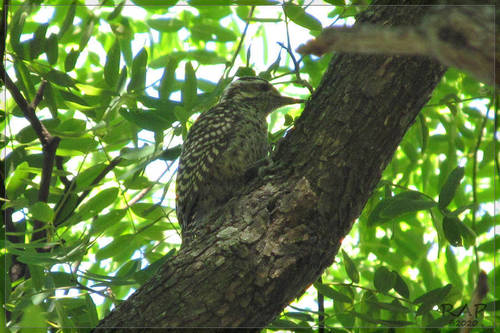
Checkered Woodpecker (Veniliornis mixtus) Checkered Woodpecker
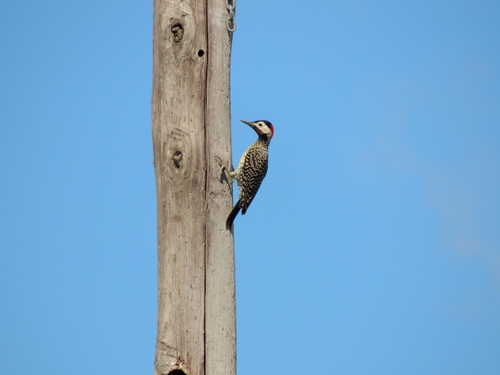
Green-barred Woodpecker (Colaptes melanochloros) Green-barred Woodpecker

Media

Loading…

In short

The Checkered Woodpecker and Green-barred Woodpecker can be distinguished by their plumage patterns and habitat preferences. The Checkered Woodpecker features a more checkered pattern on its back, while the Green-barred Woodpecker exhibits a distinctive greenish-barred appearance. Both species are woodpeckers, but they differ in their preferred habitats and foraging behaviors.

Identification tips

Look for the checkered pattern on the back of the Checkered Woodpecker versus the greenish bars on the Green-barred Woodpecker. Note the red crown on male Green-barred Woodpeckers. Observe habitat: Checkered Woodpeckers prefer open woodlands, while Green-barred Woodpeckers are more versatile in habitat choice.

Size

Both species are similar in size, typical of small to medium-sized woodpeckers.

Plumage

The Checkered Woodpecker has a checkered black-and-white pattern on its back, while the Green-barred Woodpecker displays greenish bars across its back and wings. The Green-barred Woodpecker also has a more pronounced facial pattern, with a red crown in males.

Behaviour

The Checkered Woodpecker is often seen foraging on tree trunks and branches, whereas the Green-barred Woodpecker frequently forages in the lower and middle strata of trees and sometimes on the ground.

Habitat

Checkered Woodpeckers are typically found in open woodlands and forest edges, while Green-barred Woodpeckers inhabit a wider range of environments, from lowland forests to Andean desert scrub.

Voice

Vocalizations are not well-documented for these species, but woodpeckers generally have distinctive drumming patterns.

Submit a better description

Use the same sections as the comparison. Your text is published immediately.

The Checkered Woodpecker and Green-barred Woodpecker can be distinguished by their plumage patterns and habitat preferences. The Checkered Woodpecker features a more checkered pattern on its back, while the Green-barred Woodpecker exhibits a distinctive greenish-barred appearance. Both species are woodpeckers, but they differ in their preferred habitats and foraging behaviors.

Look for the checkered pattern on the back of the Checkered Woodpecker versus the greenish bars on the Green-barred Woodpecker. Note the red crown on male Green-barred Woodpeckers. Observe habitat: Checkered Woodpeckers prefer open woodlands, while Green-barred Woodpeckers are more versatile in habitat choice.

Both species are similar in size, typical of small to medium-sized woodpeckers.

The Checkered Woodpecker has a checkered black-and-white pattern on its back, while the Green-barred Woodpecker displays greenish bars across its back and wings. The Green-barred Woodpecker also has a more pronounced facial pattern, with a red crown in males.

The Checkered Woodpecker is often seen foraging on tree trunks and branches, whereas the Green-barred Woodpecker frequently forages in the lower and middle strata of trees and sometimes on the ground.

Checkered Woodpeckers are typically found in open woodlands and forest edges, while Green-barred Woodpeckers inhabit a wider range of environments, from lowland forests to Andean desert scrub.

Vocalizations are not well-documented for these species, but woodpeckers generally have distinctive drumming patterns.

Discard your changes?

You have unsaved edits. If you leave now, those changes will be lost.

Checkered Woodpecker · Green-barred Woodpecker · My Tricky Birds