Birdr

Chestnut-backed Antbird vs Bicoloured Antbird

Poliocrania exsul versus Gymnopithys bicolor

Play a quiz with Chestnut-backed Antbird and Bicoloured Antbird
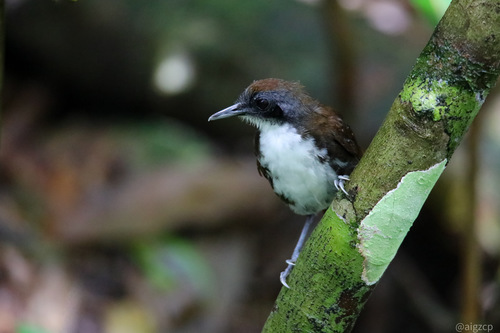
Chestnut-backed Antbird (Poliocrania exsul) Chestnut-backed Antbird
Bicoloured Antbird (Gymnopithys bicolor) Bicoloured Antbird

Media

Loading…

In short

The Chestnut-backed Antbird and Bicolored Antbird are both members of the antbird family, often seen near army-ant swarms. The Chestnut-backed Antbird is distinguished by its rich chestnut back, while the Bicolored Antbird features a more contrasting plumage with a white belly.

Identification tips

  1. Look for the chestnut back of the Chestnut-backed Antbird versus the white belly of the Bicolored Antbird. 2. Observe behavior around ant swarms; both species may be present, but habitat context can help. 3. Consider the habitat: Chestnut-backed Antbirds may be found in smaller patches, while Bicolored Antbirds prefer larger, continuous forests.

Size

Both species are similar in size, typical of small antbirds.

Plumage

The Chestnut-backed Antbird has a distinctive chestnut back and dark underparts, whereas the Bicolored Antbird has a contrasting white belly and darker upperparts, creating a bicolored appearance.

Behaviour

Both species are often found near army-ant swarms, but the Chestnut-backed Antbird is more likely to be seen in smaller forest patches.

Habitat

The Chestnut-backed Antbird can thrive in fragmented landscapes and smaller forest patches, while the Bicolored Antbird is more commonly associated with continuous forest habitats.

Voice

Vocalizations are not well-documented for distinguishing these species in the field.

Submit a better description

Use the same sections as the comparison. Your text is published immediately.

The Chestnut-backed Antbird and Bicolored Antbird are both members of the antbird family, often seen near army-ant swarms. The Chestnut-backed Antbird is distinguished by its rich chestnut back, while the Bicolored Antbird features a more contrasting plumage with a white belly.

  1. Look for the chestnut back of the Chestnut-backed Antbird versus the white belly of the Bicolored Antbird. 2. Observe behavior around ant swarms; both species may be present, but habitat context can help. 3. Consider the habitat: Chestnut-backed Antbirds may be found in smaller patches, while Bicolored Antbirds prefer larger, continuous forests.

Both species are similar in size, typical of small antbirds.

The Chestnut-backed Antbird has a distinctive chestnut back and dark underparts, whereas the Bicolored Antbird has a contrasting white belly and darker upperparts, creating a bicolored appearance.

Both species are often found near army-ant swarms, but the Chestnut-backed Antbird is more likely to be seen in smaller forest patches.

The Chestnut-backed Antbird can thrive in fragmented landscapes and smaller forest patches, while the Bicolored Antbird is more commonly associated with continuous forest habitats.

Vocalizations are not well-documented for distinguishing these species in the field.

Discard your changes?

You have unsaved edits. If you leave now, those changes will be lost.

Chestnut-backed Antbird · Bicoloured Antbird · My Tricky Birds