Birdr

Chestnut-backed Chickadee vs Bridled Titmouse

Poecile rufescens versus Baeolophus wollweberi

Play a quiz with Chestnut-backed Chickadee and Bridled Titmouse
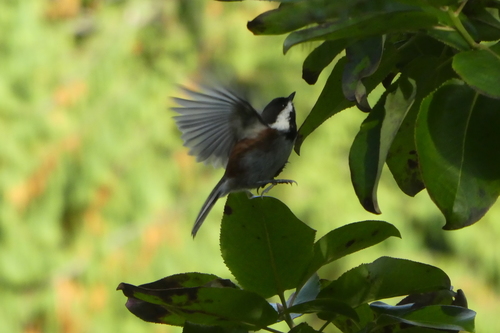
Chestnut-backed Chickadee (Poecile rufescens) Chestnut-backed Chickadee
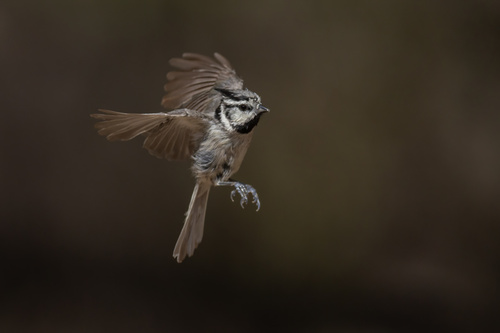
Bridled Titmouse (Baeolophus wollweberi) Bridled Titmouse

Media

Loading…

In short

The Chestnut-backed Chickadee and Bridled Titmouse can be distinguished by their plumage and facial patterns. The Chestnut-backed Chickadee has a distinctive chestnut back and lacks a crest, while the Bridled Titmouse features a striking black-and-white facial pattern with a small crest. Both species inhabit different geographic regions, which aids in identification.

Identification tips

Size

Both species are similar in size, typical of small chickadees and titmice, making size an unreliable distinguishing feature.

Plumage

The Chestnut-backed Chickadee has a chestnut-colored back and flanks, with a brown cap and white cheeks. In contrast, the Bridled Titmouse has a gray body with a black-and-white facial pattern, including a black line through the eye and a small crest.

Behaviour

The Chestnut-backed Chickadee often forages in mixed-species flocks and focuses on insects in coniferous forests. The Bridled Titmouse is noted for sometimes having a helper during breeding and foraging in oak-pine woodlands.

Habitat

Chestnut-backed Chickadees are found in humid coastal regions and coniferous forests of the Pacific Northwest. Bridled Titmice inhabit oak-pine woodlands in the southwestern United States and Mexico.

Voice

The Chestnut-backed Chickadee has a robust 'chick-a-dee' call but lacks a whistled song, while the Bridled Titmouse's vocalizations are less documented but include varied song types.

Submit a better description

Use the same sections as the comparison. Your text is published immediately.

The Chestnut-backed Chickadee and Bridled Titmouse can be distinguished by their plumage and facial patterns. The Chestnut-backed Chickadee has a distinctive chestnut back and lacks a crest, while the Bridled Titmouse features a striking black-and-white facial pattern with a small crest. Both species inhabit different geographic regions, which aids in identification.

  • Check the back color: Chestnut-backed Chickadee has a chestnut back; Bridled Titmouse is gray.
  • Look for facial patterns: Bridled Titmouse has a distinctive black-and-white face with a crest.
  • Consider location: Chestnut-backed Chickadee is in the Pacific Northwest; Bridled Titmouse is in the southwestern US and Mexico.
  • Listen for calls: Chestnut-backed Chickadee has a strong 'chick-a-dee' call.

Both species are similar in size, typical of small chickadees and titmice, making size an unreliable distinguishing feature.

The Chestnut-backed Chickadee has a chestnut-colored back and flanks, with a brown cap and white cheeks. In contrast, the Bridled Titmouse has a gray body with a black-and-white facial pattern, including a black line through the eye and a small crest.

The Chestnut-backed Chickadee often forages in mixed-species flocks and focuses on insects in coniferous forests. The Bridled Titmouse is noted for sometimes having a helper during breeding and foraging in oak-pine woodlands.

Chestnut-backed Chickadees are found in humid coastal regions and coniferous forests of the Pacific Northwest. Bridled Titmice inhabit oak-pine woodlands in the southwestern United States and Mexico.

The Chestnut-backed Chickadee has a robust 'chick-a-dee' call but lacks a whistled song, while the Bridled Titmouse's vocalizations are less documented but include varied song types.

Discard your changes?

You have unsaved edits. If you leave now, those changes will be lost.

Chestnut-backed Chickadee · Bridled Titmouse · My Tricky Birds