
Chestnut-bellied Rock Thrush vs Blue-capped Rock Thrush
Monticola rufiventris versus Monticola cinclorhyncha
Play a quiz with Chestnut-bellied Rock Thrush and Blue-capped Rock Thrush
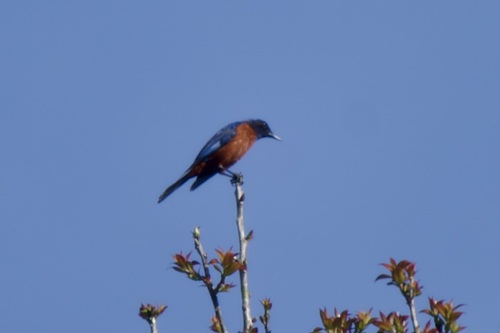
Chestnut-bellied Rock Thrush
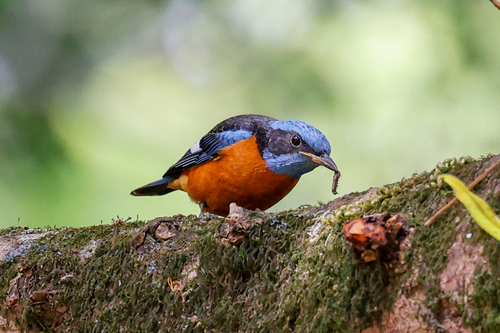
Blue-capped Rock Thrush
In short
The most reliable field mark to differentiate these species is the chestnut belly of the Chestnut-bellied Rock Thrush, which contrasts with the Blue-capped Rock Thrush's blue cap and back. Both species belong to the Old World Flycatchers family and share similar structures, but their plumage and habitat preferences can help in identification.
Identification tips
- Look for the chestnut belly in males of the Chestnut-bellied Rock Thrush.
- Note the blue cap and back in males of the Blue-capped Rock Thrush.
- Consider habitat: montane forests for Chestnut-bellied and open woodlands for Blue-capped.
- Use vocalizations as a secondary clue, with the Blue-capped having a more melodious song.
Size
Both species are similar in size, typical of rock thrushes, with no significant differences in structure.
Plumage
The male Chestnut-bellied Rock Thrush has a distinctive chestnut belly and blue upperparts, while the Blue-capped Rock Thrush male features a blue cap, back, and tail with a contrasting white belly. Females of both species are more subdued, but the Chestnut-bellied female tends to have a warmer tone on the underparts.
Behaviour
Both species exhibit similar behaviors typical of rock thrushes, such as perching on rocks and foraging on the ground.
Habitat
Chestnut-bellied Rock Thrushes are often found in montane forests and edges, while Blue-capped Rock Thrushes prefer open woodlands and clearings. Overlap can occur, but habitat preference is a useful clue.
Voice
Vocalizations are not the most reliable distinguishing feature, but the Blue-capped Rock Thrush is known for a more melodious song compared to the Chestnut-bellied.
Chestnut-bellied Rock Thrush · Blue-capped Rock Thrush · My Tricky Birds