
Chestnut-bellied Rock Thrush vs White-throated Rock Thrush
Monticola rufiventris versus Monticola gularis
Play a quiz with Chestnut-bellied Rock Thrush and White-throated Rock Thrush
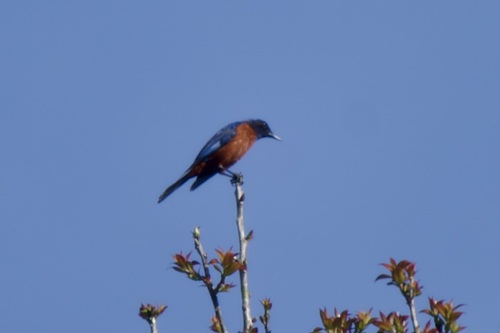
Chestnut-bellied Rock Thrush
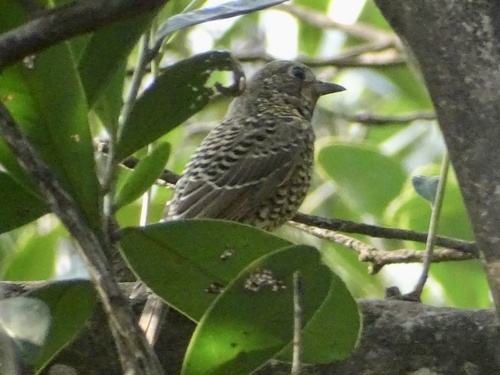
White-throated Rock Thrush
In short
The most reliable field mark to distinguish these species is the male's underpart color: the Chestnut-bellied Rock Thrush has a rich chestnut belly, while the White-throated Rock Thrush has a white throat and belly. Both species are similar in structure, being part of the same family, but their plumage differences are key.
Identification tips
- Focus on the male's underpart color: chestnut for Chestnut-bellied, white for White-throated. 2. Check for the white throat in White-throated males. 3. In females, look for subtle throat differences. 4. Use vocalizations as a secondary check if visual cues are unclear.
Size
Both species are similar in size, typical of rock thrushes, and size is not a reliable differentiator.
Plumage
Male Chestnut-bellied Rock Thrushes have a chestnut belly and blue upperparts, while males of the White-throated Rock Thrush have a white throat and belly with blue upperparts and a distinct orange flank. Females of both species are more challenging to distinguish, generally brownish, but the White-throated female may show a paler throat.
Behaviour
Both species exhibit similar behaviors typical of rock thrushes, such as perching prominently on rocks or branches. Behavior is not a key differentiator.
Habitat
Both species prefer rocky, forested areas but can overlap in range during migration. Habitat alone is not a reliable field mark.
Voice
Vocalizations can differ, with the Chestnut-bellied Rock Thrush having a more varied song, but this is not always easy to discern in the field.
Chestnut-bellied Rock Thrush · White-throated Rock Thrush · My Tricky Birds