
Chestnut-bellied Seedeater vs Black-and-tawny Seedeater
Sporophila castaneiventris versus Sporophila nigrorufa
Play a quiz with Chestnut-bellied Seedeater and Black-and-tawny Seedeater
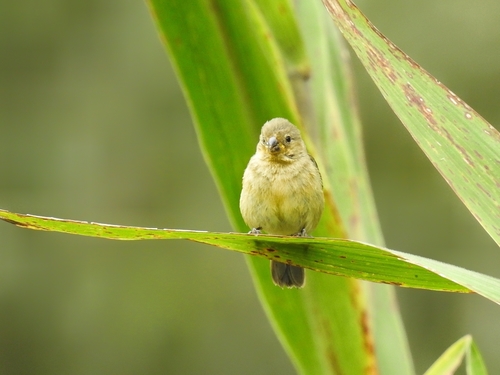 Chestnut-bellied Seedeater
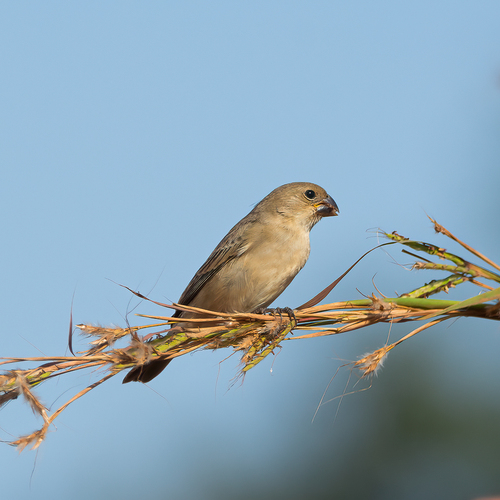 Black-and-tawny Seedeater
In short
The male Chestnut-bellied Seedeater is distinguished by its chestnut belly, while the male Black-and-tawny Seedeater features a black crown and mantle contrasting with cinnamon-rufous underparts. Females of both species are nondescript and challenging to identify without males present.
Identification tips
Look for the chestnut belly on male Chestnut-bellied Seedeaters. For Black-and-tawny Seedeaters, note the black crown and mantle with cinnamon-rufous underparts. Females are best identified when seen with males.
Plumage
Male Chestnut-bellied Seedeaters have a chestnut belly, whereas male Black-and-tawny Seedeaters display a black crown and mantle with cinnamon-rufous underparts and usually paler cheeks. Females of both species are mostly brown and difficult to differentiate.
Habitat
Black-and-tawny Seedeaters prefer seasonally flooded grasslands with scattered bushes and trees, while the habitat preference for Chestnut-bellied Seedeaters is not specified.
Chestnut-bellied Seedeater · Black-and-tawny Seedeater · My Tricky Birds