Birdr

Chestnut-breasted Malkoha vs Chestnut-bellied Malkoha

Phaenicophaeus curvirostris versus Phaenicophaeus sumatranus

Play a quiz with Chestnut-breasted Malkoha and Chestnut-bellied Malkoha
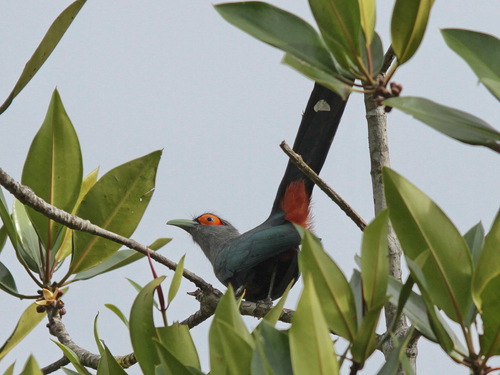
Chestnut-breasted Malkoha (Phaenicophaeus curvirostris) Chestnut-breasted Malkoha
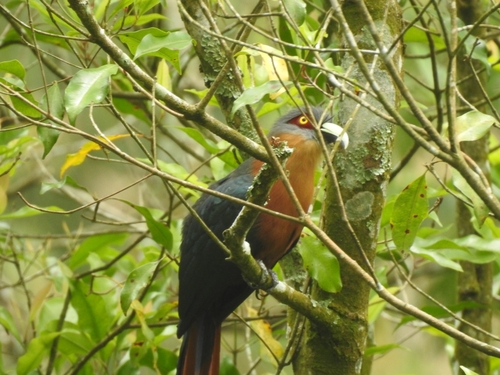
Chestnut-bellied Malkoha (Phaenicophaeus sumatranus) Chestnut-bellied Malkoha

Media

Loading…

In short

The Chestnut-breasted Malkoha and Chestnut-bellied Malkoha are both large, long-tailed cuckoos with striking plumage. The most reliable field mark is the chestnut coloration: the Chestnut-breasted Malkoha has a chestnut breast, while the Chestnut-bellied Malkoha has a chestnut belly. Both species share similar habitats and behaviors, making plumage the key distinguishing feature.

Identification tips

  1. Focus on the distribution of chestnut coloration: breast for Chestnut-breasted, belly for Chestnut-bellied. 2. Observe in good light to discern subtle plumage differences. 3. Note the habitat and behavior, though these are not distinguishing features.

Size

Both species are similar in size, with long tails and slender bodies typical of malkohas.

Plumage

The Chestnut-breasted Malkoha features a chestnut breast and greyish upperparts, while the Chestnut-bellied Malkoha has a chestnut belly and more extensive grey on the breast. Both have greenish wings and tails, but the distribution of chestnut is the key difference.

Behaviour

Both species exhibit similar behavior, often seen moving through dense foliage in search of insects.

Habitat

Both species inhabit similar environments, preferring dense forests and woodland edges.

Voice

There is no well-documented difference in vocalizations between these two species.

Submit a better description

Use the same sections as the comparison. Your text is published immediately.

The Chestnut-breasted Malkoha and Chestnut-bellied Malkoha are both large, long-tailed cuckoos with striking plumage. The most reliable field mark is the chestnut coloration: the Chestnut-breasted Malkoha has a chestnut breast, while the Chestnut-bellied Malkoha has a chestnut belly. Both species share similar habitats and behaviors, making plumage the key distinguishing feature.

  1. Focus on the distribution of chestnut coloration: breast for Chestnut-breasted, belly for Chestnut-bellied. 2. Observe in good light to discern subtle plumage differences. 3. Note the habitat and behavior, though these are not distinguishing features.

Both species are similar in size, with long tails and slender bodies typical of malkohas.

The Chestnut-breasted Malkoha features a chestnut breast and greyish upperparts, while the Chestnut-bellied Malkoha has a chestnut belly and more extensive grey on the breast. Both have greenish wings and tails, but the distribution of chestnut is the key difference.

Both species exhibit similar behavior, often seen moving through dense foliage in search of insects.

Both species inhabit similar environments, preferring dense forests and woodland edges.

There is no well-documented difference in vocalizations between these two species.

Discard your changes?

You have unsaved edits. If you leave now, those changes will be lost.

Chestnut-breasted Malkoha · Chestnut-bellied Malkoha · My Tricky Birds