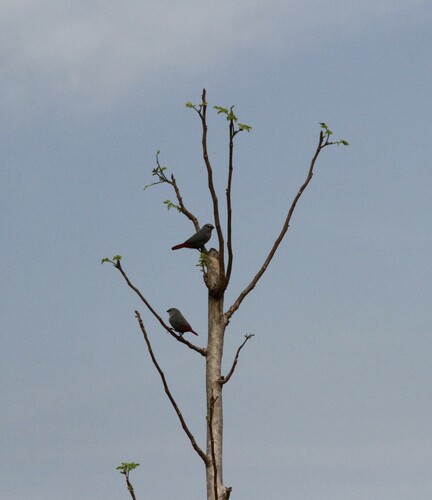
Chestnut-breasted Nigrita vs Lavender Waxbill
Nigrita bicolor versus Glaucestrilda caerulescens
Play a quiz with Chestnut-breasted Nigrita and Lavender Waxbill
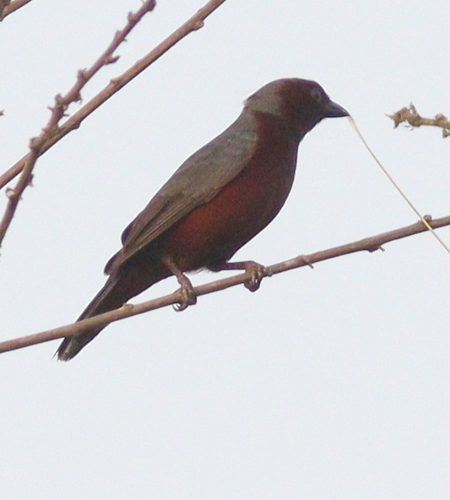
Chestnut-breasted Nigrita
Lavender Waxbill
In short
The Chestnut-breasted Nigrita and Lavender Waxbill are both small, Estrildid finches, but they can be distinguished by their plumage and behavior. The Nigrita has a distinctive chestnut breast, while the Waxbill is noted for its lavender-gray coloration. Observing their feeding behavior and preferred habitats can also aid in identification.
Identification tips
- Look for the chestnut breast on the Nigrita, which is absent in the Waxbill.
- Note the lavender-gray coloration of the Waxbill, especially if seen in open areas.
- Observe feeding behavior: Nigritas are more secretive and found in dense foliage, while Waxbills are often in open areas.
- Consider habitat: Nigritas are more forest-associated, whereas Waxbills prefer open grasslands.
Size
Both species are small finches with similar body sizes, typical of Estrildidae.
Plumage
The Chestnut-breasted Nigrita has a striking chestnut-colored breast and a dark head, while the Lavender Waxbill is characterized by its overall lavender-gray plumage with a paler belly and a red bill.
Behaviour
Chestnut-breasted Nigritas are often seen in pairs or small groups, feeding quietly in dense foliage. Lavender Waxbills are more likely to be seen in open areas, often in larger flocks.
Habitat
Chestnut-breasted Nigritas prefer dense, forested habitats, while Lavender Waxbills are more commonly found in open savannas and grasslands.
Voice
The vocalizations of both species are generally soft and not easily distinguishable without experience, but the Lavender Waxbill's calls are often described as more musical.
Chestnut-breasted Nigrita · Lavender Waxbill · My Tricky Birds