Birdr

Chestnut-capped Babbler vs Fluffy-backed Tit-Babbler

Timalia pileata versus Macronus ptilosus

Play a quiz with Chestnut-capped Babbler and Fluffy-backed Tit-Babbler
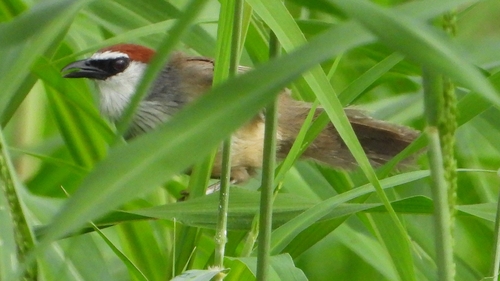
Chestnut-capped Babbler (Timalia pileata) Chestnut-capped Babbler
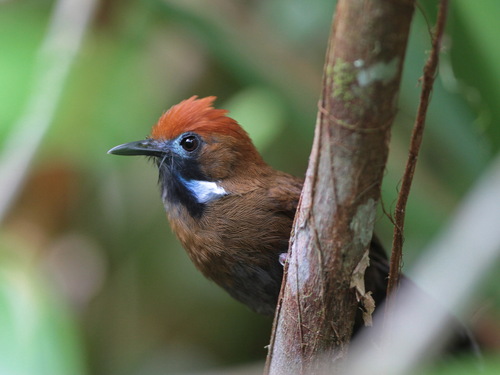
Fluffy-backed Tit-Babbler (Macronus ptilosus) Fluffy-backed Tit-Babbler

Media

Loading…

In short

The Chestnut-capped Babbler and the Fluffy-backed Tit-Babbler can be distinguished primarily by their head coloration and back texture. The Chestnut-capped Babbler has a distinctive chestnut cap, while the Fluffy-backed Tit-Babbler features a fluffy appearance on its back. Both species belong to the same family but have different vocalizations and habitats.

Identification tips

  1. Look for the chestnut cap on the Chestnut-capped Babbler. 2. Check for the fluffy back on the Fluffy-backed Tit-Babbler. 3. Consider the habitat: grasslands for the Chestnut-capped, forests for the Fluffy-backed. 4. Listen for vocal differences: sharp calls for the Chestnut-capped, melodious calls for the Fluffy-backed.

Size

Both species are similar in size, typical of small babblers, making size a less reliable differentiator.

Plumage

The Chestnut-capped Babbler is notable for its chestnut-colored cap and generally smooth plumage. In contrast, the Fluffy-backed Tit-Babbler has a fluffy appearance on its back, which is a key distinguishing feature.

Behaviour

Both species are active and often seen in small groups, but specific behavioral differences are not well-documented.

Habitat

The Chestnut-capped Babbler is typically found in grasslands and reedbeds, while the Fluffy-backed Tit-Babbler prefers forested areas, particularly lowland and hill forests.

Voice

Vocalizations differ, with the Chestnut-capped Babbler having a series of sharp calls, whereas the Fluffy-backed Tit-Babbler's calls are more varied and melodious.

Submit a better description

Use the same sections as the comparison. Your text is published immediately.

The Chestnut-capped Babbler and the Fluffy-backed Tit-Babbler can be distinguished primarily by their head coloration and back texture. The Chestnut-capped Babbler has a distinctive chestnut cap, while the Fluffy-backed Tit-Babbler features a fluffy appearance on its back. Both species belong to the same family but have different vocalizations and habitats.

  1. Look for the chestnut cap on the Chestnut-capped Babbler. 2. Check for the fluffy back on the Fluffy-backed Tit-Babbler. 3. Consider the habitat: grasslands for the Chestnut-capped, forests for the Fluffy-backed. 4. Listen for vocal differences: sharp calls for the Chestnut-capped, melodious calls for the Fluffy-backed.

Both species are similar in size, typical of small babblers, making size a less reliable differentiator.

The Chestnut-capped Babbler is notable for its chestnut-colored cap and generally smooth plumage. In contrast, the Fluffy-backed Tit-Babbler has a fluffy appearance on its back, which is a key distinguishing feature.

Both species are active and often seen in small groups, but specific behavioral differences are not well-documented.

The Chestnut-capped Babbler is typically found in grasslands and reedbeds, while the Fluffy-backed Tit-Babbler prefers forested areas, particularly lowland and hill forests.

Vocalizations differ, with the Chestnut-capped Babbler having a series of sharp calls, whereas the Fluffy-backed Tit-Babbler's calls are more varied and melodious.

Discard your changes?

You have unsaved edits. If you leave now, those changes will be lost.

Chestnut-capped Babbler · Fluffy-backed Tit-Babbler · My Tricky Birds