
Chestnut-capped Babbler vs Rufous-capped Babbler
Timalia pileata versus Cyanoderma ruficeps
Play a quiz with Chestnut-capped Babbler and Rufous-capped Babbler
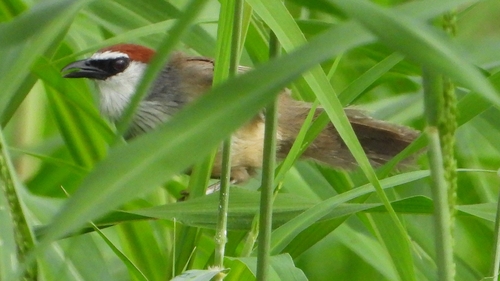
Chestnut-capped Babbler

Rufous-capped Babbler
In short
The Chestnut-capped Babbler and the Rufous-capped Babbler can be distinguished primarily by their cap color and facial markings. The Chestnut-capped Babbler has a more uniform chestnut cap, while the Rufous-capped Babbler features a rufous cap with a distinct white supercilium. Both species inhabit similar environments, but their vocalizations and behavior can also aid in identification.
Identification tips
1. Cap Color: Look for the uniform chestnut cap of the Chestnut-capped Babbler versus the rufous cap with a white supercilium of the Rufous-capped Babbler. 2. Facial Pattern: Note the more distinct facial markings in the Rufous-capped Babbler. 3. Vocalizations: Listen for the musical song of the Chestnut-capped Babbler compared to the sharper calls of the Rufous-capped Babbler. 4. Habitat and Behavior: Observe habitat preferences and behavior, as Rufous-capped Babblers may be seen higher in the canopy.
Size
Both species are similar in size, typical of small babblers.
Plumage
The Chestnut-capped Babbler has a uniform chestnut cap that extends to the nape, with a less distinct facial pattern. In contrast, the Rufous-capped Babbler has a rufous cap with a prominent white supercilium and a more contrasting facial pattern.
Behaviour
Both species are active and often found in dense undergrowth, but the Rufous-capped Babbler may be more arboreal, occasionally seen higher in the canopy.
Habitat
Both species prefer dense vegetation, such as thickets and forest edges, but the Rufous-capped Babbler might be found in slightly more varied habitats, including higher elevations.
Voice
Vocalizations differ, with the Chestnut-capped Babbler having a more repetitive and musical song, while the Rufous-capped Babbler's call is sharper and more varied.
Chestnut-capped Babbler · Rufous-capped Babbler · My Tricky Birds