Birdr

Chestnut-capped Thrush vs Long-billed Spiderhunter

Geokichla interpres versus Arachnothera robusta

Play a quiz with Chestnut-capped Thrush and Long-billed Spiderhunter
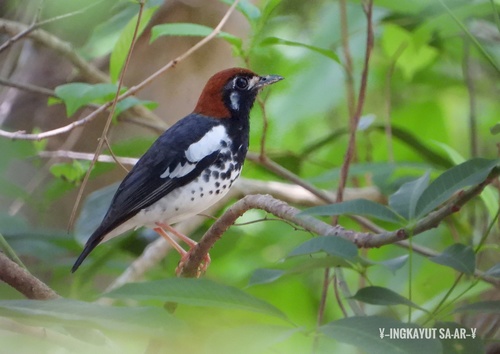
Chestnut-capped Thrush (Geokichla interpres) Chestnut-capped Thrush
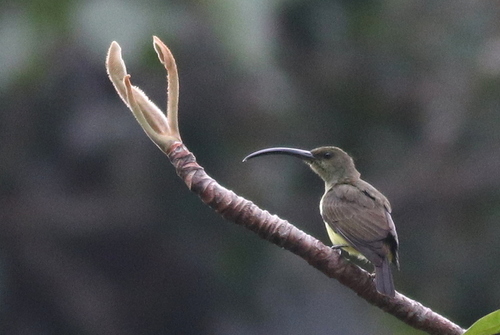
Long-billed Spiderhunter (Arachnothera robusta) Long-billed Spiderhunter

Media

Loading…

In short

The Chestnut-capped Thrush and Long-billed Spiderhunter are easily distinguished by their bill shape and plumage. The thrush has a short, straight bill and a distinctive chestnut cap, while the spiderhunter features a long, curved bill and lacks the chestnut cap. These differences make them identifiable even at a distance.

Identification tips

  1. Look for the chestnut cap on the thrush. 2. Observe the bill shape: short and straight for the thrush, long and curved for the spiderhunter. 3. Note the foraging behavior: ground foraging for the thrush, nectar feeding for the spiderhunter. 4. Listen for the vocalizations: musical for the thrush, sharp calls for the spiderhunter.

Size

The Long-billed Spiderhunter is generally larger with a more elongated body compared to the more compact Chestnut-capped Thrush.

Plumage

The Chestnut-capped Thrush is notable for its chestnut cap and contrasting black and white body. In contrast, the Long-billed Spiderhunter lacks the chestnut cap and has more uniform, less contrasting plumage.

Behaviour

The Chestnut-capped Thrush is often seen foraging on the forest floor, while the Long-billed Spiderhunter is more likely to be observed feeding on nectar from flowers, often in the canopy.

Habitat

Both species inhabit forested areas, but the Chestnut-capped Thrush is more commonly found in dense, humid forests, whereas the Long-billed Spiderhunter can also be found in more open forest edges and gardens.

Voice

The vocalizations of these species differ, with the Chestnut-capped Thrush having a more musical song, while the Long-billed Spiderhunter produces a series of sharp, repetitive calls.

Submit a better description

Use the same sections as the comparison. Your text is published immediately.

The Chestnut-capped Thrush and Long-billed Spiderhunter are easily distinguished by their bill shape and plumage. The thrush has a short, straight bill and a distinctive chestnut cap, while the spiderhunter features a long, curved bill and lacks the chestnut cap. These differences make them identifiable even at a distance.

  1. Look for the chestnut cap on the thrush. 2. Observe the bill shape: short and straight for the thrush, long and curved for the spiderhunter. 3. Note the foraging behavior: ground foraging for the thrush, nectar feeding for the spiderhunter. 4. Listen for the vocalizations: musical for the thrush, sharp calls for the spiderhunter.

The Long-billed Spiderhunter is generally larger with a more elongated body compared to the more compact Chestnut-capped Thrush.

The Chestnut-capped Thrush is notable for its chestnut cap and contrasting black and white body. In contrast, the Long-billed Spiderhunter lacks the chestnut cap and has more uniform, less contrasting plumage.

The Chestnut-capped Thrush is often seen foraging on the forest floor, while the Long-billed Spiderhunter is more likely to be observed feeding on nectar from flowers, often in the canopy.

Both species inhabit forested areas, but the Chestnut-capped Thrush is more commonly found in dense, humid forests, whereas the Long-billed Spiderhunter can also be found in more open forest edges and gardens.

The vocalizations of these species differ, with the Chestnut-capped Thrush having a more musical song, while the Long-billed Spiderhunter produces a series of sharp, repetitive calls.

Discard your changes?

You have unsaved edits. If you leave now, those changes will be lost.

Chestnut-capped Thrush · Long-billed Spiderhunter · My Tricky Birds