Birdr

Chestnut-capped Warbler vs Black-cheeked Warbler

Basileuterus delattrii versus Basileuterus melanogenys

Play a quiz with Chestnut-capped Warbler and Black-cheeked Warbler
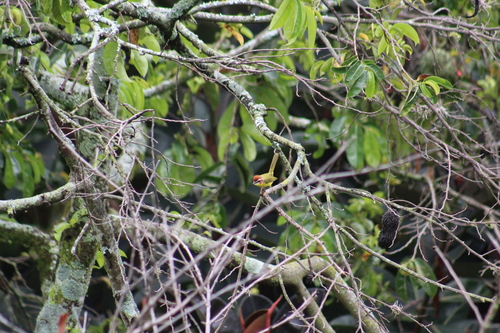
Chestnut-capped Warbler (Basileuterus delattrii) Chestnut-capped Warbler
Black-cheeked Warbler (Basileuterus melanogenys) Black-cheeked Warbler

Media

Loading…

In short

The Chestnut-capped Warbler and Black-cheeked Warbler are both small, similar-looking warblers with distinct facial patterns. The most reliable field mark is the cheek color: the Chestnut-capped Warbler has a chestnut crown and cheeks, while the Black-cheeked Warbler features black cheeks. Both species belong to the Basileuterus genus, sharing a similar structure and general appearance.

Identification tips

Size

Both species are similar in size, typical of small New World warblers.

Plumage

The Chestnut-capped Warbler has a chestnut crown and cheeks, separated by a white supercilium. In contrast, the Black-cheeked Warbler has black cheeks and a similar white supercilium, but its crown is not chestnut.

Behaviour

Both species exhibit typical warbler foraging behavior, actively moving through foliage in search of insects.

Habitat

The Chestnut-capped Warbler is often found in coffee plantations and similar habitats up to 1,500 meters. The Black-cheeked Warbler prefers montane forests, typically at higher elevations.

Voice

Vocalizations are not well-documented in the provided notes, but differences in song and call may exist.

Submit a better description

Use the same sections as the comparison. Your text is published immediately.

The Chestnut-capped Warbler and Black-cheeked Warbler are both small, similar-looking warblers with distinct facial patterns. The most reliable field mark is the cheek color: the Chestnut-capped Warbler has a chestnut crown and cheeks, while the Black-cheeked Warbler features black cheeks. Both species belong to the Basileuterus genus, sharing a similar structure and general appearance.

  • Look for the cheek color: chestnut in Chestnut-capped, black in Black-cheeked.
  • Observe the habitat: Chestnut-capped in lower elevation plantations, Black-cheeked in higher montane forests.
  • Note the supercilium: both have a white supercilium, but cheek color is key.
  • Use elevation as a clue: Chestnut-capped is more likely at lower elevations.

Both species are similar in size, typical of small New World warblers.

The Chestnut-capped Warbler has a chestnut crown and cheeks, separated by a white supercilium. In contrast, the Black-cheeked Warbler has black cheeks and a similar white supercilium, but its crown is not chestnut.

Both species exhibit typical warbler foraging behavior, actively moving through foliage in search of insects.

The Chestnut-capped Warbler is often found in coffee plantations and similar habitats up to 1,500 meters. The Black-cheeked Warbler prefers montane forests, typically at higher elevations.

Vocalizations are not well-documented in the provided notes, but differences in song and call may exist.

Discard your changes?

You have unsaved edits. If you leave now, those changes will be lost.

Chestnut-capped Warbler · Black-cheeked Warbler · My Tricky Birds